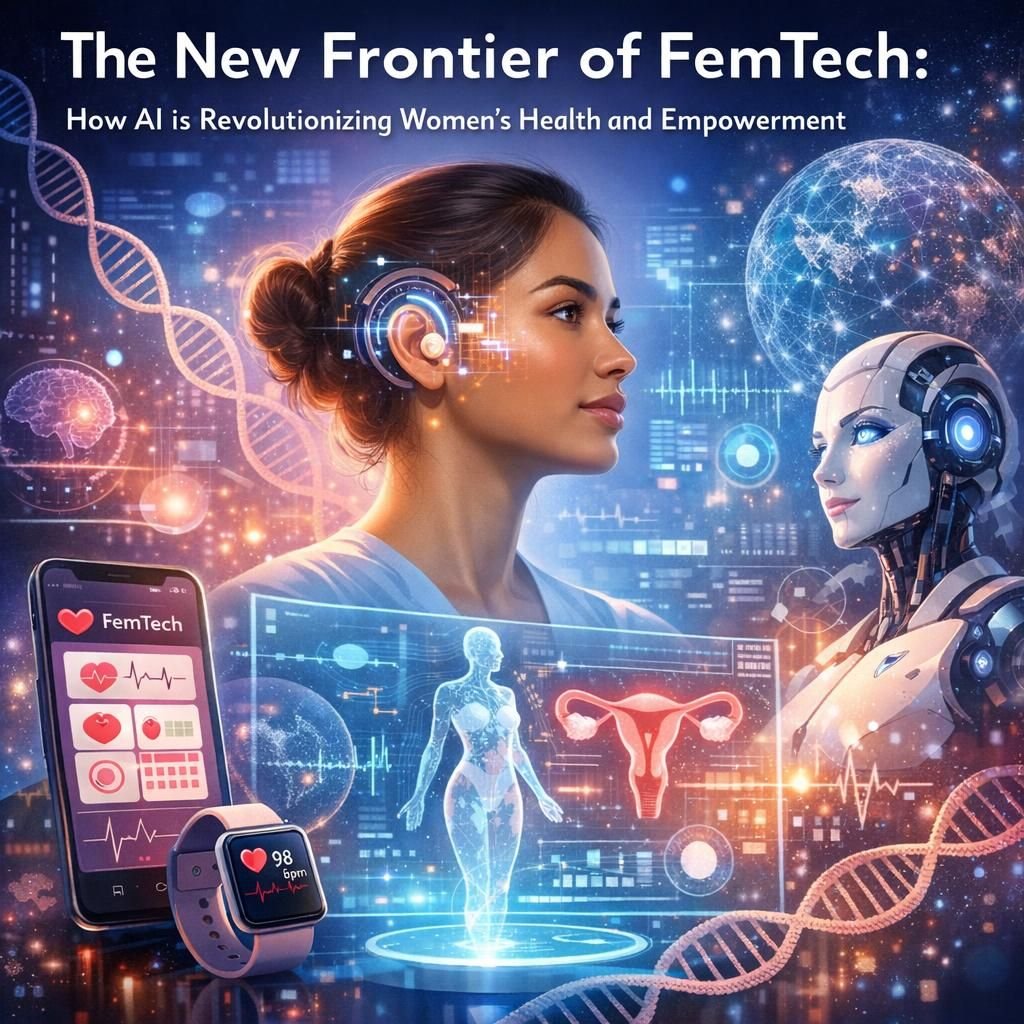
The New Frontier of FemTech: How AI is Revolutionizing Women’s Health and Empowerment
**Introduction**
In an era where digital innovation is reshaping industries worldwide, the **women’s health sector** is undergoing a profound transformation, driven by the burgeoning field of **FemTech**. FemTech, standing for female technology, refers to software, diagnostics, products, and services aimed at enhancing **women’s health** and well-being. As demand for **personalized healthcare solutions** rises, the role of **artificial intelligence (AI)** in this movement becomes increasingly vital. By harnessing AI’s capabilities to analyze complex datasets, predict health outcomes, and provide personalized recommendations, FemTech is not just improving accessibility but also empowering women with more informed choices about their health.
**AI**’s influence on FemTech spans many applications, from **menstrual health** and **fertility tracking** to more complex areas like **pregnancy monitoring** and **menopause management**. A significant AI contribution is predicting and analyzing **menstrual cycles** with exceptional precision, enabling women to understand their reproductive health better. Advanced algorithms now offer personalized insights into **fertility windows**, expected periods, and hormonal fluctuations, formerly challenging to track accurately.
Moreover, AI is leading advancements in early disease detection. Women often face underrepresentation in clinical research, which can lead to **misdiagnoses** or delayed treatment. AI helps bridge this gap by analyzing vast data to identify patterns and early warning signs of conditions like **breast** and **ovarian cancers**. These predictive models can lead to early interventions, increased survival rates, and reduced long-term medical costs.
**Empowerment** is a core tenant of the FemTech movement. AI amplifies this by providing women with digital tools that foster autonomy over healthcare decisions. Through smartphone apps and wearable devices, women now access real-time insights and **personalized healthcare plans**. This aids in enhancing physical health and bolsters mental well-being, allowing women to lead a more balanced and empowered lifestyle.
**Features**
Several professional and medical studies underscore AI’s impact on women’s health, demonstrating promising strides by integrating technology with traditional healthcare practices. A study published in [The Lancet Digital Health](https://www.thelancet.com/journals/landig/article/PIIS2589-7500(19)30123-X/fulltext) highlights AI algorithms’ proficiency in diagnosing **breast cancer** with accuracy comparable to experienced radiologists, significantly improving detection rates and reducing burdens on healthcare professionals.
Another pivotal study from [Nature Medicine](https://www.nature.com/articles/s41591-018-0022-5) reveals that machine learning has been instrumental in predicting pregnancy-related complications, such as **gestational diabetes** and **preeclampsia**. By analyzing patterns in electronic health records, AI can identify at-risk individuals early, facilitating proactive interventions and personalized care strategies. This capability saves lives and fosters a culture of preventive healthcare rather than reactive treatments.
AI’s influence extends into **fertility** and **reproductive health**, a field marked by rapid advancements. Applications like **Clue** and **Flo** have integrated AI to offer predictive insights on fertility and menstrual health, with studies showing a 30% improvement in accuracy over traditional methods. These applications continually refine their algorithms using user data, offering personalized predictions and wellness tips that empower women to make informed health decisions.
Moreover, **AI-powered chatbots** are revolutionizing mental health support by providing women immediate access to counseling and therapy sessions. Research from the [University of Toronto](https://www.utoronto.ca/news/ai-enabled-chatbots-show-promise-delivering-accessible-mental-health-care) highlights that AI-enabled chatbots have significantly reduced symptoms of anxiety and depression in women, contributing to improved mental health outcomes.
The integration of AI into **menopause management** is another burgeoning area within FemTech. Tools now offer personalized treatment plans for managing symptoms, improving the quality of life for menopausal women. This is crucial as studies indicate that personalized management plans are more effective than generic advice, satisfying the demand for custom care solutions aligning with individual health profiles.
**Conclusion**
As AI continues to merge with FemTech, the horizon for women’s health and empowerment promises to be transformative. This digital revolution is not only bridging gaps in accessibility and precision but also providing women with newfound autonomy over their healthcare journeys. By blending cutting-edge technology with healthcare innovations, AI is set to redefine the traditional landscape, paving the way for a future where every woman can access comprehensive, personalized health solutions. This intersection marks a new frontier in FemTech—an era where empowerment is just an algorithm away.
**Concise Summary**
**FemTech**, fortified by **AI**, is transforming **women’s health** by offering personalized, precise healthcare solutions. AI’s ability to analyze complex datasets enhances menstrual health tracking, early disease detection, and **empowerment** by enabling informed healthcare decisions. Devices and apps provide real-time insights, while AI improves the accuracy of diagnosing conditions like **breast cancer** and pregnancy complications. As AI integrates further into FemTech sectors, including **fertility** and **menopause management**, it heralds a future where every woman has access to tailored health solutions, cementing this advancement as a new FemTech frontier.

Dominic E. is a passionate filmmaker navigating the exciting intersection of art and science. By day, he delves into the complexities of the human body as a full-time medical writer, meticulously translating intricate medical concepts into accessible and engaging narratives. By night, he explores the boundless realm of cinematic storytelling, crafting narratives that evoke emotion and challenge perspectives. Film Student and Full-time Medical Writer for ContentVendor.com