The Art of Soft Power: How Modern Women Use Emotional Intelligence to Redefine Leadership
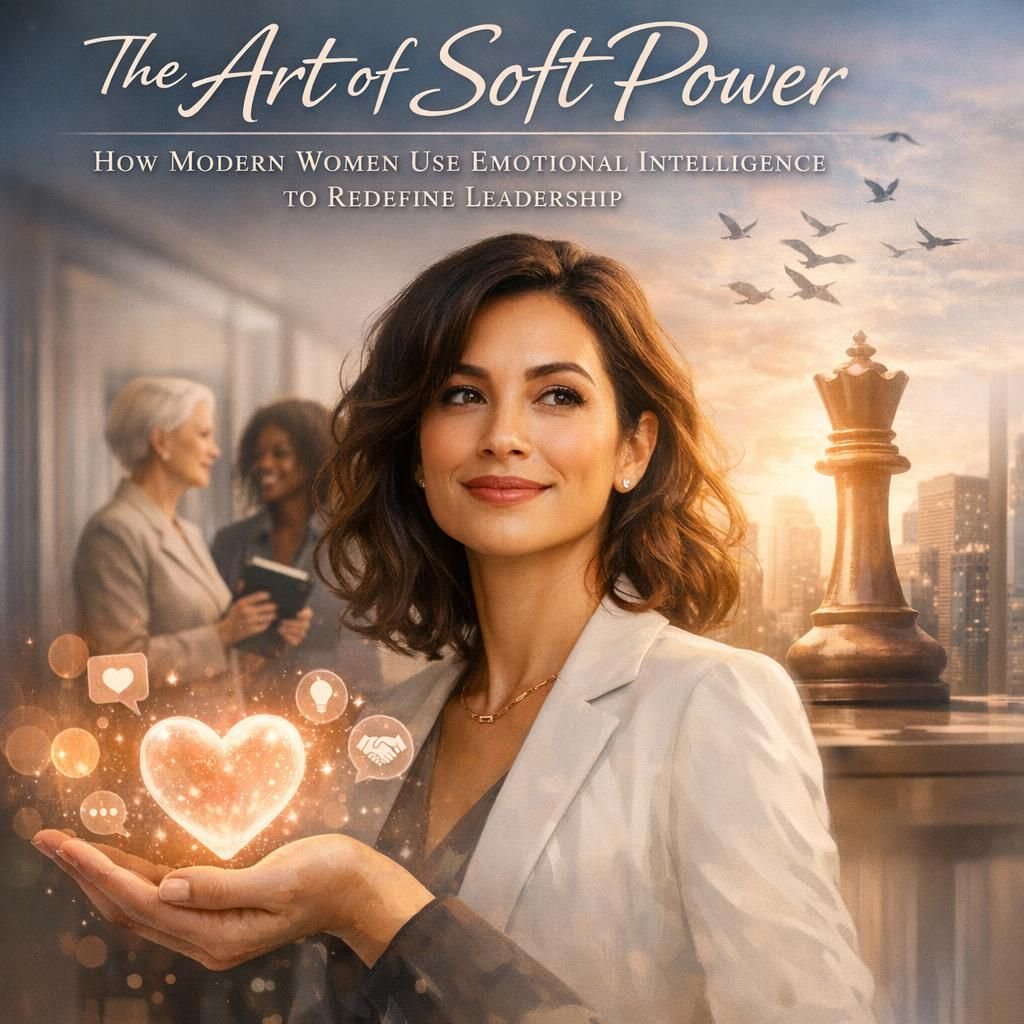
In an era where traditional **leadership paradigms** are being questioned, modern women are leading the charge to redefine effective leadership. No longer tethered solely to the corner office or hierarchical structures, these women leverage the art of **soft power**—characterized by **emotional intelligence**, empathy, and authenticity—to inspire and mobilize teams around shared objectives. Rather than relying on the outdated notion that leadership demands a harsh, authoritarian approach, these leaders embody a nuanced style that prioritizes relationship-building and emotional perceptiveness.
**Emotional Intelligence**, often abbreviated as **EI** or **EQ**, has emerged as a cornerstone attribute for effective leadership. Unlike IQ, which measures cognitive abilities, **EQ** assesses one’s capacity to understand, interpret, and manage emotions—both in oneself and others. **Modern women leaders** recognize that it is this empathetic and intuitive approach that enables them to effectively navigate the complex, and often multicultural, landscapes of today’s business world.
The narrative of power is shifting from domination and control to influence and collaboration, where persuasion is the tool of choice. Women leaders exhibiting high **emotional intelligence** are adept at weaving empathy into their decision-making processes, thereby fostering an environment of trust and open communication. More than ever, these leaders are not only influencing organizational cultures but are also setting new industry standards that prioritize well-being, diversity, and ethical practices.
Moreover, the pandemic has underscored the necessity for a leadership style that can handle crises with aplomb. Many women in **leadership positions** have displayed remarkably successful handling of crisis situations, opting for transparency, inclusivity, and a focus on collective well-being. This resonates with their teams and communities, proving that empathetic leadership is not a sign of weakness but of strength and resilience.
Features
Prominent **studies** have highlighted the critical role **emotional intelligence** plays in effective leadership. According to a study published by the **[Harvard Business Review](https://hbr.org)**, leaders with high emotional intelligence are better equipped to engage their employees, leading to heightened motivation and productivity levels. The research indicates that leaders scoring above average on emotional intelligence metrics oversee teams with superior performance metrics compared to those led by individuals with lower **EQ** scores.
Medical professionals and psychologists have also supported these findings. **Daniel Goleman**, a pioneer in the field of emotional intelligence, identified several key components of **EQ**—self-awareness, self-regulation, motivation, empathy, and social skills—that are crucial for leadership in the 21st-century economy ([**Emotional Intelligence by Daniel Goleman**](https://www.danielgoleman.info/)). **Goleman’s** research emphasizes that these competencies enable leaders to mitigate stress, adapt to change, and facilitate conflict resolution, making them invaluable in the corporate arena and beyond.
A survey conducted by **[TalentSmart](https://www.talentsmart.com)** reveals that **EQ** is responsible for 58% of job performance in various roles but is even more significant in leadership positions. Women, often naturally attuned to empathy and collaboration, may find that their inherent skills give them an advantageous foundation for developing high emotional intelligence and thereby more effective leadership.
Furthermore, organizations that cultivate leaders with high emotional intelligence report lower turnover rates, enhanced employee satisfaction, and improved organizational performance. As businesses increasingly acknowledge the importance of inclusive and emotionally intelligent leadership, the landscape of power continues to evolve. This shift is catalyzed by women who are rewriting the narrative, challenging conventions, and demonstrating that the melding of soft and hard skills is a formula for success ([**Journal of Organizational Behavior Management**](https://www.tandfonline.com)).
Conclusion
As industries and societies continue to evolve, the art of **soft power** through **emotional intelligence** will undoubtedly shape future narratives of leadership. Modern women, using empathy as their compass, redefine what it means to lead responsibly and inclusively. By cultivating environments that are both innovative and nurturing, they are not merely participants in reshaping leadership paradigms—they are the architects of a more emotionally intelligent world. Through understanding and implementing the art of soft power, we find the potential to manifest systemic change that exceeds cultural and organizational expectations.
**Concise Summary**
Modern women are redefining leadership by embracing the art of **soft power**, which prioritizes **emotional intelligence** over traditional authoritative styles. These leaders excel in relationship-building, fostering environments of trust and influencing industries by setting new standards for **well-being**, diversity, and ethics. Studies affirm that **emotional intelligence** significantly boosts leadership effectiveness, as seen in the work of **Daniel Goleman** and **TalentSmart**. As businesses recognize the value of **EQ**, the rise of women leaders catalyzes an evolution in leadership paradigms towards more inclusive, empathetic, and resilient frameworks.

Dominic E. is a passionate filmmaker navigating the exciting intersection of art and science. By day, he delves into the complexities of the human body as a full-time medical writer, meticulously translating intricate medical concepts into accessible and engaging narratives. By night, he explores the boundless realm of cinematic storytelling, crafting narratives that evoke emotion and challenge perspectives. Film Student and Full-time Medical Writer for ContentVendor.com