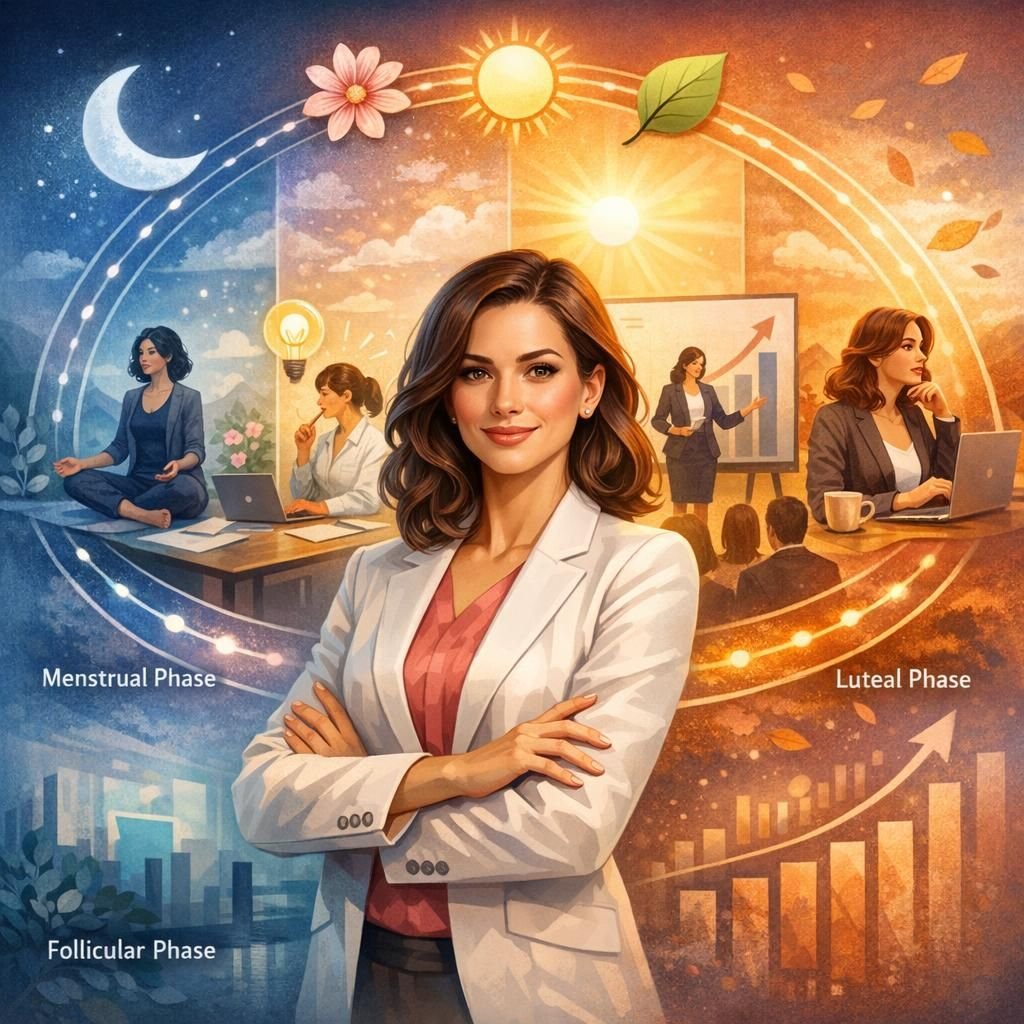
The New Feminine Economy: Harnessing Hormonal Phases for Professional Edge
In the ever-evolving modern workplace, women are discovering innovative ways to enhance their professional potential. One such transformative concept is the idea that understanding and harnessing **hormonal phases** can provide a distinct **professional edge**. This approach aligns with personalized business strategies, promoting greater self-awareness, productivity, and well-being.
The traditional workplace often overlooks women’s unique biological rhythms. Typically seen as personal health concerns, the menstrual cycle’s phases affect energy, creativity, and emotional resilience: the **menstrual phase**, **follicular phase**, **ovulatory phase**, and **luteal phase**. Each phase offers unique cognitive and emotional shifts, providing opportunities for women to leverage these changes.
For instance, the **follicular phase** often brings heightened creativity and a drive for new challenges, making it an ideal period for brainstorming and strategic planning. The **ovulatory phase** is characterized by peak energy and sociability, perfect for **networking** and collaborative efforts. Meanwhile, the **luteal phase** promotes introspection and focus, suitable for detailed work and introspective tasks.
This personalized approach empowers women by aligning professional duties with natural rhythms, potentially enhancing job satisfaction. Businesses that recognize these cycles can support women in harnessing their full potential.
Features: The Science Behind Hormonal Phases and Professional Performance
Recent studies validate the significant physiological and psychological impacts of a woman’s **menstrual cycle**. A study in *Nature Communications* finds **estrogen** during the follicular phase associated with improved creative thinking and mood, marking this time optimal for innovation and problem-solving.
Additionally, a study in *Psychoneuroendocrinology* reveals **estrogen** and **progesterone** impact decision-making and interpersonal skills. The **ovulatory phase**, with peak estrogen, correlates with increased confidence and enhanced social interactions, boosting **negotiation skills** and leadership presence.
Progressive companies are starting to integrate menstrual cycle awareness into workplace cultures. A report from the **Chartered Institute of Personnel and Development** details how **flexible working conditions** and open hormonal health discussions boost productivity and well-being. Such initiatives transform hormonal phases from hindrances into strategic professional assets.
The *Harvard Business Review* advocates for workplace adaptation to support **gender-specific health needs**, fostering inclusivity and productivity. Encouraging women to manage hormonal health leads to personalized schedules and empowerment.
Implementing these strategies requires corporate policy and cultural shifts towards flexibility and openness. By prioritizing resources for hormonal cycle education, companies build trust and inclusivity, benefiting employees and the organization alike.
Conclusion
Embracing the new feminine economy involves recognizing and utilizing the **unique strengths** women bring to the professional realm through hormonal phases. Aligning work strategies with biological rhythms enhances women’s productivity and career satisfaction. As businesses adopt these insights, they pave the way for transformative workplace dynamics, allowing female professionals to thrive and lead authentically and powerfully.
**References**
– [Nature Communications Article](https://www.nature.com/articles/ncomms)
– [Psychoneuroendocrinology Journal](https://www.journalofpsychoneuroendocrinology.com)
– [Chartered Institute of Personnel and Development Report](https://www.cipd.co.uk)
– [Harvard Business Review Articles](https://hbr.org)
**Summary**
The “New Feminine Economy” leverages women’s hormonal cycle phases for professional gain. Understanding phases like menstrual, follicular, ovulatory, and luteal enhances productivity and well-being. Studies in journals like *Nature Communications* and *Psychoneuroendocrinology* underscore estrogen’s role in creativity and social skills during these phases. Progressive workplaces are adopting flexible strategies to accommodate these cycles, fostering inclusive and productive environments. Recognizing hormonal rhythms as strategic assets empowers women, enhancing job satisfaction and professional growth.

Dominic E. is a passionate filmmaker navigating the exciting intersection of art and science. By day, he delves into the complexities of the human body as a full-time medical writer, meticulously translating intricate medical concepts into accessible and engaging narratives. By night, he explores the boundless realm of cinematic storytelling, crafting narratives that evoke emotion and challenge perspectives. Film Student and Full-time Medical Writer for ContentVendor.com