The New Age Game Changer: Harnessing Your Menstrual Cycle for Maximum Professional Success
Introduction
In a rapidly evolving world where personal wellness and professional excellence are increasingly intertwined, understanding and leveraging the power of your **menstrual cycle** could unlock unprecedented levels of success. As contemporary workspaces become more inclusive, the stigma surrounding menstruation is gradually dissipating, allowing individuals to explore and utilize their cycles to enhance productivity and well-being. By aligning work tasks with the varying phases of your cycle, you can optimize **energy distribution**, **mental clarity**, and **creativity**.
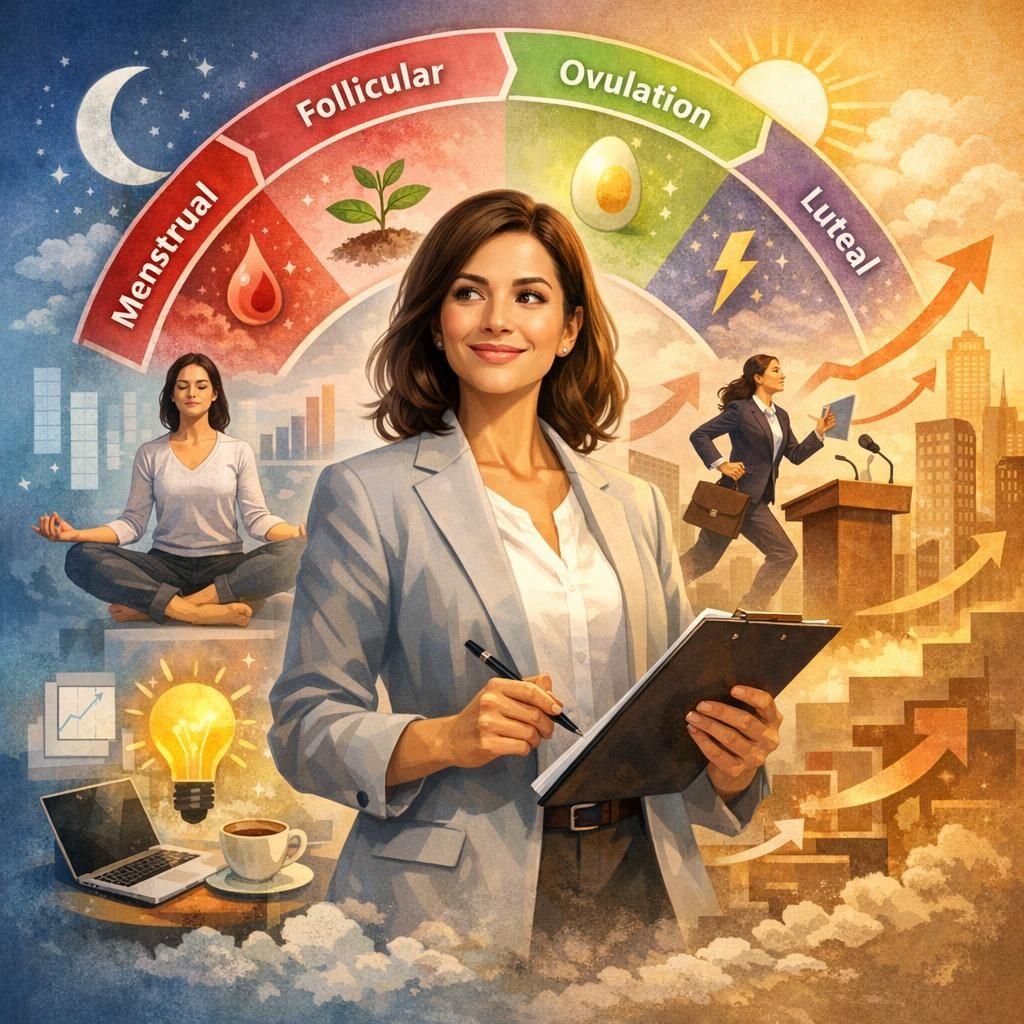
For years, professional success relied heavily on relentless hustle, often ignoring the body’s natural rhythms. Today, innovative thinkers and leaders advocate for a paradigm shift towards a more harmonious relationship with our **biological processes**. Understanding the menstrual cycle phases—**menstrual**, **follicular**, **ovulatory**, and **luteal**—and their unique attributes allows individuals to personalize work schedules. For instance, the high-energy follicular phase is ideal for brainstorming and initiating projects, while the reflective menstrual phase can be beneficial for evaluating progress and setting goals. This cyclical approach fosters personal well-being and enhances overall work performance.
Features
**Professional studies** confirm that the menstrual cycle’s varying hormonal levels affect **cognitive functions** and energy patterns, providing a scientific basis for cycle-centric productivity. Research conducted by [University Medical Center Utrecht](https://www.sciencedirect.com/science/article/abs/pii/S0022395620301694) reveals that hormone fluctuations can significantly impact brain structures tied to memory and executive functions. This highlights the potential gains from designing one’s professional life around these ebbs and flows.
An influential study in the [Harvard Business Review](https://hbr.org/2019/09/knew-when-to-act-on-it) addressed the link between cycle phases and productivity. Activities requiring **analytical thinking** or high concentration may be best undertaken during the follicular phase, whereas social engagements or negotiations might benefit from the higher testosterone levels during ovulation. Moreover, acknowledging and planning for the natural dip in energy during the luteal phase can prevent burnout and support mental resilience. A paper in the [Journal of Women’s Health](https://www.liebertpub.com/doi/abs/10.1089/jwh.2020.8436) recommended embracing the introspective tendencies of the luteal and menstrual phases to enhance interpersonal relationships and strategic thinking. Organizations like [BAE Systems](https://www.baesystems.com/en/blog/menstrual-cycle-awareness–the-next-step-in-wellbeing-support) have introduced menstrual cycle awareness training to promote cycle synchronization as a facilitator for optimal performance and well-being.
Conclusion
The menstrual cycle’s impact on professional success is a **game changer** in the dialogue surrounding productivity and personal wellness. By gaining insight into this natural rhythm and leveraging it in the workplace, individuals can cultivate a balanced and effective approach to their professional lives, redefining success through the lens of holistic well-being and biological harmony. Embracing this knowledge propels personal growth, laying a foundation for a more inclusive and understanding workplace.
Concise Summary
Harnessing the power of the menstrual cycle for professional success enables individuals to optimize energy, mental clarity, and creativity by aligning work tasks with the various cycle phases. Understanding the unique attributes of each phase—menstrual, follicular, ovulatory, and luteal—allows for personalized productivity strategies. Studies confirm that hormonal fluctuations influence cognitive functions, underscoring the potential for cycle-centric productivity. Embracing this new approach fosters personal well-being, enhances work performance, and encourages a more inclusive workspace by integrating biological rhythms into professional strategies.

Dominic E. is a passionate filmmaker navigating the exciting intersection of art and science. By day, he delves into the complexities of the human body as a full-time medical writer, meticulously translating intricate medical concepts into accessible and engaging narratives. By night, he explores the boundless realm of cinematic storytelling, crafting narratives that evoke emotion and challenge perspectives. Film Student and Full-time Medical Writer for ContentVendor.com