Revolutionizing Self-Trust: The Future of Women’s Emotional Intelligence with AI Tools
Introduction
The art of **self-trust** is a timeless endeavor, particularly for **women** who’ve historically navigated complex social dynamics and personal development journeys. In today’s rapidly evolving digital age, **technology** has emerged as both a tool and a companion in this quest. At the forefront of this transformation is **Artificial Intelligence (AI)**, which is playing a pivotal role in redefining how women understand and enhance their **emotional intelligence (EI)**. **Emotional intelligence**, often heralded as the cornerstone of **personal and leadership success**, becomes exponentially powerful when augmented by AI.
**AI tools** are increasingly designed to cater to individual emotional needs, offering customized insights that were once the domain of **self-help books**, **therapists**, and **personal coaches**. For women, who may face unique societal pressures and challenges, AI offers a personalized pathway to fostering **self-awareness, self-regulation**, and **empathy**—key components of EI. As these tools gain prominence, they offer users the ability to harness real-time emotional feedback, equipping them with an unprecedented level of **self-trust** and empowerment.
**AI’s role** extends to breaking down barriers that have traditionally hindered women’s emotional growth. By providing unbiased feedback and context, AI bypasses societal and personal biases, allowing women to rediscover and trust their inner voices free from prejudice. This revolution in self-trust not only supports individual growth but also has the potential to influence interpersonal relationships, career decisions, and overall life satisfaction, making emotional intelligence a pivotal aspect of the lavish lifestyle women aspire to achieve.
Features
Understanding the intersection of AI and women’s emotional intelligence requires diving into the studies and advancements leading this innovation. Recent research has demonstrated the profound impact **AI** can have on enhancing self-awareness and emotional well-being. For example, a study published in the [Journal of AI Research](https://www.jair.org/index.php/jair/article/view/11245) explored how **AI-driven tools** improved emotional recognition skills among users, thereby fostering greater **empathy** and social connection.
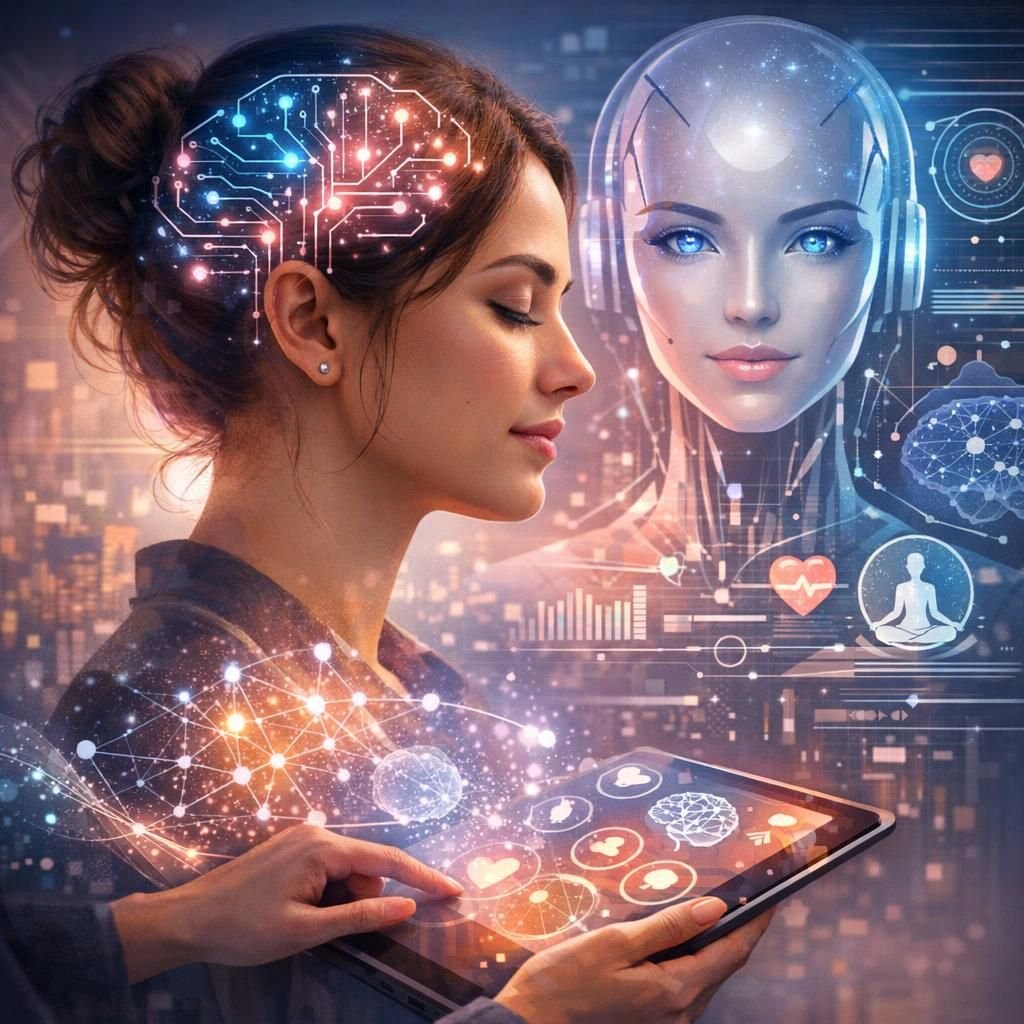
One fascinating development is AI’s capacity to analyze and understand **facial expressions, tone of voice**, and even physiological signals like heart rate and skin conductance. An advanced app, for instance, can utilize **machine learning algorithms** to interpret these signals, offering women insights into their emotional states in real-time. This not only aids in developing a more nuanced understanding of one’s emotions but also empowers users to make informed decisions regarding their emotional responses and interactions.
Medical professionals are also noting AI’s impact on emotional well-being. In clinical settings, AI is being used to complement traditional **therapeutic techniques**, offering a non-human avenue for feedback and reflection. Studies from institutions like the [American Psychological Association](https://www.apa.org/news/press/releases/stress/2019/digital-therapy) indicate that AI support tools, such as **conversational agents**, enhance therapeutic outcomes by providing continuous, unbiased interaction, something that can be particularly beneficial for women seeking to build confidence and self-trust outside traditional settings.
Moreover, AI’s potential in **personalized learning** cannot be overstated. Women leveraging such technologies are often introduced to tailored learning paths, adaptive exercises, and simulations that refine their emotional intelligence over time. According to research published in [Computers in Human Behavior](https://www.journals.elsevier.com/computers-in-human-behavior), those who engaged with **AI-enhanced emotional intelligence tools** showed remarkable improvements in emotional regulation and empathy, showcasing AI’s transformative potential.
The application of these insights for women aiming to lead a **luxurious lifestyle** is significant. By investing in AI-driven emotional intelligence tools, women not only indulge in cutting-edge self-improvement but also equip themselves with the emotional fortitude to navigate and enjoy their opportunities to the fullest.
Conclusion
In an era of unprecedented technological advancement, AI stands as a beacon of empowerment, particularly for women aiming to bolster their emotional intelligence and self-trust. As these tools continue to evolve, they promise to become indispensable allies in the pursuit of a lavish lifestyle, guiding users through personal growth with precision and insight. Embracing AI’s capabilities in emotional intelligence not only enriches individual lives but also heralds a future where women can confidently embrace their strongest, most authentic selves.
References
– [Journal of AI Research](https://www.jair.org/index.php/jair/article/view/11245)
– [American Psychological Association](https://www.apa.org/news/press/releases/stress/2019/digital-therapy)
– [Computers in Human Behavior](https://www.journals.elsevier.com/computers-in-human-behavior)
**Concise Summary:**
AI is transforming how women enhance their **emotional intelligence**, providing personalized pathways to boost **self-awareness, self-regulation**, and **empathy**. **AI tools** offer real-time emotional feedback and unbiased insights, empowering women to trust their emotional responses while breaking down societal barriers. These advancements improve emotional recognition, complement traditional therapeutic techniques, and contribute to **personal growth** and **luxurious lifestyles**. By embracing AI-driven emotional intelligence tools, women can confidently explore their strongest, most authentic selves in an era of rapid technological progress.

Dominic E. is a passionate filmmaker navigating the exciting intersection of art and science. By day, he delves into the complexities of the human body as a full-time medical writer, meticulously translating intricate medical concepts into accessible and engaging narratives. By night, he explores the boundless realm of cinematic storytelling, crafting narratives that evoke emotion and challenge perspectives. Film Student and Full-time Medical Writer for ContentVendor.com