### **Harnessing the Power of Hormones: A Feminine Approach to Negotiation Mastery in the Workplace**
In the realms of corporate boardrooms and high-stakes business deals, negotiation skills often stand as the crucible upon which success is forged. Traditionally dominated by a stoic and confrontational approach, the art of **negotiation** is evolving, embracing more nuanced strategies that leverage **emotional intelligence** and, notably, **biological insights**. As various fields of research unfold, an intriguing yet transformative perspective is emerging: harnessing the power of hormones to elevate negotiation tactics. For women, understanding the hormonal dynamics throughout the **menstrual cycle** can unlock unprecedented negotiation prowess, turning biological rhythms into strategic advantages.
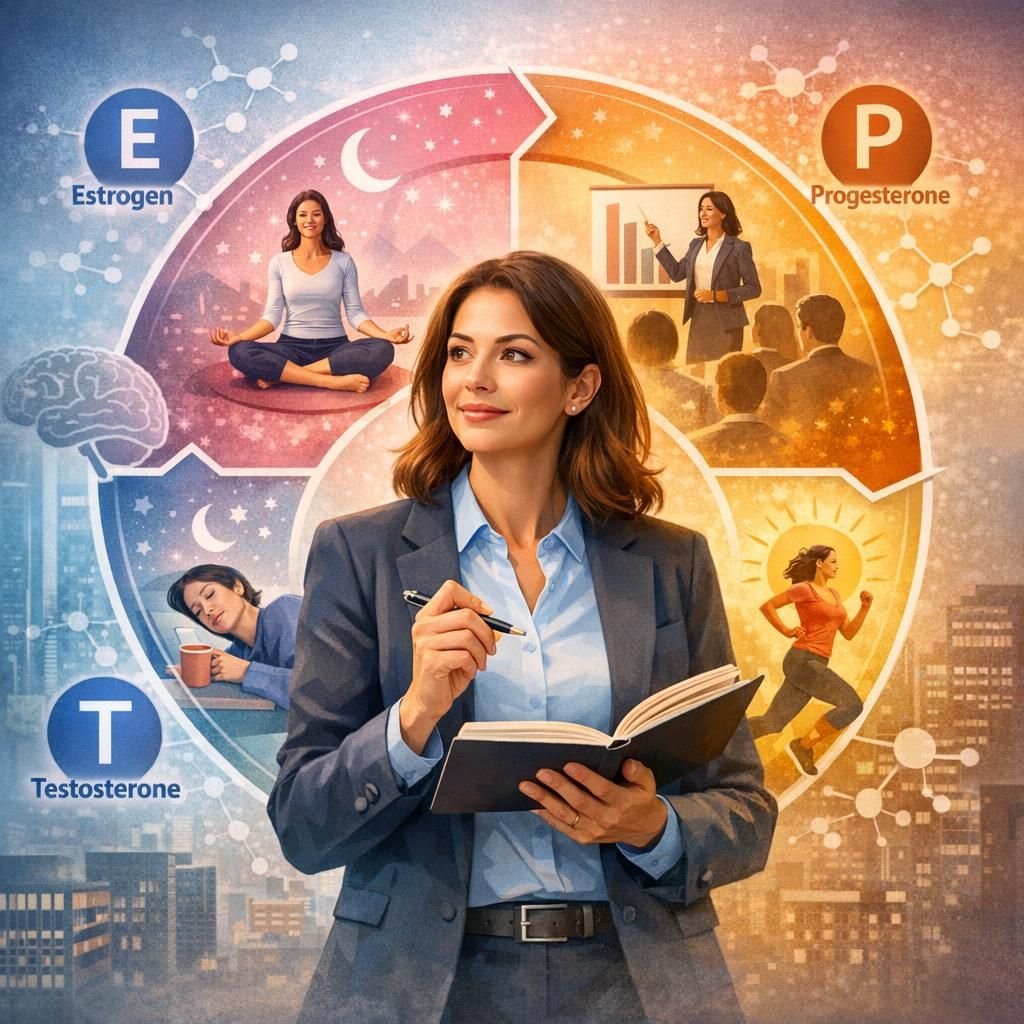
The interplay between hormones and cognitive function is a field of study that reveals significant implications for **negotiation strategies**. Women experience fluctuations in key hormones like **estrogen**, **progesterone**, and **testosterone** across their menstrual cycle, influencing everything from mood and memory to confidence and social behavior. Estrogen, often peaking just before **ovulation**, is associated with improved mood, cognitive flexibility, and an increased ability to articulate thoughts. In this phase, women might find themselves more adept at verbal tasks and **creative problem-solving**, conditions conducive to negotiation.
During the **luteal phase**, when progesterone predominates, women may experience a heightened sense of empathy and collaboration—traits that are invaluable when negotiating from a place of **emotional intelligence**. Interestingly, studies suggest that testosterone levels, although generally lower in women, can play a critical role in boosting assertiveness and the desire for achievement. Understanding these hormonal phases can arm women with the self-awareness needed to plan negotiations during periods when they are biologically inclined toward particular strengths.
Modern workplaces thrive on diversity, and embracing a feminine approach to negotiation—rooted in emotional intelligence and supported by biological insights—presents a chance for organizations to foster environments where everyone can negotiate from a position of strength. Research underscores that negotiations are not zero-sum games; empathy and mutual respect can drive more sustainable, harmonious outcomes. Women, by understanding and embracing their hormonal cycles, can bring strategic depth to **negotiation tables**, challenging the status quo and paving the way for more inclusive, effective negotiation paradigms.
### **Scientific Insights and Applications**
The burgeoning field of **neuroeconomics** provides a wealth of insights into how hormonal fluctuations affect decision-making processes, particularly among women. A pivotal study published in [*Psychoneuroendocrinology*](https://www.sciencedirect.com/science/article/abs/pii/S030645300700110X) highlighted that women’s decision-making behaviors and interpersonal negotiations are materially affected by hormonal changes. This research suggests that during the **follicular phase**, when estrogen levels rise, women might be inclined towards riskier decisions, potentially beneficial in high-stakes negotiations where confidence is critical.
Furthermore, a study in the [*Journal of Women’s Health*](https://www.liebertpub.com/doi/10.1089/jwh.2008.1010) pointed out that women in executive positions benefit from leveraging periods of heightened assertiveness driven by natural hormonal boosts, including those provided by transient spikes in testosterone during the menstrual cycle. This nuanced approach allows women to choose negotiation windows that align with their cognitive and emotional peaks.
Notably, the concept of **cycle syncing**—where women plan critical meetings and negotiations around their hormonal cycles—is gaining traction. Evidence compiled in the [Harvard Business Review](https://hbr.org/2020/05/how-your-menstrual-cycle-affects-your-mood-at-work) emphasizes that women who are aware of their hormonal influences can harness this knowledge to time negotiations for periods when cognitive metrics like verbal fluency or empathy are at a peak, potentially improving negotiation outcomes.
Such biological underpinnings also find support in the advocacy by health experts who stress the importance of self-awareness in maximizing cognitive and emotional resources. By acknowledging the natural ebb and flow of their biological rhythms, women are not only better equipped to manage stress but also to engage more effectively in negotiations, making decisions that are aligned with both logical goals and relational dynamics.
### **Conclusion**
Incorporating hormonal insights into negotiation strategy marks a progressive shift towards recognizing and valuing the unique strengths women bring to the professional world. By embracing this feminine approach, women are empowered to navigate their workplaces with renewed confidence and strategic acumen. Such knowledge augments traditional negotiation tactics, fostering a more inclusive, harmonious, and effective business environment. As the conversation around gender, negotiation, and biology continues to expand, what emerges is a future where women not only hold a seat at the table but redefine it.
### **Concise Summary**
Harnessing hormonal cycles can revolutionize negotiation strategies for women, turning natural biological rhythms into strategic advantages. Understanding hormonal dynamics—such as how estrogen and progesterone influence mood, confidence, and collaboration—can enhance negotiation prowess. By aligning negotiations with phases of the menstrual cycle, women can optimize their cognitive and emotional strengths, bringing empathy and strategic depth to the negotiation table. This approach promotes inclusive, effective negotiation paradigms, emphasizing that negotiations are not zero-sum but a collaborative effort for mutual gain. Incorporating hormonal insights signifies a future where women’s unique strengths are recognized and valued in the professional world.

Dominic E. is a passionate filmmaker navigating the exciting intersection of art and science. By day, he delves into the complexities of the human body as a full-time medical writer, meticulously translating intricate medical concepts into accessible and engaging narratives. By night, he explores the boundless realm of cinematic storytelling, crafting narratives that evoke emotion and challenge perspectives. Film Student and Full-time Medical Writer for ContentVendor.com