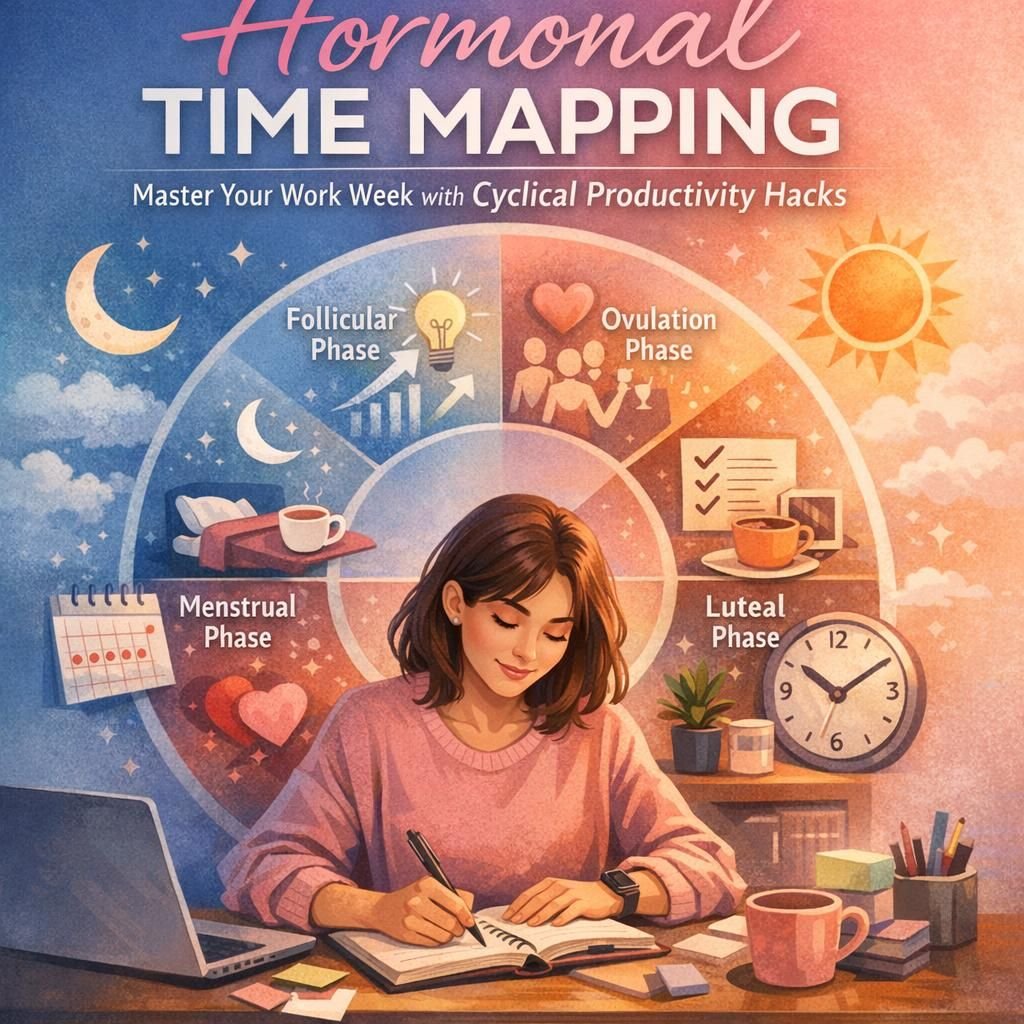
Hormonal Time Mapping: Master Your Work Week with Cyclical Productivity Hacks
Introduction
In today’s fast-paced society, staying productive and efficient is not just a preference; it’s a necessity. The traditional 9-to-5 workweek is rooted in a century-old industrial model, yet our biological clocks haven’t evolved at the same pace. Enter the burgeoning concept of **hormonal time mapping**—a revolutionary approach to productivity that leverages the natural ebb and flow of our biological cycles to enhance focus and efficiency.
**Hormones** wield influence not just over our physical health, but also our mental agility and emotional well-being. Everyone is subject to hormonal rhythms, but it’s especially pertinent for **women**. Throughout the menstrual cycle, hormonal levels fluctuate and impact energy, mood, and cognitive function. By understanding these hormonal changes and aligning our tasks accordingly, one can optimize productivity and well-being.
The premise is simple: instead of forcing your body to conform to a rigid schedule, adapt your work to suit the natural hormonal fluctuations you experience throughout the month. This personalized approach is gaining traction among high-achievers who recognize the benefits of aligning work tasks with their body’s **natural rhythms**.
Imagine starting your week with a strategic plan that not only aligns with your professional objectives but is also tailored to your hormonal strengths of that particular phase. This approach empowers individuals to tackle **creative tasks** during their peak expression phases and focus on detailed work during more introspective times. The result? **Higher productivity**, reduced stress, and a more harmonious balance between work and personal life.
Features
Medical and professional studies have provided a foundation for understanding the science behind hormonal time mapping and cyclic productivity. The **menstrual cycle** consists of four distinct phases: the menstrual phase, the follicular phase, the ovulatory phase, and the luteal phase. Each phase is associated with particular hormonal profiles that influence energy levels, cognitive functions, and emotional states.
In the **follicular phase**, which follows menstruation, estrogen levels begin to rise, fostering improved energy levels and mental clarity. During this time, individuals often experience a boost in creativity and are more open to new ideas, making it an ideal window for brainstorming sessions and strategic planning.
The **ovulatory phase** is characterized by peaked estrogen levels and increased testosterone, contributing to heightened confidence, verbal skills, and extroversion. This is the perfect time for negotiations, presentations, and tasks requiring assertiveness and social interaction.
Following ovulation, the **luteal phase** sees a rise in progesterone, which can enhance focus but may also lead to heightened emotional sensitivity. It’s best utilized for detailed, solitary work, where deep concentration is paramount. Understanding brain function during this phase can help lay the groundwork for effective organizational tasks, ensuring fewer errors and sustained productivity.
Research conducted by the **National Institutes of Health** [Hormonal Influence on Brain Function](https://www.nih.gov/) highlights the symbiotic relationship between hormonal fluctuations and brain function. Moreover, a study published in the **Journal of Women’s Health** [Cognitive and Emotional States Across the Menstrual Cycle](https://www.liebertpub.com/jwh) notes significant variability in cognitive and emotional states across the menstrual cycle, underscoring the practicality of harnessing these dynamics for individualized work strategies.
This concept isn’t limited to women. **Men**, too, experience hormonal cycles, albeit less pronounced. Their cycles tend to follow a 24-hour rhythm influenced by testosterone levels, which peak in the morning and gradually decline throughout the day.
As awareness around cyclical productivity grows, many organizations are beginning to see the value in accommodating flexible schedules that cater to individual hormonal rhythms, recognizing that such adaptations could naturally lead to more productive and healthier employees.
Conclusion
**Hormonal time mapping** presents a forward-thinking approach to productivity by integrating **cycle-awareness** into our daily lives. By honoring our natural hormonal rhythms, we can transform the conventional workweek into a more intuitive and efficient experience. As interest in this strategy continues to grow, it may well become a cornerstone of the future of work, facilitating not only better individual productivity but also greater satisfaction and well-being.
References
– **National Institutes of Health**, “Hormonal Influence on Brain Function” [https://www.nih.gov/](https://www.nih.gov/)
– **Journal of Women’s Health**, “Cognitive and Emotional States Across the Menstrual Cycle” [https://www.liebertpub.com/jwh](https://www.liebertpub.com/jwh)
**Concise Summary:**
**Hormonal time mapping** is a novel approach to boosting productivity by aligning work tasks with the natural **hormonal cycles** of the body. This strategy optimizes work performance by leveraging phases of heightened energy, creativity, and focus associated with hormonal changes. This method recognizes that both **women** and **men** experience such cycles, though differently. Endorsed by scientific studies, this approach promises to not only enhance individual productivity but also promote better overall well-being and satisfaction. It’s an emerging trend that could redefine how businesses and individuals structure their workweeks.

Dominic E. is a passionate filmmaker navigating the exciting intersection of art and science. By day, he delves into the complexities of the human body as a full-time medical writer, meticulously translating intricate medical concepts into accessible and engaging narratives. By night, he explores the boundless realm of cinematic storytelling, crafting narratives that evoke emotion and challenge perspectives. Film Student and Full-time Medical Writer for ContentVendor.com