Unlocking the Power of the Menstrual Cycle to Boost Career Performance
**Introduction**
In the pursuit of career advancement and professional success, individuals often dive into **productivity hacks**, **time management strategies**, and **personal development courses**. Yet, there exists an untapped resource that can significantly enhance female productivity and performance: the **menstrual cycle**. Historically viewed through a lens of inconvenience and discomfort, the menstrual cycle is being redefined as a powerful tool for optimizing **energy management** and productivity. This fascinating biological process is comprised of distinct phases, each characterized by unique hormonal fluctuations that can impact mood, energy levels, and cognitive performance.
Understanding and harnessing the power of the menstrual cycle can offer a game-changing advantage in the workplace. Gone are the days when women had to conform strictly to a linear, traditionally male-dominated productivity model. Instead, by aligning tasks and workload with the menstrual cycle, women can optimize their natural rhythms. This method fosters a sense of balance and efficiency, with large corporations and health professionals acknowledging this forward-thinking approach. Recognizing the benefits of **cycle synchronization** is becoming a priority—not just for the individual, but for businesses where female productivity is paramount.
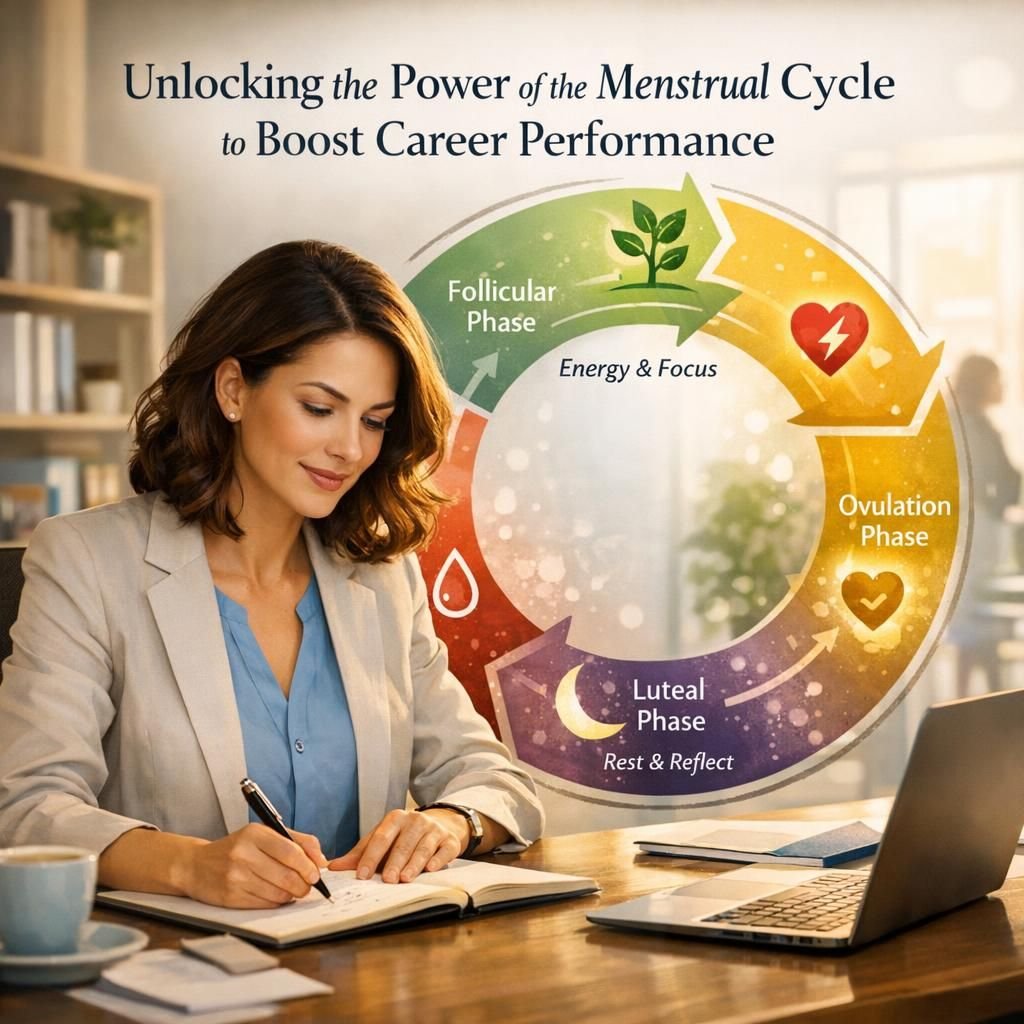
Embracing the menstrual cycle as an asset involves understanding its phases: menstruation, follicular, ovulation, and luteal. During menstruation, physical energy might dip, yet many women find this an excellent time for reflective, strategic thinking. As the follicular phase progresses, rising estrogen levels contribute to increased energy, attention to detail, and problem-solving skills, making it an ideal period for tackling complex tasks. Ovulation, marked by heightened communication skills and confidence, is perfect for presentations and negotiations. The luteal phase may herald a need for more solo work and self-care, providing a window for completing detailed or creative projects without external pressure.
By tailoring work responsibilities to align with these phases, professional women can experience less stress, reduced risk of burnout, and a greater sense of control over their productivity. This holistic approach shifts the paradigm from simply coping with menstrual cycles to leveraging them strategically.
Features
A groundbreaking study published in the journal [*Frontiers in Neuroendocrinology*](https://www.frontiersin.org/journals/neuroendocrinology) highlights how hormonal changes throughout the menstrual cycle impact brain function and cognition. Researchers found that fluctuations in **estrogen** and **progesterone** levels influence neurotransmitter activity, potentially enhancing cognitive flexibility during particular phases. This suggests that women may be naturally inclined to excel in specific cognitive tasks during certain times of their cycle.
Another influential study by Dr. [Martie Haselton](https://www.psychologytoday.com/us/blog/the-human-beast/201809/hormonal-influences-behavior), a leading researcher in hormonal influences on behavior, indicates that the menstrual cycle could affect emotional regulation and decision-making processes. There is a need to align demanding tasks with optimal windows of hormonal balance. For instance, during the high-estrogen days of the follicular phase, women might experience heightened verbal skills and dynamic thinking, assets that are invaluable for high-stakes meetings or brainstorming sessions.
Furthermore, [Harvard Business Review](https://hbr.org/2020/01/how-to-be-more-productive-by-monitoring-your-brains-peak-performance-time) has explored productivity rhythms and highlighted that cycle-informed scheduling could promote not only increased efficiency but also allow companies to become more inclusive workplaces by acknowledging and supporting biological diversity. As awareness of menstrual cycles’ potential gains traction, some companies have started to implement cycle-aligned work practices as part of their diversity and wellness initiatives.
Empowering women with the knowledge to leverage their menstrual cycle aligns with broader wellness and productivity principles, fostering an environment where women’s natural rhythms are respected and optimized. This integration of physiology and professional performance marks a significant step towards more personalized and effective work strategies, recognizing the unique potential inherent in the biological cycles that have been underappreciated for far too long.
Conclusion
Unlocking the power of the menstrual cycle to boost career performance is not just about understanding biology; it’s about redefining how we view productivity in the modern workplace. By aligning work with natural rhythms, women can achieve greater professional fulfillment, well-being, and success, transforming the narrative surrounding menstruation from a hurdle to a remarkable advantage. Integrating this knowledge into workplace strategies heralds a new era of empowerment and efficiency for women across industries.
References
1. [Frontiers in Neuroendocrinology. Hormonal Influences on Brain Function](https://www.frontiersin.org/journals/neuroendocrinology)
2. [Haselton, M. Hormonal Influences on Behavior](https://www.psychologytoday.com/us/blog/the-human-beast/201809/hormonal-influences-behavior)
3. [Harvard Business Review. Cognitive Work and Productivity Rhythms](https://hbr.org/2020/01/how-to-be-more-productive-by-monitoring-your-brains-peak-performance-time)
**Concise Summary**
The menstrual cycle is increasingly recognized as a powerful tool for enhancing female productivity. By aligning work tasks with the cycle’s phases—menstruation, follicular, ovulation, and luteal—women can optimize energy levels and cognitive performance. Studies show hormonal fluctuations influence brain function, which can be leveraged strategically in professional settings. Organizations adopting cycle-aligned practices see improvements in efficiency and inclusivity. Understanding and harnessing this biological resource not only shifts the traditional productivity paradigm but also empowers women toward greater career success and fulfillment.

Dominic E. is a passionate filmmaker navigating the exciting intersection of art and science. By day, he delves into the complexities of the human body as a full-time medical writer, meticulously translating intricate medical concepts into accessible and engaging narratives. By night, he explores the boundless realm of cinematic storytelling, crafting narratives that evoke emotion and challenge perspectives. Film Student and Full-time Medical Writer for ContentVendor.com