Unlocking the Power of Femtech: How the Latest Innovations Are Revolutionizing Women’s Wellness
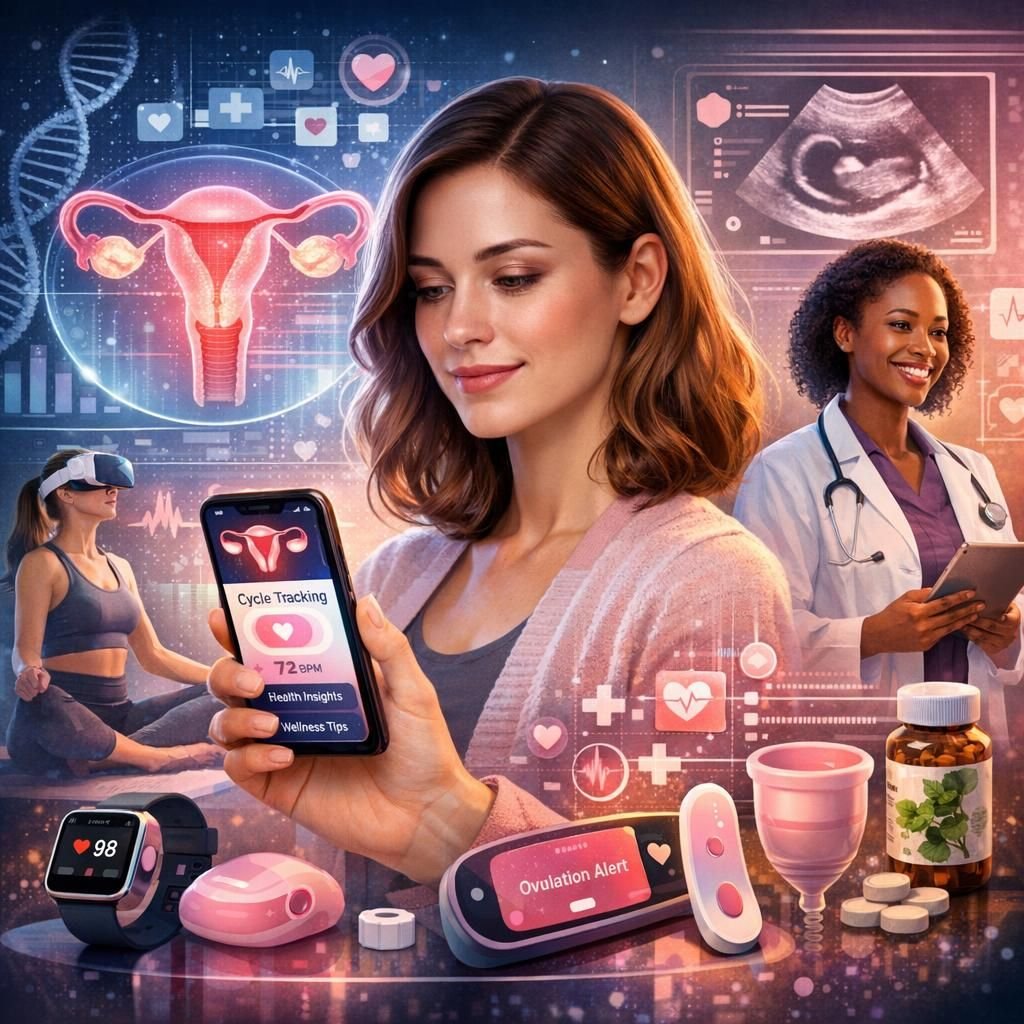
In a world where **technology** touches nearly every aspect of our daily lives, it’s no surprise that its reach has extended into the realm of **women’s wellness** through a flourishing area known as **femtech**. This burgeoning sector, emphasizing technology-driven products and services addressing **women’s health**, is set to revolutionize the way women engage with and manage their physical and mental well-being. From smart home fertility trackers to apps designed to enhance **mental health** by identifying and tracking mood patterns, the femtech industry is laying the ground for a seismic shift in **women’s healthcare**.
The global femtech market has been expanding rapidly in recent years, attracting significant attention from investors and innovators alike. With a valuation projected to surpass $75 billion by 2025, this energetic sector is characterized by its commitment to improving health outcomes for women through personalized solutions. The reason behind this explosive growth lies in a growing acknowledgment of the challenges unique to women that have historically been underfunded and under-researched. As technology continues to evolve, so too does our understanding of women’s health needs, resulting in an increasing number of innovations that are both groundbreaking and empowering. The global femtech market is anticipated to continue its impressive expansion trajectory, driven by a surge in **investor** interest and **innovative solutions** tailored to women’s specific health challenges. This growth in femtech is not just a commercial success but reflects a societal shift toward recognizing and funding women’s unique health needs.
At the core of this revolution is a suite of tools and products designed to tackle a myriad of issues ranging from **reproductive health** to **menopause**. Femtech’s solutions are multifaceted; they include wearable devices that monitor vital signs, mobile apps offering guidance and support for conditions such as **PCOS** and **endometriosis**, and even telemedicine platforms providing easier access to specialists. Such innovations embody a significant step forward in providing women with more control over their own health, enabling them to make informed decisions based on real-time data. The impact of femtech is multiplied when we consider its potential to connect gaps in healthcare accessibility, offering remote health solutions that can be crucial for women in rural or underserved communities.
Significant strides are being made in both the development and research of femtech solutions. One prominent area of research is **menstrual health**, where devices like Elvie’s smart breast pump and wearable trackers by companies such as Ava are making waves. According to a study published in the [*Journal of Medical Internet Research*](https://www.jmir.org/2020/11/e23368), wearable menstrual tracking devices not only increase users’ understanding of their cycles but also lead to more accurate data collection when compared to traditional methods. These insights allow users to make better-informed decisions regarding their reproductive health and lifestyle adjustments.
Research is also delving into the impact of mental health apps on women, with promising results. A study from the [*Journal of Affective Disorders*](https://www.jad-journal.com/article/S0165-0327(20)30130-1/fulltext) demonstrated significant improvements in **depression** and **anxiety symptoms** among women utilizing digital therapies as part of their mental health regimen. Such findings underscore the potential for femtech to play an essential role in bridging gaps within **mental healthcare** for women, offering more accessible and affordable solutions compared to traditional therapy.
The opportunity for femtech to address menopause-related concerns is another exciting frontier. Innovators are striving to address menopause with sound, evidence-based solutions. For instance, the digital health platform *Stella* offers personalized menopausal health plans, receiving high engagement and satisfaction ratings from users who report a more comprehensive understanding of their symptoms and management strategies. Medical literature supports these developments, such as an article in *Menopause: The Journal of The North American Menopause Society* advocating for more technology-driven approaches to menopause due to their potential to enhance the quality of life and control health costs.
In conclusion, femtech is something of a renaissance for women’s health, presenting not only new tools but also reframing the conversation about what is possible in women’s wellness. As technology continues to adapt and innovate, it stands poised to break down longstanding barriers and foster a new era of healthcare that is as dynamic as it is inclusive. With femtech leading this charge, women have never been more equipped to take charge of their health, empowering them with unprecedented autonomy and insight.
**Concise Summary:**
Femtech is transforming women’s health through innovative technology-driven solutions such as wearable devices, mental health apps, and remote healthcare options. This rapidly expanding market, set to exceed $75 billion by 2025, addresses traditionally under-researched women’s health issues. Key areas of focus include reproductive health, mental wellness, and menopause, offering personalized and accessible healthcare solutions. Femtech not only empowers women with better health management tools but also challenges existing healthcare norms, ushering in an era of more inclusive and dynamic healthcare.
**References:**
– *Journal of Medical Internet Research*: [https://www.jmir.org/2020/11/e23368](https://www.jmir.org/2020/11/e23368)
– *Journal of Affective Disorders*: [https://www.jad-journal.com/article/S0165-0327(20)30130-1/fulltext](https://www.jad-journal.com/article/S0165-0327(20)30130-1/fulltext)
– *Menopause: The Journal of The North American Menopause Society*: [https://journals.lww.com/menopausejournal/Fulltext/2019/26000](https://journals.lww.com/menopausejournal/Fulltext/2019/26000)

Dominic E. is a passionate filmmaker navigating the exciting intersection of art and science. By day, he delves into the complexities of the human body as a full-time medical writer, meticulously translating intricate medical concepts into accessible and engaging narratives. By night, he explores the boundless realm of cinematic storytelling, crafting narratives that evoke emotion and challenge perspectives. Film Student and Full-time Medical Writer for ContentVendor.com