Unlocking the Power of Feminine Alignment: Leveraging Hormonal Cycles for Peak Productivity and Creativity in Career Women
Introduction
In today’s fast-paced world, where the lines between careers and personal life often blur, women strive to excel in every aspect of their lives. Yet, many remain unaware of a powerful tool within them that can amplify their **productivity** and **creativity**: their **hormonal cycles**. By understanding and embracing these natural rhythms, career-driven women can optimize their work-life balance, enhancing not only their **efficiency** but also their well-being. Women’s bodies undergo hormonal fluctuations throughout their **menstrual cycles**, influencing everything from mood to energy levels. Traditional work environments are largely designed with a one-size-fits-all approach, often overlooking these natural shifts. For career women, this can lead to dissonance manifesting as fatigue, burnout, or even creative blocks. Recognizing and aligning with their hormonal cycles could offer a blueprint for leveraging physiological changes to achieve peak performance.
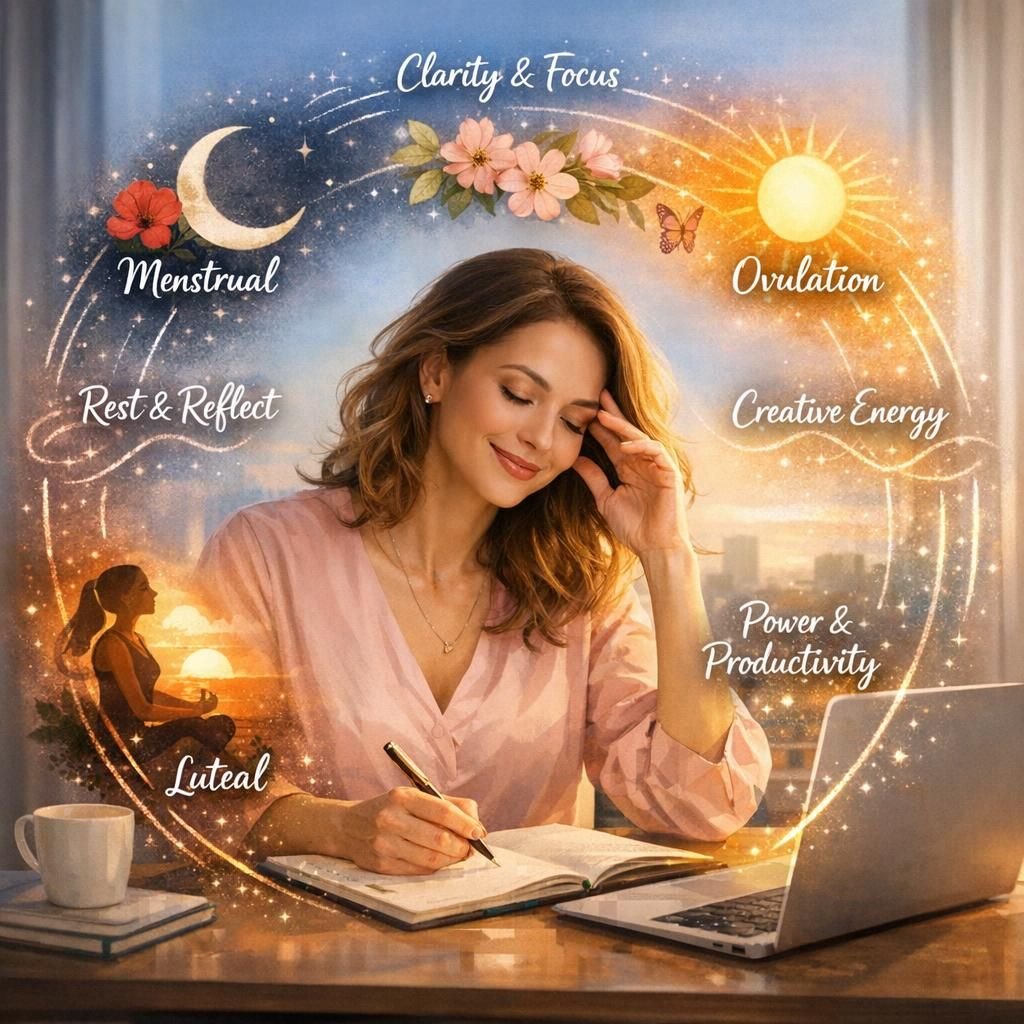
The menstrual cycle is typically divided into four phases: **menstrual**, **follicular**, **ovulatory**, and **luteal**. Each phase presents distinct physical and mental characteristics. For example, the **follicular phase**, following menstruation, often brings a surge in energy and creativity due to rising estrogen levels, making it an optimal time for brainstorming and strategic planning. The **ovulatory phase** can enhance communication skills and confidence, suitable for presentations or negotiations. Conversely, the **luteal phase**, when progesterone rises, can shift the focus toward detail-oriented tasks and reflection.
Understanding these phases allows women to schedule tasks and responsibilities that align with their natural rhythms. By doing so, they can capitalize on periods of heightened creativity and productivity while allowing time for introspection and rest during more demanding phases. Embracing this cyclical approach not only empowers women professionally but also enriches their personal lives, fostering a more holistic integration of ambitions and well-being.
Features
Various studies reinforce the significance of aligning work schedules with **hormonal cycles**. According to research published in the [“Journal of Women’s Health: Hormonal Impact on Cognitive Functions”](https://www.liebertpub.com/jwh), hormonal fluctuations can indeed impact cognitive functions and mood. For instance, increases in estrogen during the follicular phase have been linked to enhancements in verbal memory and fine motor skills, while progesterone dominance in the luteal phase is associated with increased emotional sensitivity and introspective thinking.
A groundbreaking study from the [“University of Oxford”](https://www.ox.ac.uk/research) explored how hormonal cycles affect cognitive performance. It found that women tended to perform better on tasks requiring verbal articulation during the follicular phase and showed greater spatial awareness during the luteal phase. This suggests that by tuning into these natural ebbs and flows, career women could strategically align their work tasks with their physiological strengths, maximizing productivity and creativity.
Moreover, a report by the [“American Psychological Association”](https://www.apa.org) emphasized the importance of recognizing and adapting to hormonal influences to prevent work-related stress and burnout. Women’s health advocates propose structuring the workday and week around different phases, promoting self-awareness and self-care as integral components of professional development. By doing so, women can mitigate the impact of premenstrual syndrome (PMS) and other cycle-related challenges.
Organizations like [“Hormone Intelligence”](https://www.hormoneintelligence.com) advocate for increased awareness and education regarding hormonal health in the workplace, arguing that understanding these natural cycles can lead to higher job satisfaction and fewer health-related absences. Some companies have initiated pilot programs encouraging flexible work hours and tasks around employees’ cycles, reporting improved morale and output.
Incorporating this science-based approach to work can revolutionize how women experience their careers by aligning personal wellness with professional success. The goal is not to view hormonal cycles as a limitation but as a powerful guide to mastering one’s environment.
Conclusion
Embracing and understanding **hormonal cycles** presents an innovative approach for career women to enrich their professional and personal endeavors. By harmonizing with these natural rhythms, women unlock a profound potential for heightened **productivity,** creativity, and well-being. This alignment not only fosters individual success but also paves the way for a more inclusive and adaptable workplace culture.
**Summary**
Understanding and leveraging hormonal cycles can significantly boost productivity and creativity in career women. By recognizing the phases of the menstrual cycle—menstrual, follicular, ovulatory, luteal—and aligning tasks with these natural rhythms, women can optimize their work-life balance. Research highlights benefits, including improved verbal skills and mood enhancements during various phases. This approach enhances well-being, reduces burnout risks, and boosts job satisfaction. Emphasizing self-care and awareness of hormonal influences fosters a supportive and adaptable workplace culture, transforming how women approach their careers by aligning with their physiological strengths.

Dominic E. is a passionate filmmaker navigating the exciting intersection of art and science. By day, he delves into the complexities of the human body as a full-time medical writer, meticulously translating intricate medical concepts into accessible and engaging narratives. By night, he explores the boundless realm of cinematic storytelling, crafting narratives that evoke emotion and challenge perspectives. Film Student and Full-time Medical Writer for ContentVendor.com