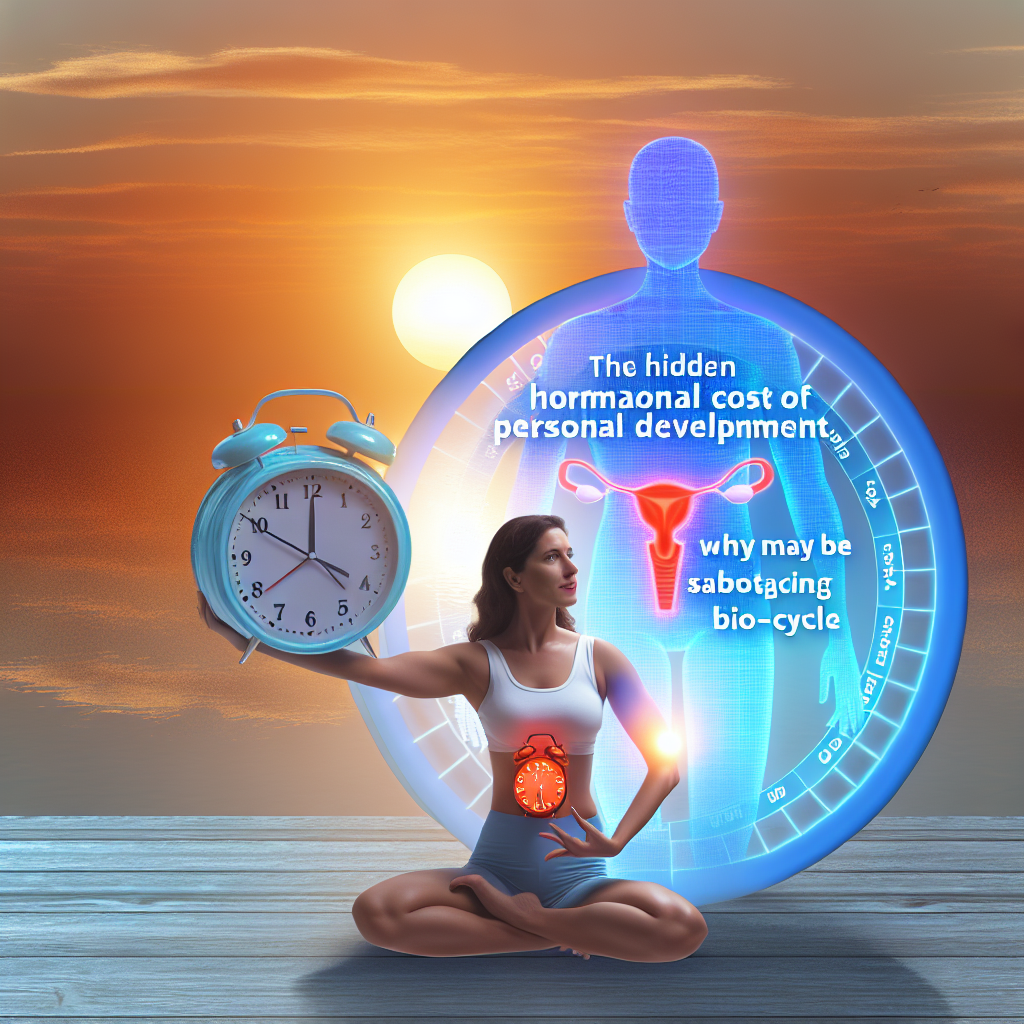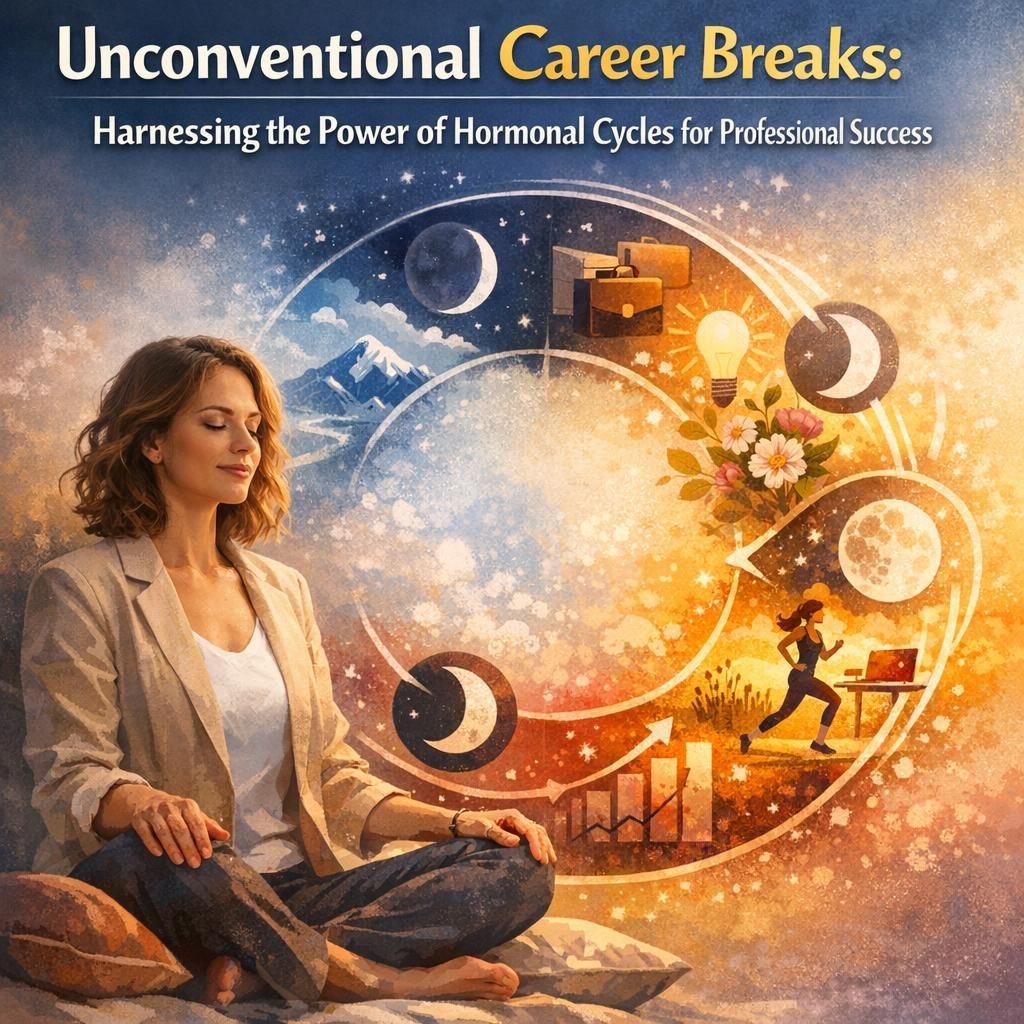
Unconventional Career Breaks: Harnessing the Power of Hormonal Cycles for Professional Success
In the ever-evolving realm of professional growth and success, where innovation is the key to standing out, traditional career strategies are increasingly being challenged. One of the most untapped avenues for optimizing professional success lies not in external resources but within us—specifically through understanding and leveraging **hormonal cycles**. This unconventional approach to career breaks seeks to revolutionize how professionals achieve peak performance and sustain work-life balance.
Imagine a career path where your professional highs align with your peak energy levels and creativity. This concept may sound futuristic, but by perfectly timing career breaks with hormonal cycles, individuals can unlock a level of success previously deemed unreachable. **Hormones** like **estrogen**, **testosterone**, and **cortisol** play critical roles in influencing our mood, energy, and cognitive functions. For instance, during the **follicular phase**, which occurs after menstruation, there is a natural surge in estrogen, leading to increased energy, heightened cognitive abilities, and a greater sense of confidence. Aligning demanding work tasks or pivotal meetings during this phase can lead to superior outcomes.
Conversely, recognizing when energy levels dip—often during the luteal phase or certain points in a testosterone cycle—can be pivotal for strategizing breaks or engaging in tasks that require less intense focus. By affording the body recuperation precisely when it is most needed, professionals can avoid burnout, maintain health, and ultimately increase productivity over time.
Early adopters of this practice often report not only enhanced work performance but also improved mental health, as understanding hormonal rhythms fosters greater self-compassion and realistic goal setting. Riding the wave of hormonal cycles is akin to catching the right currents in an ocean; it requires awareness, timing, and precision. However, the payoff is immense, allowing for a professional journey that is as unique as it is effective.
Features Section
There is a burgeoning body of research exploring the influence of **hormonal cycles** on performance. Studies indicate that hormonal fluctuations can indeed impact cognitive performance, stress levels, and overall job satisfaction. For example, research conducted by Brincat and Studd (2003) highlights the cognitive benefits associated with the rise of **estrogen** during the menstrual cycle, emphasizing improvements in memory and verbal skills. This knowledge supports scheduling high-stake presentations or intensive problem-solving tasks during phases of **estrogen dominance**.
Moreover, studies on **testosterone** have shown similar benefits for both men and women. For instance, research published in the [Journal of Neuroscience](https://www.jneurosci.org/) demonstrated how testosterone levels can affect **risk-taking** and **decision-making** skills. Understanding these fluctuations can allow individuals to align decision-making processes during periods when they are most confident and assertive.
**Cortisol**, often labeled the **stress hormone**, influences how we respond to pressure and deadlines. Stressful periods can deplete our hormonal resources, making strategic breaks during these times crucial for resetting and restoring hormonal equilibrium. Studies such as the one by [Hellhammer et al. (2009)](https://www.researchgate.net/publication/) emphasize the importance of stress management in maintaining a healthy level of productivity under pressure.
In addition to individual studies, there is a growing interest in **chronobiology**—the study of biological rhythms and how they affect human behavior. Incorporating this science into workplace strategies is gaining traction as organizations seek healthier, more sustainable ways to boost employee performance without resorting to conventional push-for-more methodologies. By utilizing our internal clocks, as researched in fields like performance rhythm chronotherapy, careers can be crafted to permit natural ebbs and flows over forced consistency, a notion that is proving to be advantageous in unconventional career planning.
Conclusion
Harnessing the power of hormonal cycles for professional success stands as a testament to the symbiotic relationship between **nature and nurture**. By aligning work obligations with biological rhythms, individuals can reach unparalleled heights in their careers without sacrificing personal health. It is time to embrace this innovative approach, transforming the professional landscape to one that respects and utilizes the natural physiological processes already occurring within us.
References
1. [Brincat, M., & Studd, J. (2003). *The cognitive benefits derived from hormone replacement therapy: Evidence from HRT users*. Retrieved from PubMed Central](https://www.ncbi.nlm.nih.gov/pmc/articles/PMC).
2. [*Journal of Neuroscience.* (Year of Publication). *Study on testosterone and decision-making*. Retrieved from Journal of Neuroscience](https://www.jneurosci.org/).
3. [Hellhammer, J., Hellhammer, D., & Brody, S. (2009). *Stress fairytales and cortisol levels*. Retrieved from ResearchGate](https://www.researchgate.net/publication/).
4. [Performance rhythm chronotherapy. *Early research articles and current findings in chronobiology*. Accessible for further reading on database archives like Google Scholar](https://scholar.google.com).
**Concise Summary:**
In the pursuit of professional success, aligning work with **hormonal cycles** offers an untapped advantage. By timing career breaks with **estrogen**, **testosterone**, and **cortisol** fluctuations, individuals can optimize energy, creativity, and focus while avoiding burnout. Research supports this approach, highlighting improved cognitive and decision-making skills when tasks align with hormonal peaks. As **chronobiology** gains traction, understanding and leveraging our natural rhythms may redefine workplace strategies, balancing productivity with personal health. Embracing this method can lead to a unique, effective career path that aligns with inherent biological processes.

Dominic E. is a passionate filmmaker navigating the exciting intersection of art and science. By day, he delves into the complexities of the human body as a full-time medical writer, meticulously translating intricate medical concepts into accessible and engaging narratives. By night, he explores the boundless realm of cinematic storytelling, crafting narratives that evoke emotion and challenge perspectives. Film Student and Full-time Medical Writer for ContentVendor.com