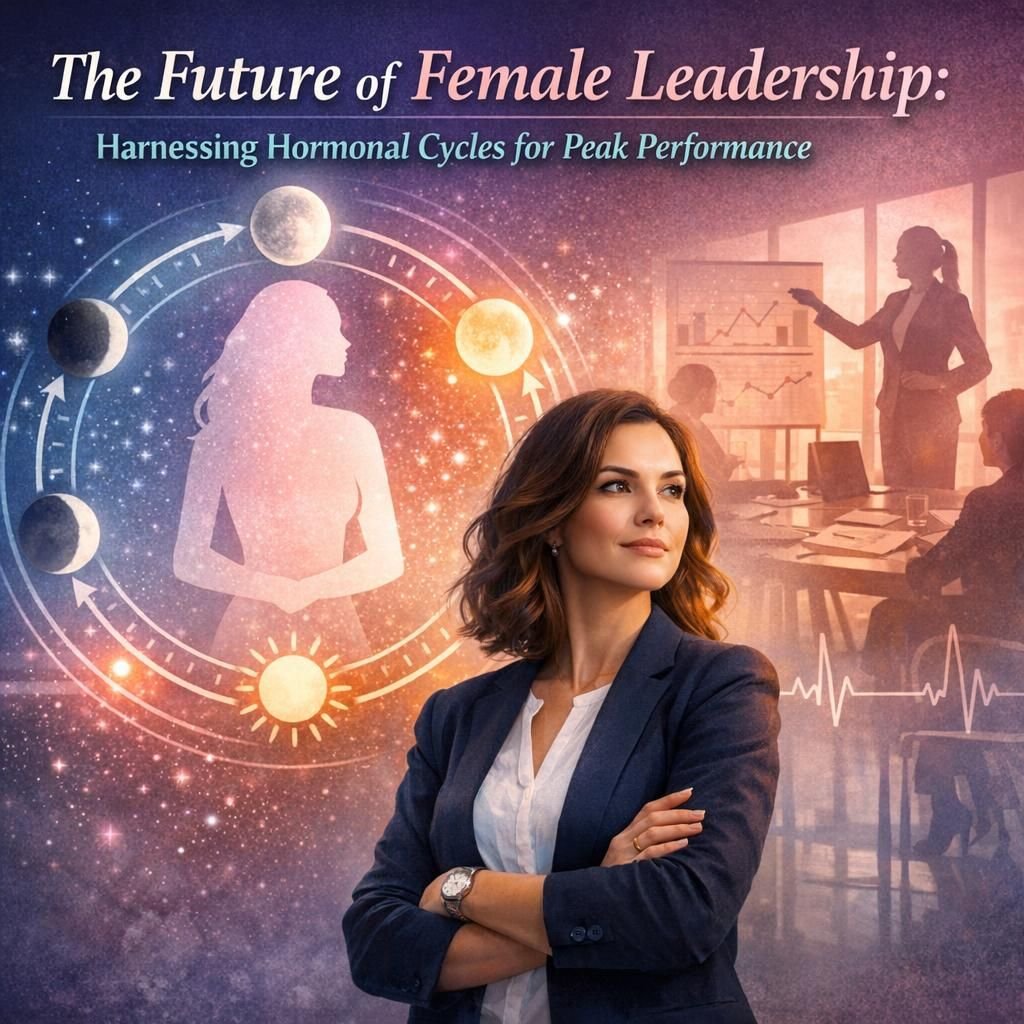
The Future of Female Leadership: Harnessing Hormonal Cycles for Peak Performance
In the evolving landscape of modern leadership, women are not just participants; they are trendsetters, pioneering diverse fields, and breaking glass ceilings. Advocates for **gender equality** are now shifting the conversation toward optimizing women’s inherent strengths. A significant shift is observed in aligning **female leadership** with natural **hormonal cycles**.
The core of this discussion is the potential for hormonal cycles to be considered assets to leadership, contrary to the historical perspective of these cycles as barriers due to perceived emotional volatility or productivity issues. Modern research reveals that hormonal cycles enhance cognitive abilities, emotional intelligence, and decision-making processes.
The interaction of hormones, including **estrogen**, **progesterone**, and **testosterone**, affects not just mood but critical neurological and psychological functions. **Estrogen** contributes to mood elevation and cognitive clarity during the **follicular phase**. **Progesterone**, dominant during the **luteal phase**, aids emotional sensitivity and introspection. Female leaders can leverage these cycles by planning significant tasks during optimal phases—enhancing leadership effectiveness and performance.
This approach amplifies inherent female capabilities, such as **emotional intelligence**, **empathy**, and collaboration, crucial for leadership, and reframes hormonal cycles as tools for empowerment. By strategically leveraging these cycles, female leaders can enhance productivity, minimize burnout, and create a sustainable environment where female leadership thrives.
Features
Innovative studies reveal the potential of leveraging hormonal cycles to enhance female leadership roles. A study in the journal [*Frontiers in Neuroscience*](https://www.frontiersin.org/articles/10.3389/fnins.2019.01410/full) highlighted how estrogen fluctuations boost verbal and social skills during critical phases, such as interpersonal collaboration periods. Women exhibit superior skills in verbal communication, negotiation, and emotional processing during the **mid-follicular phase** when **estrogen levels peak**.
Moreover, research in the [*Journal of Clinical Psychology*](https://onlinelibrary.wiley.com/journal/10974679) states that **progesterone** during the luteal phase enhances introspection and self-assessment, promoting strategic planning, reflection, and goal-setting.
From a neuroscientific vantage, the increase in **testosterone** during the ovulatory phase boosts confidence, risk-taking, and assertiveness, which are crucial in leadership situations requiring decisive action, as outlined in [*Endocrine Reviews*](https://academic.oup.com/edrv).
In practical terms, integrating **cycle-tracking tools** and apps into the workplace helps women anticipate workloads based on hormonal cycles. Platforms like **Clue** and **Moody Month** offer advanced tools for tracking physical and emotional patterns, proposing personalized strategies to leverage these phases for leadership optimization.
The implications are profound, urging organizations to support female leaders in understanding these biological rhythms and creating frameworks to capitalize on them. The evolving conversation around female leadership emphasizes celebrating and optimizing individuality emerging from nature itself.
Conclusion
The future of female leadership is deeply connected to understanding the link between biological rhythms and professional performance. By harnessing hormonal cycles, women can navigate corporate environments with greater clarity, empathy, and effectiveness—paving the way for personal success and a broader shift toward adaptive and inclusive leadership. This science-driven approach ensures women can lead with strength, resilience, and authenticity in a dynamic global arena.
**Concise Summary:**
This piece explores how aligning female leadership with hormonal cycles can optimize performance. Research shows hormones like **estrogen**, **progesterone**, and **testosterone** significantly influence cognitive and emotional capabilities during different phases of the cycle. Understanding these cycles allows female leaders to strategically plan significant tasks, thereby improving productivity and reducing burnout. As companies adopt **cycle-tracking tools** like **Clue** and **Moody Month**, they help women utilize these natural rhythms to enhance their leadership skills—reflecting a broader shift toward celebrating individuality and biological insights.

Dominic E. is a passionate filmmaker navigating the exciting intersection of art and science. By day, he delves into the complexities of the human body as a full-time medical writer, meticulously translating intricate medical concepts into accessible and engaging narratives. By night, he explores the boundless realm of cinematic storytelling, crafting narratives that evoke emotion and challenge perspectives. Film Student and Full-time Medical Writer for ContentVendor.com