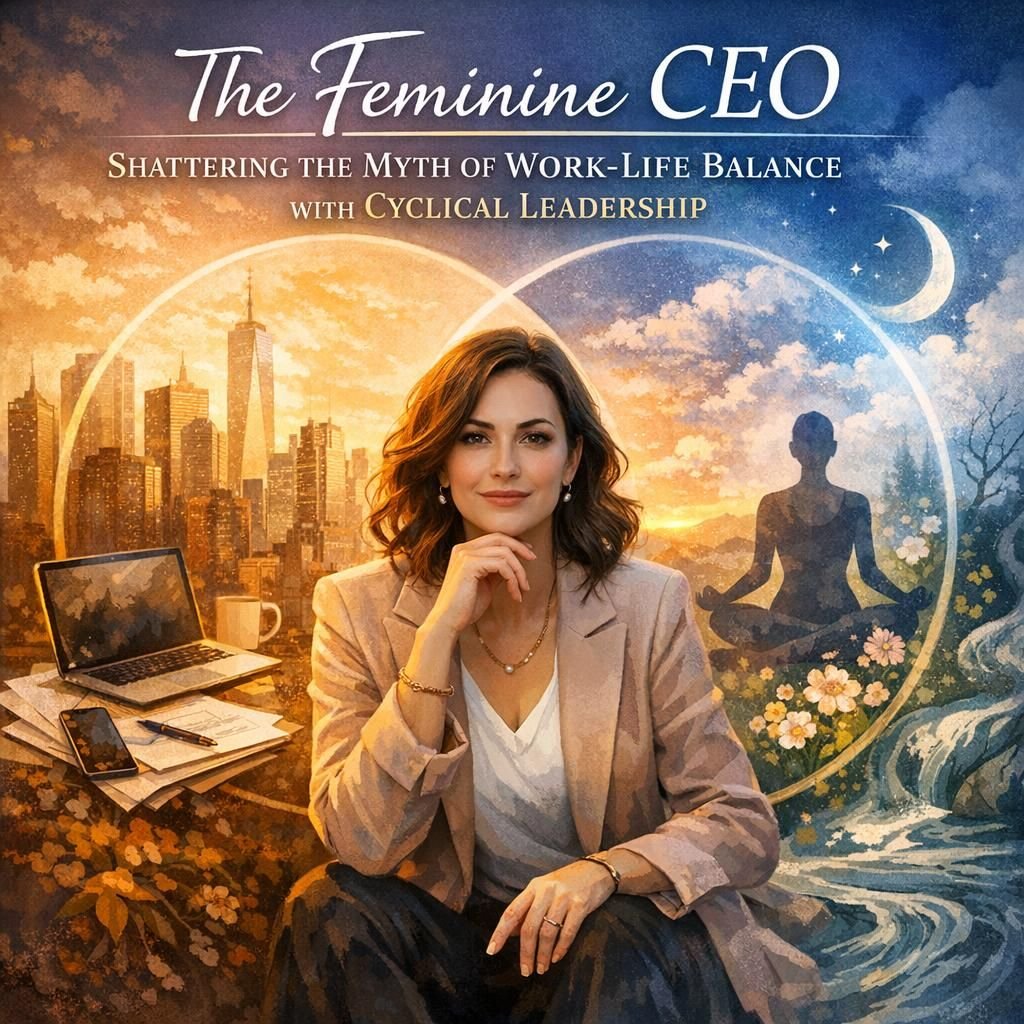
The Feminine CEO: Shattering the Myth of Work-Life Balance with Cyclical Leadership
In today’s fast-paced corporate landscape, achieving **work-life balance** is a goal that remains elusive for many. Traditionally, this balance has been framed as a scale that needs to be evenly weighted between personal and professional lives. However, the emerging wave of **feminine CEOs** is challenging this outdated notion, instead advocating for a revolutionary concept: **cyclical leadership**. This innovative approach aligns more naturally with the flow of energy, creativity, and productivity rather than forcing a balance that often leads to burnout and dissatisfaction.
Cyclical leadership is inspired by the natural cycles that govern the planet and, indeed, our own biological processes. It’s based on the understanding that energy levels fluctuate throughout the month, influenced by natural hormonal cycles present in women. This paradigm shift encourages leaders, especially women, to leverage these fluctuations for maximum effectiveness and well-being, eschewing rigid frameworks of productivity that can often prove counterproductive.
Femininity in corporate leadership does not demand uniformity with existing masculine structures. Instead, it thrives in its unique strengths, drawing from **empathy**, **collaboration**, and **emotional intelligence**. Embracing **cyclical leadership** enables feminine CEOs to break free from the constraints of trying to achieve an impossible equilibrium. By recognizing and respecting their cycles, women leaders can plan tasks that require high energy and creativity for their peak times and opt for reflection, strategy, or planning during their introspective phases.
Empirical evidence suggests that businesses led by women tend to focus on long-term strategic goals, holistic development, and an inclusive work environment. These traits are often byproducts of understanding and applying cyclical leadership principles. As more women ascend to leadership roles, they bring with them an innovative approach that prioritizes not just economic growth but overall humanistic development. By adopting these methods, businesses can create environments where employees can thrive, contributing to lower turnover rates, higher job satisfaction, and improved performance metrics.
Features: Empowering Through Knowledge
Recent professional and medical studies provide enlightening insights into how natural cycles, such as the **menstrual cycle**, can impact women’s physical productivity and emotional resilience. A study published in the [Journal of Business and Psychology](https://link.springer.com/journal/10869) emphasizes the link between hormonal changes throughout the menstrual cycle and variability in mood, cognition, and stress levels. This research lends credibility to the idea that women can optimize their work-life interaction by acknowledging and planning in accordance with these cyclical changes.
Further exploration by the [Harvard Business Review](https://hbr.org) into gender and leadership concluded that leaders who embrace **flexibility**—pivoting between varying states of productivity and rest—tend to cultivate more successful and adaptive work environments. This luxury in leadership style is not limited to personal health but extends to organizational wellness and productivity. Leaders who work within their naturally rhythmic cycles not only enhance their personal performance but also influence a progressive company culture that values individual wellness.
Moreover, neuroscientific studies have shown how our brains are innately wired to handle tasks in patterns and sequences. The implications for cyclical leadership here are profound: when women align their responsibilities with their natural predispositions, they tap into untapped reserves of potential, nurturing a bold leadership style that breaks away from conventional molds of balance and efficiency.
Conclusion: Embracing the Shift
As feminine CEOs redefine leadership paradigms through the practice of cyclical leadership, they lay the groundwork for a future where personal wellbeing and professional success are not mutually exclusive but rather symbiotic. This approach not only empowers women in their personal health and productivity but also enriches company culture, reflecting a modern understanding of what it means to live and work lavishly. Embracing these natural cycles heralds an era of leadership that is holistic, sustainable, and unprecedented in its elegance.
**Concise Summary:**
The book “The Feminine CEO: Shattering the Myth of Work-Life Balance with Cyclical Leadership” highlights how feminine CEOs are adopting **cyclical leadership**, focusing on energy and productivity flow rather than rigid balance, leveraging natural hormonal cycles for enhancing productivity. This empowers women to align tasks with their energy levels, boosting creativity and strategic thinking. Emphasizing traits like empathy and emotional intelligence, businesses led by women foster long-term goals and inclusive environments, enhancing job satisfaction and performance. Supporting studies underline how cyclical leadership enhances both personal and organizational wellness, promoting a new era of holistic, sustainable leadership.
**References**
1. [The Journal of Business and Psychology, “Hormonal Changes and Leadership: Implications for Productivity”](https://link.springer.com/journal/10869)
2. [Harvard Business Review, “Gender and Leadership: Adaptation and Flexibility in the Workspace”](https://hbr.org)
3. [MindBodyGreen, “Understanding the Benefits of Cyclical Living”](https://www.mindbodygreen.com)

Dominic E. is a passionate filmmaker navigating the exciting intersection of art and science. By day, he delves into the complexities of the human body as a full-time medical writer, meticulously translating intricate medical concepts into accessible and engaging narratives. By night, he explores the boundless realm of cinematic storytelling, crafting narratives that evoke emotion and challenge perspectives. Film Student and Full-time Medical Writer for ContentVendor.com