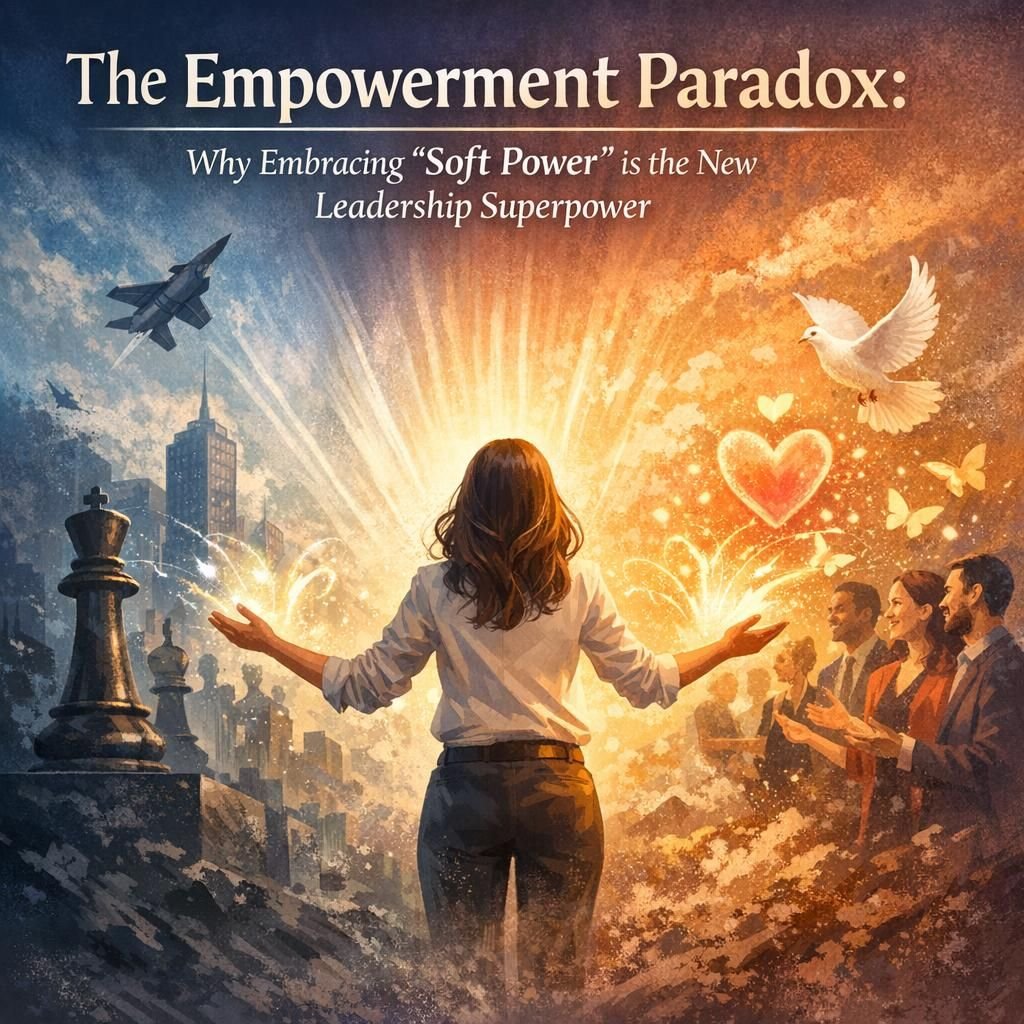
The Empowerment Paradox: Why Embracing ‘Soft Power’ is the New Leadership Superpower
In the fast-paced world of business and leadership, the days of iron-fisted authority figures commanding respect are fading into oblivion. Today, a new form of leadership is making waves, challenging the traditional paradigms of power dynamics—**‘Soft Power’**. Coined by political scientist **Joseph Nye** in the late 1980s, **soft power** is defined as the ability to shape the preferences of others through appeal and attraction rather than coercion. As our global culture begins to value empathy, **emotional intelligence**, and authentic connections, **soft power** is emerging as a critical asset for both individuals and corporations aiming to lead effectively in the 21st century.
Understanding Soft Power
Understanding the mechanics of **soft power** involves an exploration of what motivates people in their personal and professional lives today. As the world becomes increasingly interconnected, influence is garnered not from imposing one’s will, but from inspiring others through vision, culture, and values. **Millennials**, for example, tend to ally themselves with brands or companies that exhibit conscious leadership and social responsibility instead of traditional top-down management models. In this scenario, leaders who wield **soft power** are those who listen actively, foster environments of collaboration, and nurture a culture of inclusivity and innovation.
Moreover, the zeitgeist of **luxury lifestyles** is itself evolving; it no longer purely aligns with material wealth and exuberance. Rather, luxury today incorporates experiences that enrich and empower both the individual and the community. Leaders in this space use **soft power** to elevate their brand identity by fostering genuine relationships and creating a legacy that transcends the products they sell. This broadened spectrum of intention reshapes the notion of luxury into inclusive yet aspirational experiences, shared narratives, and sustainability.
Features of Soft Power
Scientific support for the effectiveness of **soft power** in leadership is growing, with multiple studies highlighting its impact on organizational dynamics. A research paper published in the “Harvard Business Review” elucidates how **soft power** can be leveraged in corporate settings to promote engagement, increase workforce morale, and improve overall productivity. It articulates that a leadership style incorporating **soft power** elements such as empathy and shared vision is more effective in capturing the hearts and minds of today’s employees, leading to innovative problem-solving and heightened creativity within teams.
Additionally, a study from the “Journal of Business Ethics” underscores the importance of **ethical leadership** closely linked with **soft power** dynamics. It reveals how leaders exemplifying **ethical behaviors** can set a behavioral benchmark, influencing organizational culture positively and reducing incidences of misconduct. By modeling the values they wish to nurture within their organizations, leaders harness **soft power** to guide and inspire.
In the professional field, **soft power**’s influence has extended to **negotiations** and **conflict resolution processes**. According to a study conducted by the “Program on Negotiation at Harvard Law School“, employing a **soft power** approach leads to more sustainable agreements that preserve relationships and foster collaboration. This study highlights how leaders who prioritize understanding, mutual benefits, and transparent communication over adversarial tactics achieve more favorable and enduring outcomes.
The financial sector is also riding the wave of **soft leadership**. A McKinsey & Company report discusses how financial institutions are prioritizing relationship management and stakeholder engagement as key market differentiators. **Soft power**, in this context, becomes a strategic tool for brand development and customer loyalty.
Conclusion
The embrace of **soft power** in leadership marks a paradigm shift toward more holistic and humane forms of influence, perfectly aligning with contemporary societal values. As businesses and individuals encounter ever-increasing complexities, the ability to lead with empathy, foster collaboration, and inspire through intrinsic appeal stands as a superpower of our era. Integrating **soft power** principles into your personal and professional life can unlock new potential avenues of growth and fulfillment.
Concise Summary
**Soft Power** is revolutionizing leadership by promoting influence through empathy, values, and authentic connections rather than coercion. As younger generations favor conscious leadership and social responsibility, leaders are using **soft power** to foster collaboration and inclusivity. Recent studies affirm its effectiveness in enhancing organizational culture, ethics, and innovation. Additionally, **soft power** is pivotal in negotiations and transforming the financial sector’s focus toward customer-centric approaches. Embracing soft power aligns leadership with modern societal values, offering pathways for growth and fulfillment.

Dominic E. is a passionate filmmaker navigating the exciting intersection of art and science. By day, he delves into the complexities of the human body as a full-time medical writer, meticulously translating intricate medical concepts into accessible and engaging narratives. By night, he explores the boundless realm of cinematic storytelling, crafting narratives that evoke emotion and challenge perspectives. Film Student and Full-time Medical Writer for ContentVendor.com