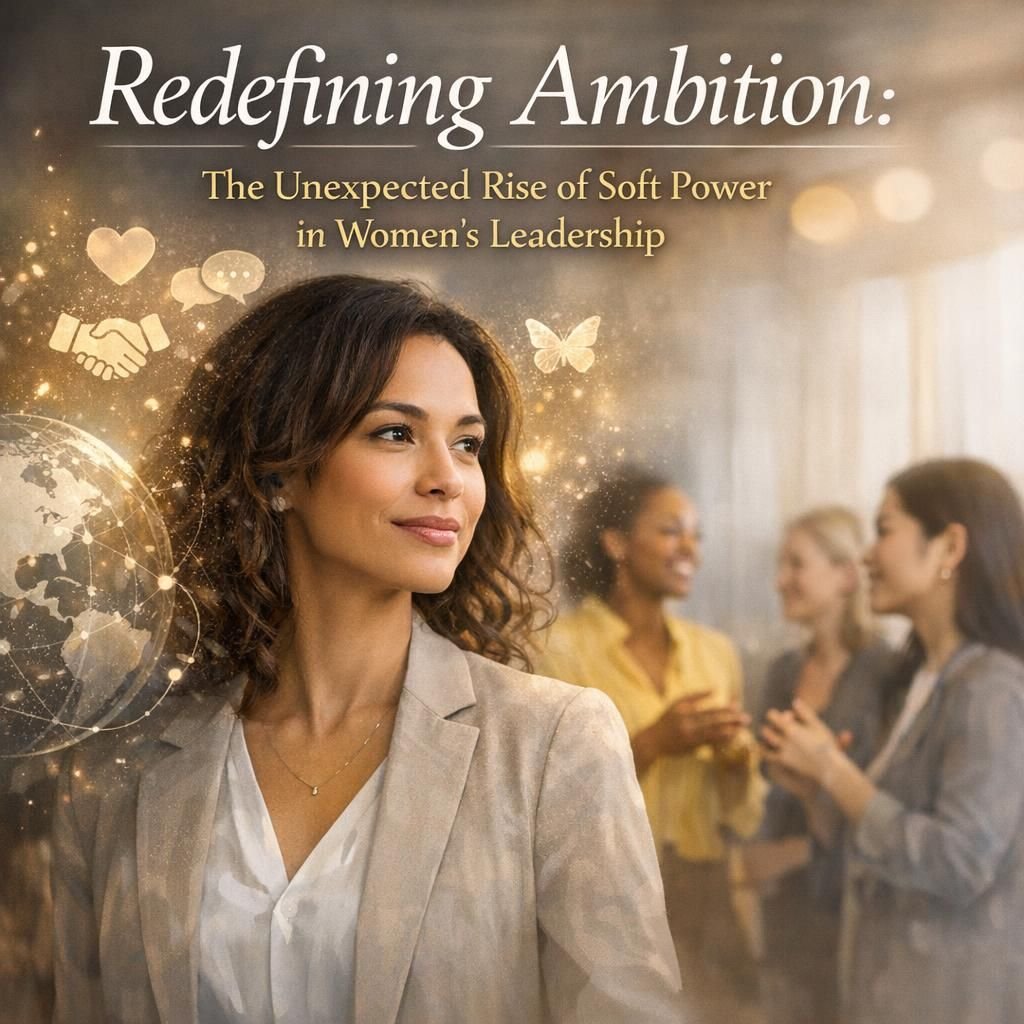
Redefining Ambition: The Unexpected Rise of Soft Power in Women’s Leadership
In the dynamic tapestry of global leadership, a nuanced yet powerful transformation is unfolding—one that underscores the growing influence of **soft power**, particularly in the realm of **women’s leadership**. For decades, the archetype of a successful leader was synonymous with **hard power** attributes: assertiveness, authority, and dominance. Yet, as women progressively ascend to leadership roles across various sectors, they are redefining ambition by embracing and leveraging soft power strategies. This strategic pivot is not merely a nod to gender differences but a revolutionary shift in understanding the essence of effective leadership in today’s interconnected world.
Traditionally, leadership has been measured by metrics associated with ‘hard power’: control, coercive strategies, and top-down decision-making. However, these metrics often overlook the equally formidable, albeit subtle, strength inherent in **soft power**. This form of power capitalizes on attraction, persuasion, and collaboration, crafting a compelling narrative of influence without exertion of force. Women leaders, in particular, have increasingly adapted these soft power skills, innovating approaches to leadership that reflect empathy, listening, and relationship-building.
The ascent of soft power in women’s leadership is catalyzed by contemporary calls for inclusivity and **emotional intelligence** in governance and business. The challenges brought forth by ever-evolving workplaces and market environments demand leaders who can inspire rather than impose. The **tech industry**, corporate boards, and political arenas provide glowing examples of women who lead by fostering inclusivity and trust, thereby driving change and growth. This evolution represents not just a shift in leadership style, but a reformation that values collective input and collaborative achievement—a framework where female leaders are excelling.
Features
The emergence of soft power parallels a seismic shift in leadership studies, sharply spotlighting **emotional intelligence (EI)** as a critical component of effective governance. Emotional Intelligence, a term popularized by psychologist Daniel Goleman, encompasses the ability to recognize and manage our own emotions and the emotions of others. According to a [study by Harvard Business Review](https://hbr.org/2004/01/what-makes-a-leader), emotional intelligence is twice as important as technical skills or IQ for job roles at all levels, especially in leadership positions.
Women, by virtue of societal expectations and gender-based skills development, often exhibit higher proficiency in emotional intelligence. Another [important study by Korn Ferry](https://www.kornferry.com/insights/this-week-in-leadership/women-score-higher-than-men-in-most-leadership-skills) reviewed assessments of 55,000 professionals worldwide and revealed that women outperform men in 11 out of 12 emotional intelligence competencies. Attributes such as empathy, coaching and mentoring, and adaptability, where women score highly, are critical to the magnification of soft power in leadership positions.
Moreover, the [2019 study by the Peterson Institute for International Economics](https://piie.com/publications/working-papers/gender-diversity-and-financial-performance) found a positive correlation between the presence of women in corporate leadership and improved financial performance. This research indicates that companies with women leaders generally benefit from enhanced organizational health and financial profitability—a telltale sign of the effectiveness of soft power in navigating complex business landscapes. Further insights suggest that the adoption of inclusive practices resonates culturally, bringing a broader representation of ideas and solutions to the forefront.
Healthcare sectors too showcase examples where female leaders using soft power drive systemic improvements. An [article in JAMA Network](https://jamanetwork.com/journals/jama/fullarticle/2748789) points to how women’s leadership has enhanced patient-oriented care models, substantially improving patient satisfaction and outcomes by prioritizing team synergy and inclusive decision-making. This soft power dynamic in healthcare underscores the profound impact of emotional intelligence in environments requiring empathy and nuanced understanding.
Conclusion
The intersection of **soft power** with **women’s leadership** marks a defining chapter in the evolution of global leadership paradigms. In present-day contexts where diversity and emotional agility lead the way, embracing this power not only progresses **gender equality** but refines the core tenets of leadership itself. As businesses and governments better understand and implement these insights, a profound transformation of opportunities will continue to redefine ambition, effectively bridging traditional practices with forward-thinking strategies.
**References**
– [What Makes a Leader](https://hbr.org/2004/01/what-makes-a-leader)
– [Women Score Higher Than Men in Most **Leadership Skills**](https://www.kornferry.com/insights/this-week-in-leadership/women-score-higher-than-men-in-most-leadership-skills)
– [Gender Diversity and Financial Performance](https://piie.com/publications/working-papers/gender-diversity-and-financial-performance)
– [Women in Leadership: The Family Medicine Example](https://jamanetwork.com/journals/jama/fullarticle/2748789)
**Concise Summary**
The rise of **soft power** in women’s leadership is redefining leadership paradigms globally. Historically dominated by **hard power** traits, effective leadership is now embracing soft power strategies like emotional intelligence, empathy, and collaboration, especially in sectors like tech, healthcare, and corporate governance. Studies link women’s leadership with improved organizational health, financial performance, and patient satisfaction, highlighting women’s proficiency in emotional intelligence competencies. This shift not only challenges traditional notions of leadership but also promotes gender equality and paves the way for more inclusive and innovative leadership practices.

Dominic E. is a passionate filmmaker navigating the exciting intersection of art and science. By day, he delves into the complexities of the human body as a full-time medical writer, meticulously translating intricate medical concepts into accessible and engaging narratives. By night, he explores the boundless realm of cinematic storytelling, crafting narratives that evoke emotion and challenge perspectives. Film Student and Full-time Medical Writer for ContentVendor.com