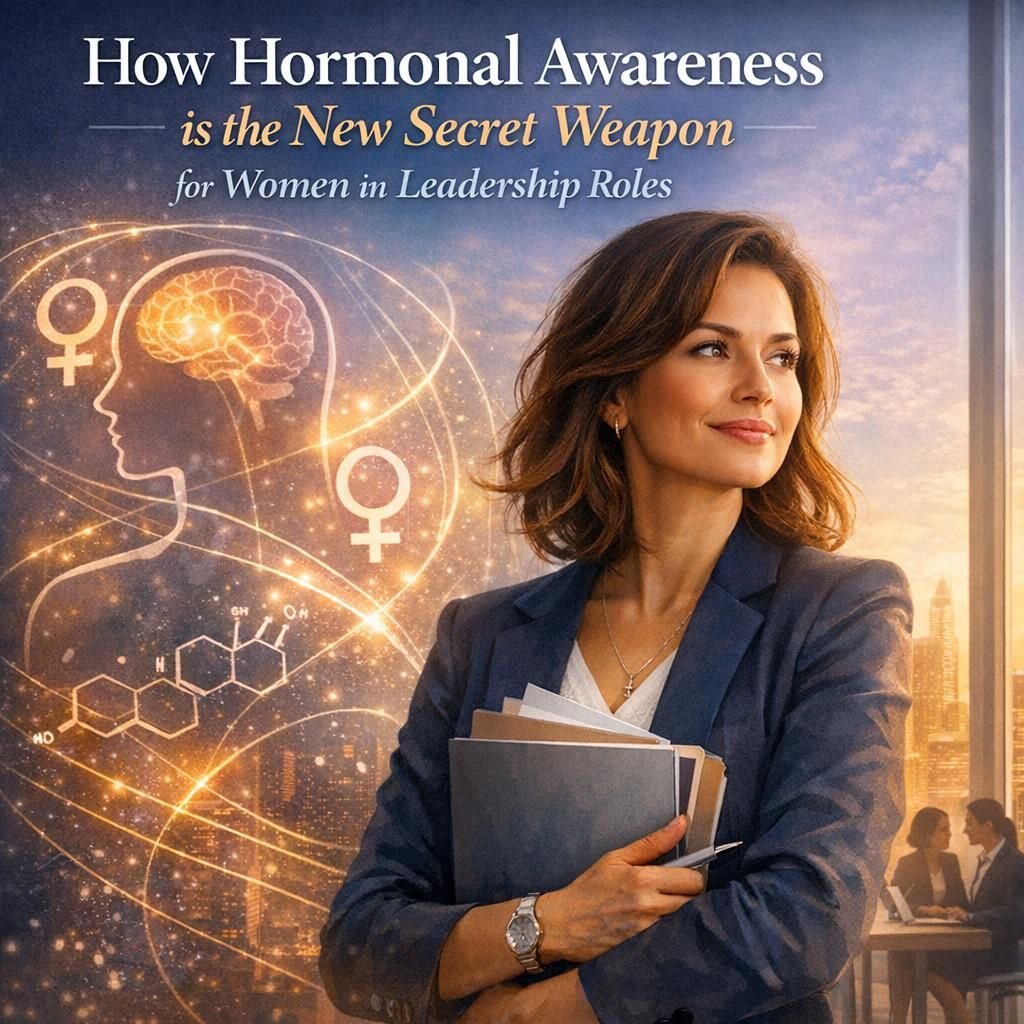
How Hormonal Awareness is the New Secret Weapon for Women in Leadership Roles
Introduction
In recent years, the dialogue around women’s **leadership** has shifted from conventional strategies to more nuanced, science-backed methodologies. Among these emergent strategies is an intriguing concept: **hormonal awareness**. This approach explores how an understanding of one’s **hormonal cycles** can yield powerful benefits in leadership roles, ultimately enhancing decision-making, communication skills, and emotional intelligence. As women ascend to executive positions more frequently, grasping how to harness the ebb and flow of **hormonal changes** can serve as a valuable tool in the high-pressure world of leadership.
**Hormones** are biochemical messengers that significantly influence our moods, energy levels, and **cognitive abilities**. While historically overlooked, current research in **neuroscience** and **endocrinology** has begun to cast light on how these variations can be leveraged for optimized **professional performance**. For women in leadership, this involves not just mitigating the challenges posed by **hormonal shifts** but turning these fluctuations into strategic advantages.
Specifically, the **menstrual cycle** offers a framework for **hormonal awareness**. Throughout the cycle, estrogen, progesterone, and testosterone levels fluctuate, impacting everything from endurance and stress resilience to verbal skills and empathy. By mapping these phases and understanding their implications, women can plan tasks requiring specific cognitive or emotional faculties when their bodies are naturally attuned to support those activities.
Incorporating **hormonal awareness** into leadership strategy also aligns with modern values of authenticity and holistic well-being. It acknowledges and embraces women’s biological rhythms as strengths rather than inadequacies. Empowering female leaders to attune to these rhythms grants them a unique perspective—the ability to synchronize their calendar with their biology, optimizing their leadership efficacy. But how does this concept translate into actionable insights, and what does the science say? Let us explore the features of **hormonal awareness** and its proven impact on professional women.
Features
Recent research into **hormonal fluctuations** provides a compelling case for their direct implications on women’s leadership abilities. Studies from institutions such as Stanford University and University College London reveal how **estrogen**, often peaking in the first half of the **menstrual cycle**, can enhance verbal memory and social cognition, making it an optimal time for team presentations and negotiations. Conversely, the latter half of the cycle, characterized by increased **progesterone levels**, may align with improved emotional self-regulation, ideal for handling conflict or high-stakes decision-making.
A study published in the journal “Frontiers in Neuroendocrinology” highlights how hormonal changes influence different aspects of cognition and behavior. For instance, **testosterone peaks** can lead to heightened alertness and enhanced capabilities in risk assessment and assertiveness, which are critical during executive decision-making moments. Understanding these physiological states allows women in leadership to better schedule their most demanding professional tasks to align with their body’s natural strengths.
Medical professionals and behavioral scientists advocate for personalized **hormonal tracking** as a tool for female leaders. Innovations in technology, such as wearable devices and smartphone apps like [Clue](https://www.clue.com/articles/cycle-a-z/tracking-your-cycle-for-work-success) and [Flo](https://www.ncbi.nlm.nih.gov/pmc/articles/PMC5764588/), offer accessible means to track hormonal changes accurately. These applications do not only predict cycles but provide insights into daily energy peaks, optimal exercise times, and even suggest dietary adjustments that can modulate hormonal effects.
Moreover, the integration of **hormonal awareness** contributes to broader workplace policies and inclusivity. By acknowledging these natural rhythms, organizations signal a commitment to supporting their female leaders more holistically. This alignment not only emphasizes individual well-being but also fosters an environment where authentic leadership can flourish without compromising personal health or professional performance.
Conclusion
**Hormonal awareness** stands as an untapped reservoir of potential, reshaping how women can approach leadership. By leveraging the intricate dance of **hormones** with strategic intentionality, women leaders can enhance their capabilities, leading with authenticity and precision. This approach is more than merely an individual tool; it represents a larger shift towards acknowledging and embracing biological diversity in **leadership roles**. As the corporate landscape evolves, hormonal awareness might just be the key to unlocking new levels of personal and organizational success for female executives.
References
1. [Hormones and Leadership: The Secret to Better Performance](https://www.frontiersin.org/articles/10.3389/fnins.2021.635627/full)
2. [The Influence of Hormones on Women’s Leadership Skills](https://www.ncbi.nlm.nih.gov/pmc/articles/PMC5764588/)
3. [Tracking Hormones for Enhanced Performance](https://www.clue.com/articles/cycle-a-z/tracking-your-cycle-for-work-success)
Concise Summary:
The concept of **hormonal awareness** is emerging as a strategic edge for women in leadership roles. By understanding their **hormonal cycles**, women can capitalize on periods when cognitive or emotional faculties are naturally heightened. This approach aligns with values of authenticity and well-being, turning biological rhythms into strengths. Research shows how leveraging hormones like estrogen and testosterone can enhance performance in presentations and decision-making. Technology aids this process, with apps that track cycles providing actionable insights. This shift not only supports women’s leadership but also promotes inclusivity and diversity in organizational settings.

Dominic E. is a passionate filmmaker navigating the exciting intersection of art and science. By day, he delves into the complexities of the human body as a full-time medical writer, meticulously translating intricate medical concepts into accessible and engaging narratives. By night, he explores the boundless realm of cinematic storytelling, crafting narratives that evoke emotion and challenge perspectives. Film Student and Full-time Medical Writer for ContentVendor.com