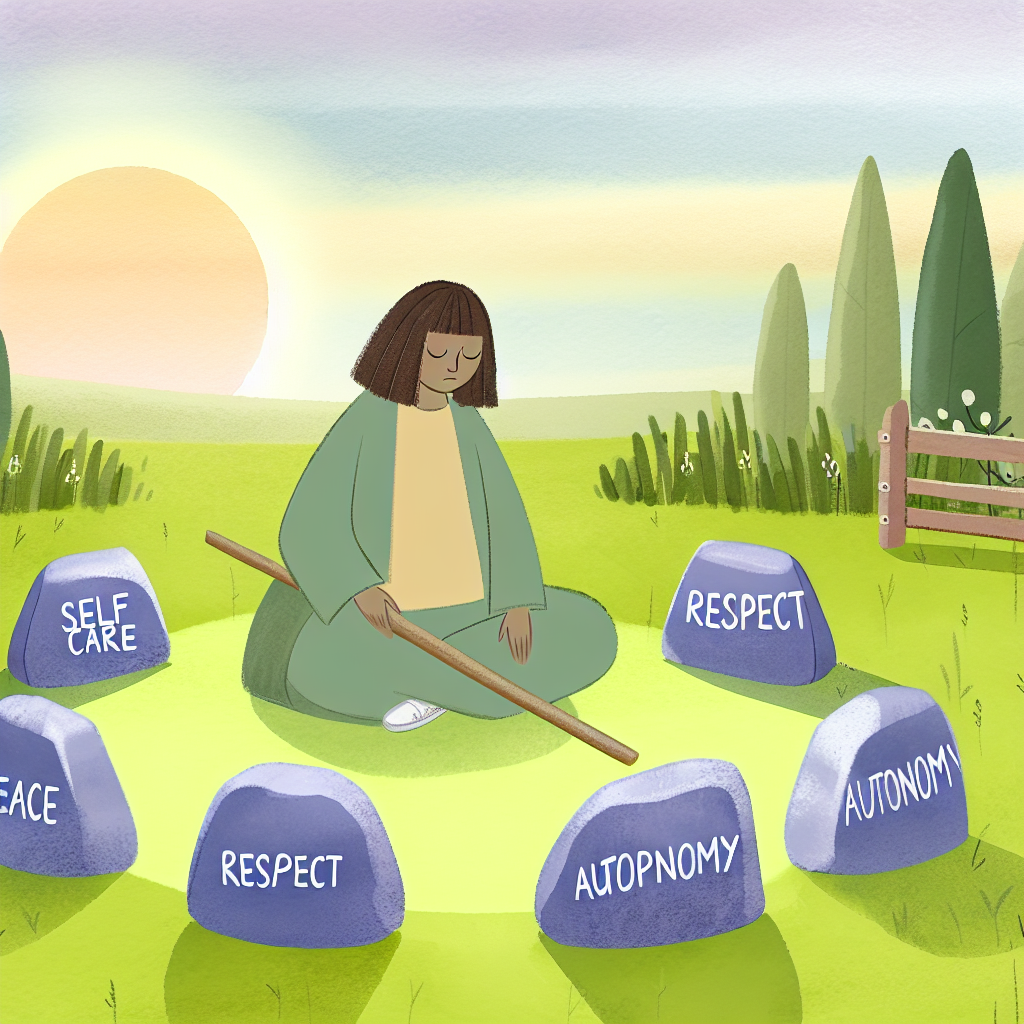
Boundary Setting for Women’s Mental Health
Introduction
In a world that never sleeps and constantly demands more, the modern woman finds herself walking a dangerously thin line between ambition and overwhelm. Juggling career aspirations, family duties, social responsibilities, and the constant pursuit of personal fulfillment, many women face chronic stress, emotional fatigue, and eventual burnout. For those seeking a truly elevated lifestyle—one that feels as good on the inside as it looks on the outside—mental health must be a non-negotiable priority.
One of the most potent tools for protecting and preserving psychological well-being is boundary setting. Too often, self-care is seen as bubble baths and yoga classes, when in reality, it’s rooted in the quiet but assertive decisions we make to respect our limits.
Boundary setting is not a passing trend or pop psychology buzzword. It is a lifelong self-discipline grounded in purpose and self-respect. Especially for women navigating high-pressure careers or demanding households, clear boundaries are essential not only for survival but for thriving. Contrary to the long-standing stereotype that boundaries are barriers, they are, in fact, declarations of self-worth. They allow us to interact with the world intentionally, protect our emotional and physical energy, and create order out of chaos.
Despite the abundance of wellness content available online, boundary setting remains under-discussed and misunderstood—practiced consistently only by those who align their internal values with external commitments. Why is it often ignored? Because establishing healthy boundaries means saying “no” in a culture that teaches women to say “yes” to everything—and to do so with a smile.
The luxury of emotional peace begins with self-responsibility and the courage to protect your own life force. Whether in professional environments, friendships, family dynamics, or even social media interactions, setting boundaries is the foundation of lasting mental health. For the discerning woman who curates her lifestyle consciously, there’s no room for unmanaged stress. Boundaries are the blueprint for a life of mental clarity, graceful living, and personal power.
So how does setting boundaries protect your mental health? What does science tell us about its psychological and physiological impact? And how can today’s dynamic woman practice boundary setting with grace and strength?
Let’s explore the transformative power of this often-overlooked luxury.
The Science and Psychology Behind Boundary Setting
An increasing number of psychological and medical studies support the powerful effects of boundary setting on women’s mental health. Research published in the Journal of Psychosomatic Research found that individuals with poorly defined boundaries are more likely to suffer from anxiety, depression, and sustained stress responses (Kalliath et al., 2017). These individuals often report feeling overwhelmed, used, and emotionally depleted, particularly those in high-responsibility or caregiving roles. Elevated cortisol—the body’s primary stress hormone—was a consistent biological marker among these individuals, leading to fatigue, irritability, weakened immune response, and impaired cognitive function.
For women, the risks are magnified. According to a 2020 report by the American Psychological Association (APA), women are significantly more likely than men to report both emotional and physical symptoms of stress. The APA attributes this disparity to women frequently juggling overlapping roles—from leadership positions at work to primary caretakers at home—often without adequate personal boundaries. As roles diversify, emotional bandwidth narrows. Setting emotional boundaries becomes a critical tool for regulating mood, preventing exhaustion, and maintaining equilibrium.
Cognitive Behavioral Therapy (CBT)—one of the leading evidence-based therapies for mental health—incorporates boundary-setting tools to manage anxiety, depression, and relationship issues. A staple of CBT is cognitive restructuring, which teaches individuals to identify distorted thought patterns such as people-pleasing or fear of rejection. Clients learn to replace them with empowered beliefs like “I respect my limits” or “My no is a complete sentence.” This cognitive shift fosters emotional resilience and improved self-image.
Dr. Brené Brown, a respected researcher and bestselling author on vulnerability and authenticity, calls boundaries the foundation of compassion and genuine connection. She explains, “Boundaries are simply the distance at which I can love you and me simultaneously.” According to her research, clarity in personal limits reduces conflict, builds trust in relationships, and boosts self-esteem. When we know how to say “no,” we free ourselves to say “yes” where it truly matters.
Emerging research in social neuroscience also highlights the connection between boundaries and the nervous system. When individuals lack firm boundaries, their sympathetic nervous system—responsible for the “fight or flight” response—becomes overactive. This constant activation keeps the mind and body in survival mode, contributing to chronic stress, sleep issues, and emotional volatility. Conversely, boundary setting helps promote parasympathetic nervous system responses—those that govern rest, digestion, and mindfulness—restoring the brain’s ability to recalibrate and find calm.
For women dedicated to a high-frequency, purpose-driven lifestyle, boundaries are a performance tool. They ensure that emotional energy is not squandered on low-value tasks or draining interactions. For example, limiting your availability to after-hours work emails, saying no to obligations that don’t feed your spirit, or carving out time for self-reflection—all are deliberate practices that protect your most valuable asset: your presence.
Brands that promote modern luxury often focus on efficiency, intention, and refinement. Similarly, setting boundaries allows women to distill their energy and interactions into experiences that uplift and sustain them, not ones that deplete or overwhelm. Mental health for high-performing women thus becomes not just a protective mechanism, but a luxury lifestyle strategy.
Conclusion
True luxury isn’t defined by designer labels or elite access—it’s the freedom to live from a place of inner harmony and empowered choice. Boundaries don’t push people away; they show the world how deeply you value your time, peace, and self-worth.
As elite, dynamic women continue to curate lives of beauty and purpose, incorporating boundaries into their daily mindset becomes less of an option and more of a necessity. The result? A life where mental peace is prized, emotional clutter is cleared, and every decision reflects clarity and confidence.
Choose to honor yourself. Step into a life of opulent mental health. Start with the most profoundly luxurious tool of all—your ability to say: “this is where I begin, and the chaos ends.”
Concise Summary
Boundary setting is a powerful yet overlooked practice that supports women’s mental health. With science highlighting its impact on stress, anxiety, and cognitive clarity, boundaries help women protect their energy and avoid emotional burnout. Research confirms that strong personal boundaries reduce cortisol, improve self-worth, and promote deeper emotional regulation. Especially for women balancing high-pressure lifestyles, boundaries serve as both a wellness strategy and a performance optimization tool. Integrating them into daily life fosters peace, resilience, and a luxe inner life. Boundaries, far from barriers, are essential tools for intentional, elevated living.
References
– American Psychological Association. (2020). Women more likely than men to report high levels of stress.
– Brown, B. (n.d.). The Gifts of Imperfection.
– Kalliath, T., Kalliath, P., & Chan, C. (2017). Work–family conflict and employee well-being: A comparative study…
– National Institute of Mental Health. (n.d.). Women and Mental Health.

Dominic E. is a passionate filmmaker navigating the exciting intersection of art and science. By day, he delves into the complexities of the human body as a full-time medical writer, meticulously translating intricate medical concepts into accessible and engaging narratives. By night, he explores the boundless realm of cinematic storytelling, crafting narratives that evoke emotion and challenge perspectives. Film Student and Full-time Medical Writer for ContentVendor.com