Navigating Conflict: Harnessing Hormonal Cycles for Better Workplace Communication
In the **fast-paced and competitive world** of **luxury business**, effective communication is a vital skill. Understanding and managing interpersonal interactions can lead to more harmonious and productive outcomes. One often-overlooked aspect of communication, especially in conflict resolution, is the role of **hormonal cycles**. By gaining insights into how our **biological rhythms** influence mood, cognition, and behavior, we can unlock strategies for improving workplace interactions.
Hormonal cycles, particularly those related to the reproductive system, can significantly impact how individuals communicate and perceive social cues. Both men and women experience **hormonal fluctuations** that influence their daily functions. While women’s hormonal cycles are more frequently acknowledged due to their visible impact on fertility and menstrual health, men’s hormonal rhythms—such as fluctuations in **testosterone levels**—also affect energy, mood, and stress resilience.
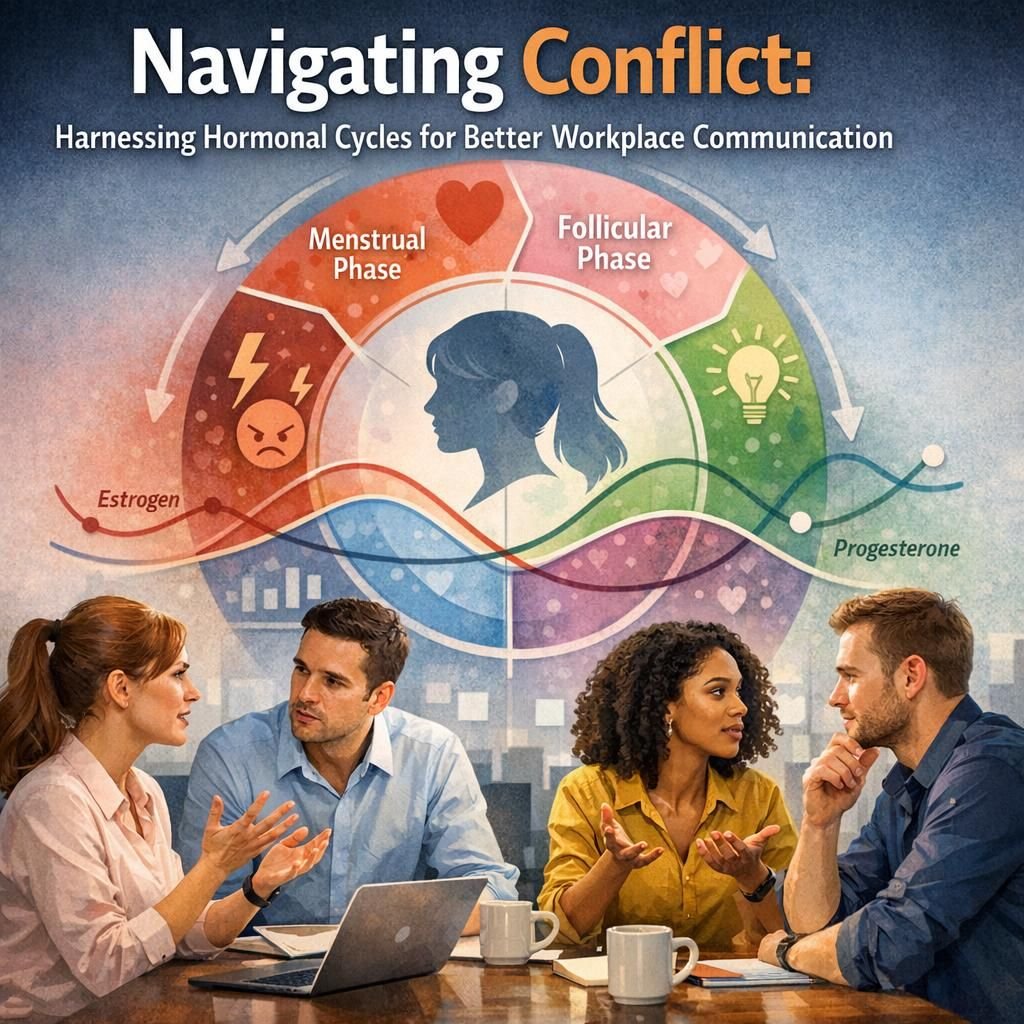
Understanding these cycles can enhance empathy and effectiveness in communication. For instance, awareness of **premenstrual syndrome (PMS)** and its potential impact on emotional reactivity allows teams to adapt their interactions accordingly. Moreover, **estrogen** influences mood regulation and stress resilience in women, impacting communication styles. For men, **testosterone fluctuations** have been linked to changes in aggression and risk-taking behavior, informing when and how to engage in challenging discussions.
This holistic approach to understanding workplace dynamics fosters greater respect among peers and paves the way for innovative leadership strategies. The luxury industry, which thrives on creativity and meticulous attention to detail, can particularly benefit from these insights. By encouraging delicate timing and enhanced communication strategies based on hormonal influences, companies can better navigate high-stakes environments.
Features
Recent studies have highlighted the profound impact of biological rhythms on workplace dynamics. According to research published in the journal [*Psychoneuroendocrinology*](https://www.ncbi.nlm.nih.gov/pubmed/), **hormonal fluctuations** can influence cognitive functions such as memory, attention, and decision-making processes. Hormonal balance also affects stress responses, playing a crucial role in workplace communication. A study by the [University of Montreal’s Centre for Studies on Human Stress](https://www.humanstress.ca/) indicates that hormonal cycles can affect cortisol levels—the primary **stress hormone**—influencing how individuals respond under pressure.
Moreover, the influence of **circadian rhythms**—24-hour cycles that govern physiological processes—also ties into hormonal impacts on communication. Research from the [University of Texas Southwestern Medical Center](https://www.utsouthwestern.edu/) reveals that these cycles affect alertness and cognitive performance throughout the day. Recognizing these patterns can help optimize meeting times and collaborative efforts, leading to more efficient and dynamic exchanges.
By incorporating these scientific insights, companies can implement practical strategies to mediate conflicts and optimize collaboration. Scheduling critical meetings during periods of optimal cognitive function or avoiding emotionally charged discussions during known periods of hormonal imbalance could improve outcomes significantly.
Conclusion
Incorporating an understanding of hormonal cycles into workplace communication strategies offers a cutting-edge approach for luxury industries aiming to enhance their internal culture. By fostering an environment of awareness and empathy, businesses can improve interpersonal dynamics and drive innovation and success. Recognizing the **intricate interplay** between biology and behavior opens doors to more harmonious and effective professional interactions.
**Concise Summary:**
In luxury business, effective communication is essential. Understanding hormonal cycles can enhance workplace interactions by recognizing how these cycles affect mood, cognition, and behavior. Both men’s and women’s hormonal fluctuations influence energy, aggression, and stress resilience, impacting day-to-day functions. By strategizing around these cycles, such as scheduling meetings during optimal cognitive times, companies can foster better empathy and communication. This approach, supported by studies from *Psychoneuroendocrinology* and other research institutions, leads to innovative leadership strategies, benefiting the dynamic and detail-oriented luxury industry.

Dominic E. is a passionate filmmaker navigating the exciting intersection of art and science. By day, he delves into the complexities of the human body as a full-time medical writer, meticulously translating intricate medical concepts into accessible and engaging narratives. By night, he explores the boundless realm of cinematic storytelling, crafting narratives that evoke emotion and challenge perspectives. Film Student and Full-time Medical Writer for ContentVendor.com