Revamp Your Hormonal Leadership: How Understanding Your Cycle Can Transform Your Career
In our quest for success, we often overlook a powerful tool: our **biology**. For many women, understanding their **hormonal cycle** is not merely about health but a strategic asset for enhancing career efficacy. This emerging interest stems from recognizing that hormonal cycles influence **cognitive abilities**, energy levels, and emotional resilience. Traditional work environments tend to ignore these rhythms, presupposing constant productivity. However, aligning professional tasks with hormonal changes may unlock exceptional productivity and creativity.
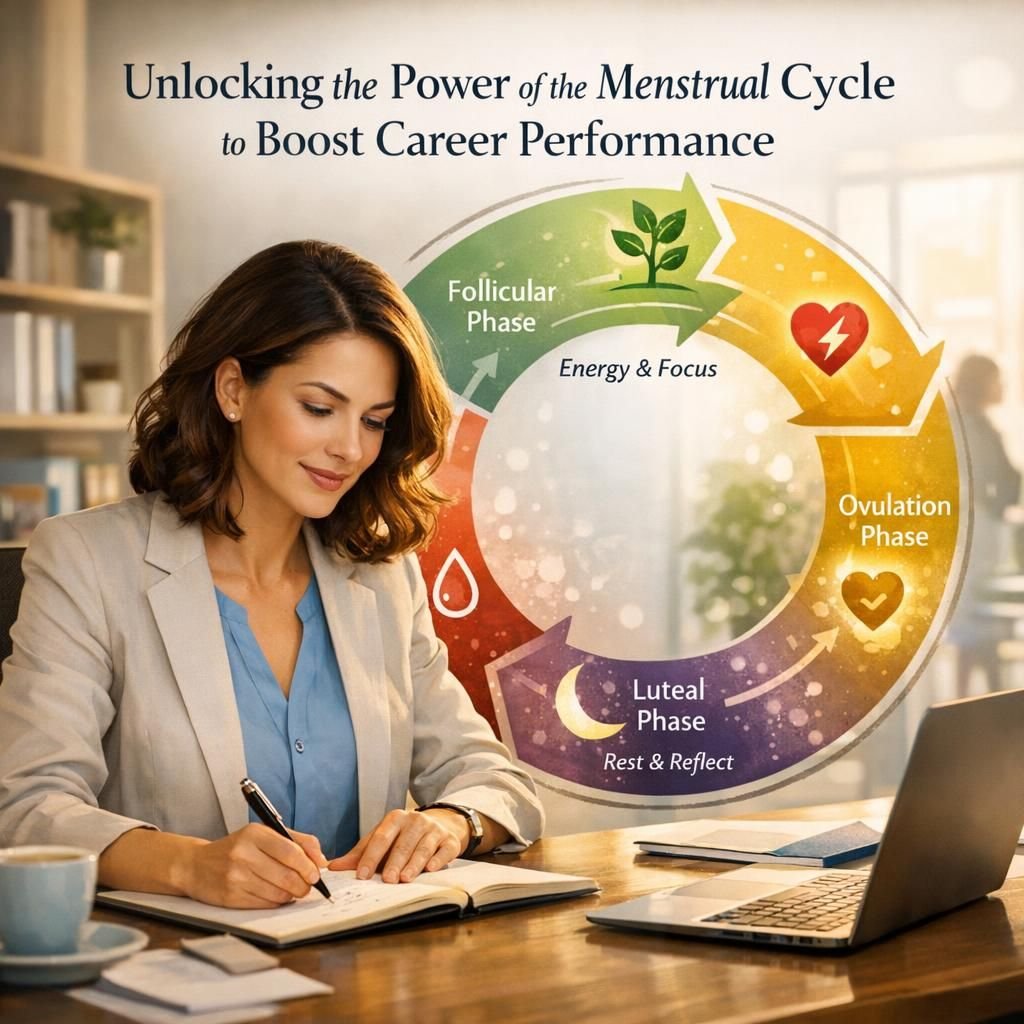
Explore the **menstrual cycle**, with its phases impacting mood, energy, and concentration. During the **follicular phase**, heightened **estrogen** levels elevate energy, creativity, and openness to new ideas, ideal for brainstorming and new initiatives. In contrast, the **luteal phase**, marked by increased **progesterone**, suits tasks requiring deep focus and strategic analysis.
Scientific studies validate these observations. Research in the [Journal of Clinical Endocrinology & Metabolism](https://academic.oup.com/jcem) highlights the cognitive benefits tied to estrogen, indicating substantial professional advantages through hormonal literacy. A study in [Nature Reviews Neuroscience](https://www.nature.com/nrn/) details how estrogen enhances learning, memory, and mood regulation, vital in high-pressure contexts. Another study in [Psychoneuroendocrinology](https://www.journals.elsevier.com/psychoneuroendocrinology) links progesterone levels during the luteal phase to improved stress management, emphasizing the potential of cycle-aware strategic planning.
Features
Several studies demonstrate hormonal cycles’ powerful influence on cognitive and emotional states. The pivotal study in [Nature Reviews Neuroscience](https://www.nature.com/nrn/) elaborates on estrogen’s positive effects on brain function, enhancing decision-making and emotion regulation capacity. These benefits are crucial in demanding work environments, promoting productivity and effective leadership.
Research in [Psychoneuroendocrinology](https://www.journals.elsevier.com/psychoneuroendocrinology) explores how **hormone fluctuations** affect stress resilience. During the **luteal phase**, higher **progesterone** levels boost performance in stress management tasks, underscoring the advantages of incorporating hormonal knowledge into strategic planning.
In professional development, adopting cycle-synced productivity doesn’t limit but optimizes each phase’s potential. Scheduling crucial meetings or creative projects during the **follicular phase** can yield dynamic outcomes. In contrast, the **luteal and menstrual phases** are suited for reflective practice and tasks demanding focused attention.
Adapting workplaces to these insights is a pressing concern. Forward-thinking organizations are integrating such knowledge into wellness programs, offering personalized work schedules or tasks that align with hormonal cycles. This evolution boosts employee well-being, productivity, and job satisfaction.
Conclusion
Understanding your hormonal cycle’s role in career strategy transcends wellness trends, revolutionizing leadership and productivity. Aligning professional responsibilities with **biological rhythms** enhances work performance, fosters resilience, and ushers in transformative workplace changes. As awareness deepens, work environments become more inclusive and adaptive, harnessing the full spectrum of human potential.
**References**
1. [Journal of Clinical Endocrinology & Metabolism](https://academic.oup.com/jcem)
2. [Nature Reviews Neuroscience](https://www.nature.com/nrn/)
3. [Psychoneuroendocrinology](https://www.journals.elsevier.com/psychoneuroendocrinology)
**Concise Summary**
Understanding and leveraging our hormonal cycles can transform career strategies, enhancing productivity and leadership. Phases like the follicular phase, with increased estrogen, foster creativity and innovation, ideal for dynamic tasks. The luteal phase, with high progesterone, encourages focus and strategic planning. Scientific studies support these insights, leading companies to integrate cycle-aware wellness programs, promoting well-being and job satisfaction. This approach is not just a trend but a path to more adaptive and inclusive work environments, optimizing the full potential of employees.

Dominic E. is a passionate filmmaker navigating the exciting intersection of art and science. By day, he delves into the complexities of the human body as a full-time medical writer, meticulously translating intricate medical concepts into accessible and engaging narratives. By night, he explores the boundless realm of cinematic storytelling, crafting narratives that evoke emotion and challenge perspectives. Film Student and Full-time Medical Writer for ContentVendor.com