Redefining Success: Does Wealth Make You Happy or Do Wellbeing Priorities Bring Success?
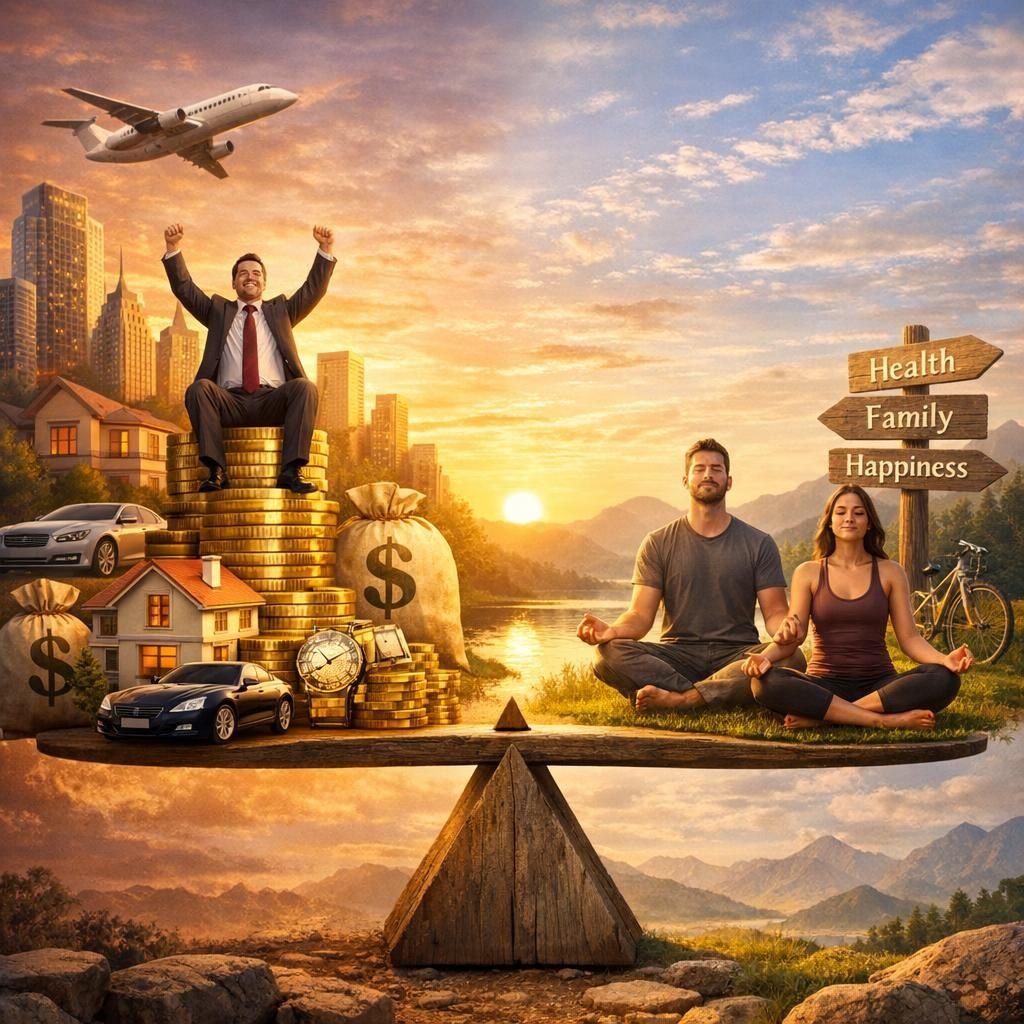
In a world where **luxury** and **opulence** are often signifiers of **success**, many of us equate **financial prosperity** with **happiness**. As society flurries towards a future framed by **globalization** and **digitalization**, material wealth appears to be the ultimate goal. Yet, the adage “money cannot buy happiness” continues to resonate, prompting us to scrutinize whether true success is better measured by **wellbeing** rather than **net worth**. The concept of success is deeply entrenched in the ability to acquire possessions, travel the globe, or revel in grandiose experiences. For those captivated by a lavish lifestyle, the allure of multi-million-dollar homes, exquisite couture, and elite memberships perpetuates the belief that financial triumph is synonymous with happiness. Luxury promises a life unrestrained by budgetary concerns, but does it really deliver a fulfilling life, or is there a gap between richness and contentment?
Contemporary psychology and sociology delve deeper into understanding the correlation between wealth and happiness, offering a more nuanced perspective. Increasingly, research suggests that while financial stability can offer a foundation for wellbeing, wealth alone is not a singular determinant of happiness. **Components such as emotional health, strong relationships, purpose, and personal growth** emerge as crucial elements that contribute to one’s sense of fulfillment and contentment. The shift toward prioritizing holistic wellbeing over material wealth calls into question the current parameters of success.
Interestingly, some affluent individuals have begun to echo this sentiment, finding that a lifestyle focused on **health, mindfulness, and personal satisfaction** offers a richer form of fulfillment. Considerations such as these have started to redefine the very essence of success, challenging high-net-worth individuals and aspirers alike to rethink their aspirations and align them with deeper life values. As we indulge in luxury, the question becomes: Is it truly enhancing our life quality, or should its purpose be reconsidered in light of broader wellbeing objectives? The answer lies in the delicate balance between outward wealth and inward richness, with many discovering that integrating wellbeing priorities can lead to a more authentic and lasting form of success.
Features: Analyzing Studies on Wealth and Wellbeing
Recent professional and medical studies have started exploring the intricate relationship between wealth and happiness, providing evidence that success may not be as straightforward as a luxury car or an expansive bank account. A pivotal study conducted by Princeton University in 2010 [found](https://www.princeton.edu/news/2010/09/06/spending-money-right-way-can-buy-happiness) that while higher income enhances emotional wellbeing up to a certain point, beyond an annual income of approximately **$75,000**, happiness does not proportionally increase with income. Known as the “**Easterlin Paradox**,” this phenomenon illustrates a plateau in the beneficial effects of wealth on individual happiness and emphasizes the diminishing returns of income on wellbeing.
Moreover, the [Harvard Study of Adult Development](https://news.harvard.edu/gazette/story/2017/04/over-nearly-80-years-harvard-study-has-been-showing-how-to-live-a-healthy-and-happy-life/), one of the longest-running studies of human life, offers profound insights into what contributes to happiness over a span of 80 years. The findings reveal that strong **relationships**, rather than wealth, are the key to a joyful life. It underscores the significance of quality social connections in ensuring physical health and emotional stability, advocating that fostering meaningful interactions and community ties should be aspects of any ambition toward a luxurious lifestyle.
The emerging field of **positive psychology** further supports this view, spotlighting wellbeing as integral to understanding happiness and success. Prominent psychologist Martin Seligman’s [PERMA model](https://positivepsychology.com/perma-model/) highlights five essential elements: Positive Emotion, Engagement, Relationships, Meaning, and Accomplishment—all of which contribute to a contented life. Seligman’s research stresses that while financial resources can enhance these elements to some extent, they cannot substitute for the internal work required to nurture them.
The discourse on wealth and wellbeing underscores a critical reassessment within our fast-paced, luxury-focused society. While many seek luxury as the pinnacle of success, it is becoming increasingly clear that aligning our goals with elements that foster genuine happiness can yield more profound and sustainable results. By prioritizing wellbeing, individuals can redefine the parameters of success to achieve a harmonious balance that incorporates both financial and emotional prosperity.
Conclusion
As we navigate the complexities of modern luxury and its influence on our perception of success, it becomes evident that neither wealth nor wellbeing singularly spells happiness. Yet, by attuning our goals to encompass emotional wellness, relational depth, and self-fulfillment, we can cultivate a life of true richness. This holistic approach to success not only enhances individual satisfaction but also prepares us to enjoy the privileges of wealth with greater purpose and joy.
**Concise Summary:**
The article explores the dynamic relationship between **wealth** and **happiness**, questioning traditional perceptions that equate financial prosperity with success. Contemporary research, including studies from Princeton and Harvard, highlights the limited impact of wealth on happiness beyond certain income levels, shifting focus towards **emotional health**, **relationships**, and personal growth as key success determinants. The piece suggests reorienting goals to prioritize **wellbeing** over material wealth, offering a more enduring and fulfilling measure of success. This holistic perspective encourages integrating **wellbeing priorities** into luxury pursuits, fostering a harmonious balance between outward wealth and inward richness.

Dominic E. is a passionate filmmaker navigating the exciting intersection of art and science. By day, he delves into the complexities of the human body as a full-time medical writer, meticulously translating intricate medical concepts into accessible and engaging narratives. By night, he explores the boundless realm of cinematic storytelling, crafting narratives that evoke emotion and challenge perspectives. Film Student and Full-time Medical Writer for ContentVendor.com