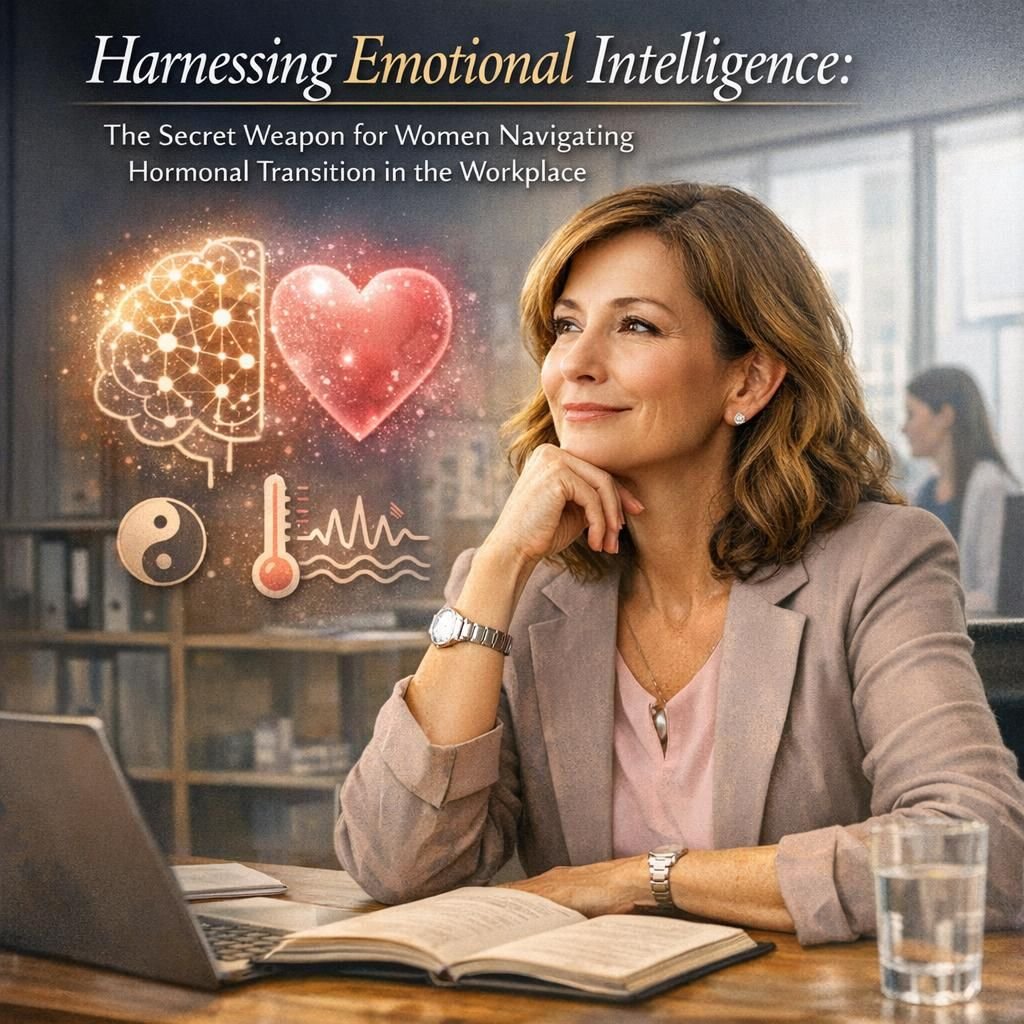
Harnessing Emotional Intelligence: The Secret Weapon for Women Navigating Hormonal Transition in the Workplace
Introduction
In the ever-evolving landscape of the modern workplace, **emotional intelligence (EI)** is increasingly recognized as a vital skill for achieving professional success, particularly for women undergoing **hormonal transitions**. These transitions include **menopause**, **pregnancy**, and **postpartum changes**, which can profoundly impact emotions, cognition, and overall well-being. These natural life stages often coincide with critical career milestones, placing women in a unique position to leverage their emotional intelligence to navigate these challenges effectively.
Emotional intelligence, defined as the ability to recognize, understand, and manage our own emotions and the emotions of others, has emerged as a crucial tool in maintaining professional efficacy and personal well-being. While inherent to some extent, EI can be developed and honed through deliberate practice, making it an accessible strategy for women seeking to balance the demands of hormonal changes with their professional responsibilities.
The physical symptoms of hormonal transition, such as fatigue, mood swings, and cognitive changes, can be compounded by workplace stressors, leading to a heightened emotional response. However, women who cultivate their **emotional intelligence** can better manage these stressors and adapt their work environment to suit their needs. Skills such as **self-awareness**, **self-regulation**, **empathy**, and **effective communication** allow women to navigate workplace challenges with grace and resilience.
For instance, by harnessing the power of **empathy**, women can build stronger relationships with colleagues and superiors, fostering a supportive work environment. **Self-regulation** helps manage stress-induced emotions, preventing them from undermining professional interactions or decision-making processes. Additionally, effective communication, a cornerstone of emotional intelligence, enables women to express their needs confidently and negotiate workplace accommodations, such as flexible schedules or quiet workspaces.
As organizations increasingly prioritize diversity and inclusion, recognizing and supporting the needs of women experiencing hormonal transitions can enhance workplace culture and productivity. Women, armed with the knowledge and tools of emotional intelligence, are uniquely positioned to advocate for themselves and others, challenging stereotypes and breaking barriers to success.
Features
Numerous studies underscore the transformative potential of emotional intelligence in the workplace, particularly for women managing hormonal transitions. Research consistently shows that high EI is linked to improved **job performance**, **leadership abilities**, and **job satisfaction**, making it a critical asset for women balancing their careers with personal health changes.
A study published in the [Journal of Occupational and Environmental Medicine](https://journals.lww.com/joem/pages/default.aspx) highlighted that women with higher emotional intelligence reported lower levels of stress and anxiety during menopause. This correlation suggests that emotional intelligence provides women with the tools to mitigate stress and manage the emotional fluctuations associated with hormonal shifts. By fostering a **supportive network** and maintaining a positive outlook, women can navigate this transitional phase more smoothly, maintaining their professional engagement and productivity.
Another study from the [Harvard Business Review](https://hbr.org/) explored the benefits of emotional intelligence in leadership, emphasizing that emotionally intelligent leaders are more effective in **conflict resolution**, team management, and fostering innovation. Women in leadership roles facing hormonal transitions can greatly benefit from these skills, as they allow for adaptive thinking and maintaining composure under pressure, essential for both personal well-being and professional success.
Moreover, the integration of emotional intelligence training within organizations can foster an inclusive cultural shift, normalizing discussions around women’s health issues and reducing stigma. This cultural evolution not only supports individual well-being but also enhances organizational morale and inclusivity. Techniques such as **mindfulness**, **active listening**, and **emotional literacy** workshops can be included in corporate training programs to enhance the emotional intelligence of all employees, creating a more empathetic and understanding workplace environment.
These studies and organizational practices highlight the critical role of emotional intelligence in empowering women to navigate hormonal transitions effectively. As companies strive for greater inclusivity, incorporating emotional intelligence into their diversity strategies can lead to a more resilient and supportive workforce.
Conclusion
**Emotional intelligence** serves as an invaluable resource for women navigating hormonal transitions in the workplace. By enhancing self-awareness, fostering empathy, and refining communication skills, women can not only maintain their professional performance but also create a supportive and inclusive work environment. Investing in emotional intelligence training benefits individuals and organizations alike, leading to a more resilient and empowered workforce prepared for the challenges of hormonal shifts and beyond.
**References**
– [Journal of Occupational and Environmental Medicine](https://journals.lww.com/joem/pages/default.aspx)
– [Harvard Business Review](https://hbr.org/)
– [American Psychological Association](https://www.apa.org/)
Concise Summary
Emotional intelligence is a critical asset for women facing hormonal transitions like menopause, pregnancy, and postpartum changes. By cultivating skills like self-awareness, empathy, and effective communication, women can navigate workplace challenges with resilience. Studies reveal that high EI leads to better job performance and reduced stress during hormonal shifts. Organizations can foster inclusivity by incorporating EI training, supporting women’s health issues, and challenging stereotypes. This strategy benefits both individuals and companies, creating a more empowered, productive workforce aligned with evolving inclusivity goals.

Dominic E. is a passionate filmmaker navigating the exciting intersection of art and science. By day, he delves into the complexities of the human body as a full-time medical writer, meticulously translating intricate medical concepts into accessible and engaging narratives. By night, he explores the boundless realm of cinematic storytelling, crafting narratives that evoke emotion and challenge perspectives. Film Student and Full-time Medical Writer for ContentVendor.com