**Transforming Career Burnout into Post-Hustle Empowerment: Embracing Soft Power**
Introduction:
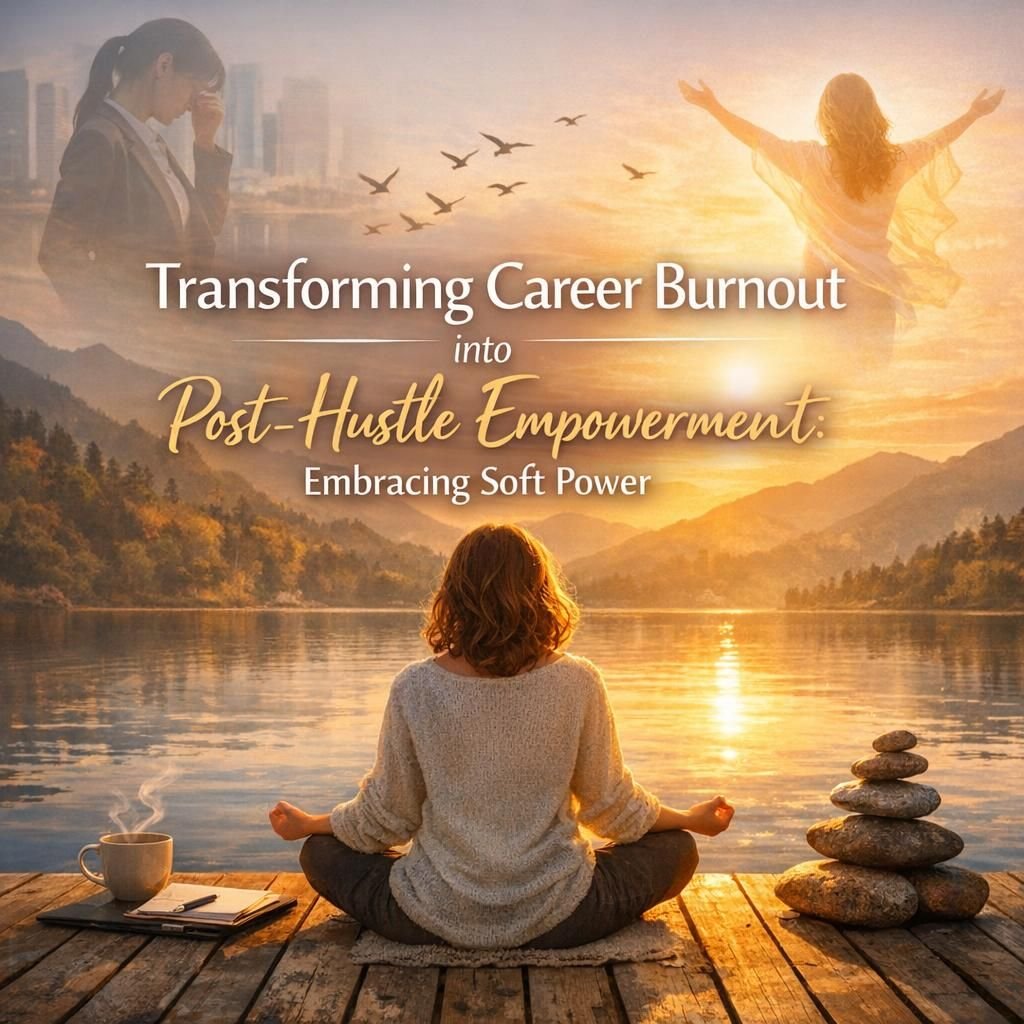
In the relentless pursuit of **success**, many trailblazers, high-achievers, and innovators find themselves succumbing to **career burnout**—a state of emotional, physical, and mental exhaustion brought on by prolonged and excessive **stress**. This condition sees individuals feeling overwhelmed, emotionally drained, and unable to meet constant demands. Yet, beneath the shadows of this pervasive problem lies an opportunity to reinvent one’s career and, ultimately, their life—ushering in an era of **post-hustle empowerment** through the adoption of ‘**soft power**’.
Traditionally, **power** in the professional world has been associated with assertiveness, domination, and relentless hustle. But a conspicuous shift is unfolding; modern professionals are exchanging exhaustion and burnout for a more sustainable, fulfilling path to success that emphasizes balance, empathy, and influence over authority. Embracing **soft power** involves harnessing qualities such as emotional intelligence, collaboration, and adaptability—skills that enable individuals to exert influence without blunt force.
This transformation acknowledges that while ambition and drive are valuable, they are not truly sustainable without the counterbalance of well-being and strategic self-care. The movement toward soft power doesn’t just redefine personal success—it reimagines the entire blueprint of **professional life**, allowing individuals to thrive without relentless toil.
Soft power equips individuals to weave their personal values into their professional lives, stage-managing the narrative of their careers gently yet compellingly. Furthermore, it enables them to develop authentic connections, foster a trustworthy reputation, and nurture a workplace environment conducive to innovation and shared success. As professionals embrace this paradigm shift, the dichotomy between a successful career and a fulfilling life narrows, revealing a cohesive path to enduring fulfillment and empowerment.
For those standing on the precipice of career burnout, understanding and leveraging **soft power** can turn exhaustion into empowerment and transform the post-hustle period into an era of regained passion and influence—a shimmering beacon for those aspiring to experience not just luxury, but a truly lavish lifestyle enriched by well-being and fulfillment.
Features:
Research underscores the critical need for a revised approach to career exhaustion—one where individuals pivot from burnout to empowerment, steering toward embracing soft power. A landmark study by the World Health Organization recognizes burnout as an **occupational phenomenon**, emphasizing its implications on mental health and the urgent need for sustainable career strategies [WHO](https://www.who.int/news/item/28-05-2019-burn-out-an-occupational-phenomenon-international-classification-of-diseases).
Moreover, academic research highlights the benefits of **emotional intelligence**—a cornerstone of soft power—in mitigating the adverse effects of **burnout**. An insightful study published in the *Journal of Occupational Health Psychology* reveals that employees with high emotional intelligence experience less stress and are more adept at coping with challenges, indicating that nurturing these skills is crucial for avoiding the spiral of burnout [Journal of Occupational Health Psychology](https://psycnet.apa.org/record/2010-01658-010).
Furthermore, a study by Harvard Business Review unveils the intrinsic value of **soft skills**—like communication and empathy—in leadership roles, proving more effective long-term compared to traditional authoritative tactics. The research highlights that teams led by individuals exhibiting soft power characteristics—such as active listening and empathy—demonstrate better performance, creativity, and job satisfaction [Harvard Business Review](https://hbr.org/2013/07/the-hard-data-on-soft-skills).
Medical professionals, too, vocalize the transformative potential of embracing soft power. According to the **American Psychological Association**, stress reduction techniques—central to soft power ethos—are vital in combating burnout and rejuvenating mental health, restoring a balanced perspective that fuels empowerment [American Psychological Association](https://www.apa.org/monitor/2019/01/burnout-stress).
This convergence of healthcare, psychological research, and leadership studies collectively champions the rise of soft power as a strategy to recalibrate career trajectories and lives blighted by burnout. The path to luxurious living, it seems, extends beyond tangible opulence, stemming from a profound sense of personal and professional equilibrium—a luxury unto itself.
Conclusion:
In embracing **soft power**, professionals stand primed to transcend burnout and experience a lavish lifestyle that serenades them with endless possibilities of influence, creativity, and fulfillment. As career-driven hustlers become mindful advocates of well-being, post-hustle empowerment emerges not just as an aspiration but as a transformative movement, gracefully redefining the landscape of success and luxury.
Summary:
The article explores the shift from traditional career burnout to post-hustle empowerment through the adoption of **soft power**—emphasizing emotional intelligence, collaboration, and adaptability. Highlighted by academic and organizational research, soft power mitigates stress, fosters authentic professional relationships, and enhances workplace performance, offering a balanced path to success. With insights from the World Health Organization and psychological studies, adopting soft power emerges as crucial for recalibrating careers, transforming the post-hustle era into a phase of regained passion, influence, and enduring personal and professional fulfillment.

Dominic E. is a passionate filmmaker navigating the exciting intersection of art and science. By day, he delves into the complexities of the human body as a full-time medical writer, meticulously translating intricate medical concepts into accessible and engaging narratives. By night, he explores the boundless realm of cinematic storytelling, crafting narratives that evoke emotion and challenge perspectives. Film Student and Full-time Medical Writer for ContentVendor.com