The Empowerment Echo: How Empowering Yourself Creates Ripple Effects in Your Community
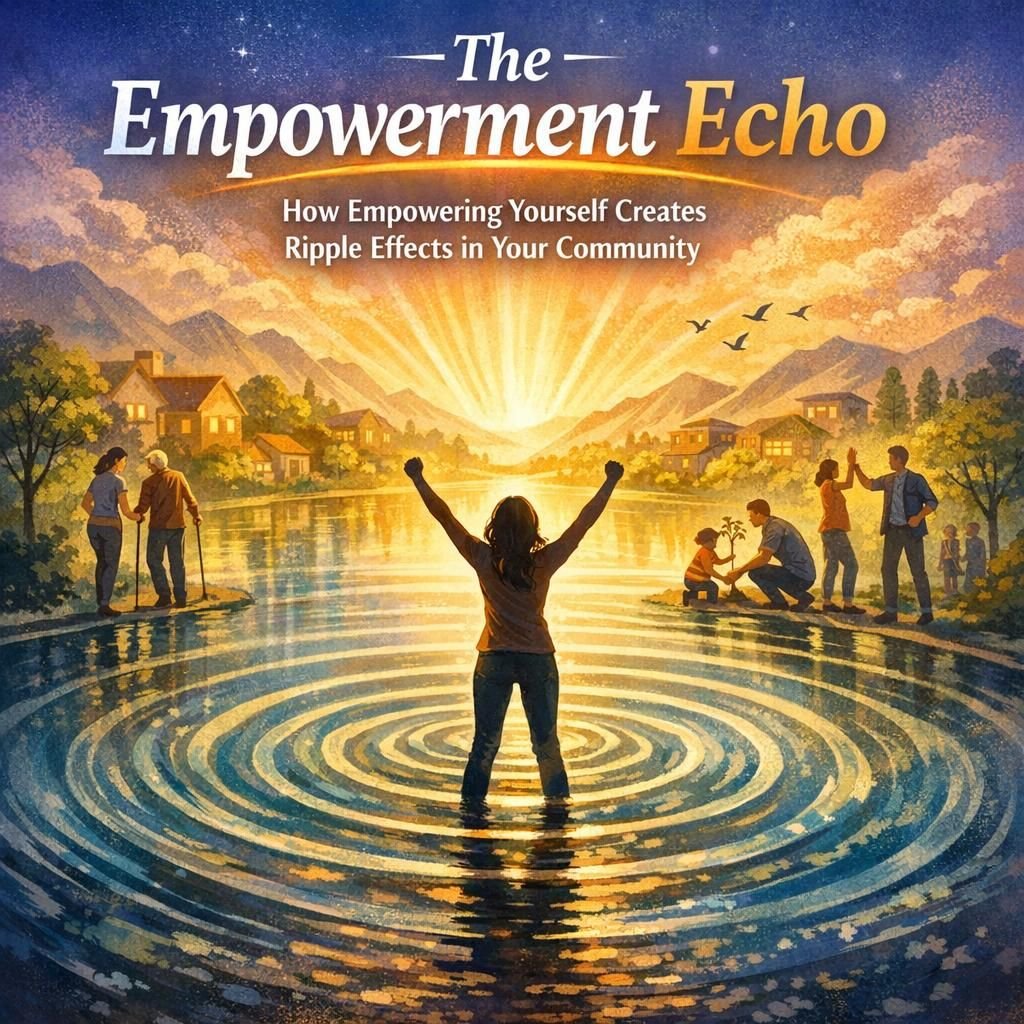
In the pursuit of a lavish lifestyle, **empowerment** stands as a fundamental pillar. Imagine it as a grand symphony, where your personal empowerment strikes the first chord, setting off a resonance that captivates not just yourself but those in your orbit. When you empower yourself, it’s akin to casting a stone into a tranquil lake—the ripples extend beyond the initial impact point, influencing the world around you more than you might realize.
**Empowerment** begins at a personal level, a mindset shift that often involves building self-confidence, gaining knowledge, and reinforcing one’s abilities. It’s about harnessing the power to make decisions that positively influence your life, paving the way for opportunities that align with your dreams and ambitions. This journey is not merely about personal gain but about cultivating an inner strength that reflects outward, affecting your environment, your community, and broader societal structures.
The concept of **empowerment**, particularly **self-empowerment**, has drawn increasing attention in studies related to personal development and societal impact. Dr. Brené Brown, a renowned researcher and author, emphasizes the importance of vulnerability in personal empowerment. Her research illustrates that embracing vulnerability allows individuals to connect more deeply with themselves and others, creating genuine interactions that can transform communities.
Furthermore, Dr. Martin Seligman, often referred to as the father of **positive psychology**, introduces the idea of **learned optimism**. He suggests that by shifting our perspective to a more optimistic outlook, we not only empower ourselves but also encourage changes within our communities. This positivity becomes contagious; an empowered individual can inspire others to foster change, leading to a more dynamic, engaged community.
A dynamic interaction exists between **self-empowerment** and **community development**, whereby empowerment shapes not only individuals but also the collective cultural practices and societal norms. Communities thrive when individuals invest in their personal growth—this investment encourages cooperative behavior, enhances mutual respect, and builds a culture of support and collaboration. This is witnessed in various social projects and community initiatives around the world, which show how empowered individuals catalyze positive changes by participating in decision-making processes and leading efforts to uplift their surroundings.
Professional and Medical Studies on Empowerment and its Ripple Effects
**Empowerment** has been extensively studied across various domains, demonstrating its profound effects not only on individuals but also on **community well-being**.
A significant study conducted by the [Harvard Business Review](https://hbr.org/) delves into how empowerment leads to enhanced performance and satisfaction. Empowered individuals typically display higher levels of engagement and productivity. This assertion is backed by neuroscience research demonstrating that when individuals feel empowered, they experience a surge in **dopamine**—a neurotransmitter associated with pleasure and reward. This biochemical response catalyzes an intrinsic motivation to excel and encourages a cycle of success that spreads within the community.
In the realm of public health, a study published in the [Journal of Public Health Management and Practice](https://journals.lww.com/jphmp/pages/default.aspx) highlights that empowering individuals through education and community engagement leads to improved **health outcomes**. When individuals take charge of their health, they not only enhance their personal wellness but also influence the attitudes and behaviors of those around them, promoting a culture of health-conscious behavior within their communities.
Moreover, **empowerment initiatives** have been highlighted in social and community psychology, underscoring their importance in fostering social change. According to research published by the [American Psychological Association](https://www.apa.org/pubs/journals), empowering marginalized groups results in increased civic participation and advocacy, often leading to policy changes and societal improvements. These studies underline that the ripple effects of empowerment are both extensive and enduring, reaching far beyond individual advancements to drive societal progress and transformation.
Conclusion
Ultimately, **empowering yourself** is far more than a personal victory; it is a catalyst for expansive change. By prioritizing self-empowerment, you ignite a sequence of positive actions and outcomes that reverberate throughout your community, contributing to a richer, more inclusive society. In embracing the power within, you not only elevate your life but also inspire and facilitate transformation in the world around you. Empowerment, through its compelling ripple effects, becomes the bridge that connects personal aspirations with collective achievement, resulting in a harmonized realm of possibilities for all.
References
1. [Harvard Business Review: Empowering Leadership](https://hbr.org/)
2. [Journal of Public Health Management and Practice](https://journals.lww.com/jphmp/pages/default.aspx)
3. [American Psychological Association](https://www.apa.org/pubs/journals)
**Concise Summary:**
Empowerment begins at an individual level, influencing not just personal growth but also communities and societal structures. Studies, including those by Dr. Brené Brown and Dr. Martin Seligman, highlight the transformative power of self-empowerment and optimism. When individuals feel empowered, it boosts productivity and health outcomes, as shown in research from the Harvard Business Review and the Journal of Public Health Management and Practice. Empowered individuals inspire changes in their communities, underscoring empowerment’s role in societal progress and transformation.

Dominic E. is a passionate filmmaker navigating the exciting intersection of art and science. By day, he delves into the complexities of the human body as a full-time medical writer, meticulously translating intricate medical concepts into accessible and engaging narratives. By night, he explores the boundless realm of cinematic storytelling, crafting narratives that evoke emotion and challenge perspectives. Film Student and Full-time Medical Writer for ContentVendor.com