“`html
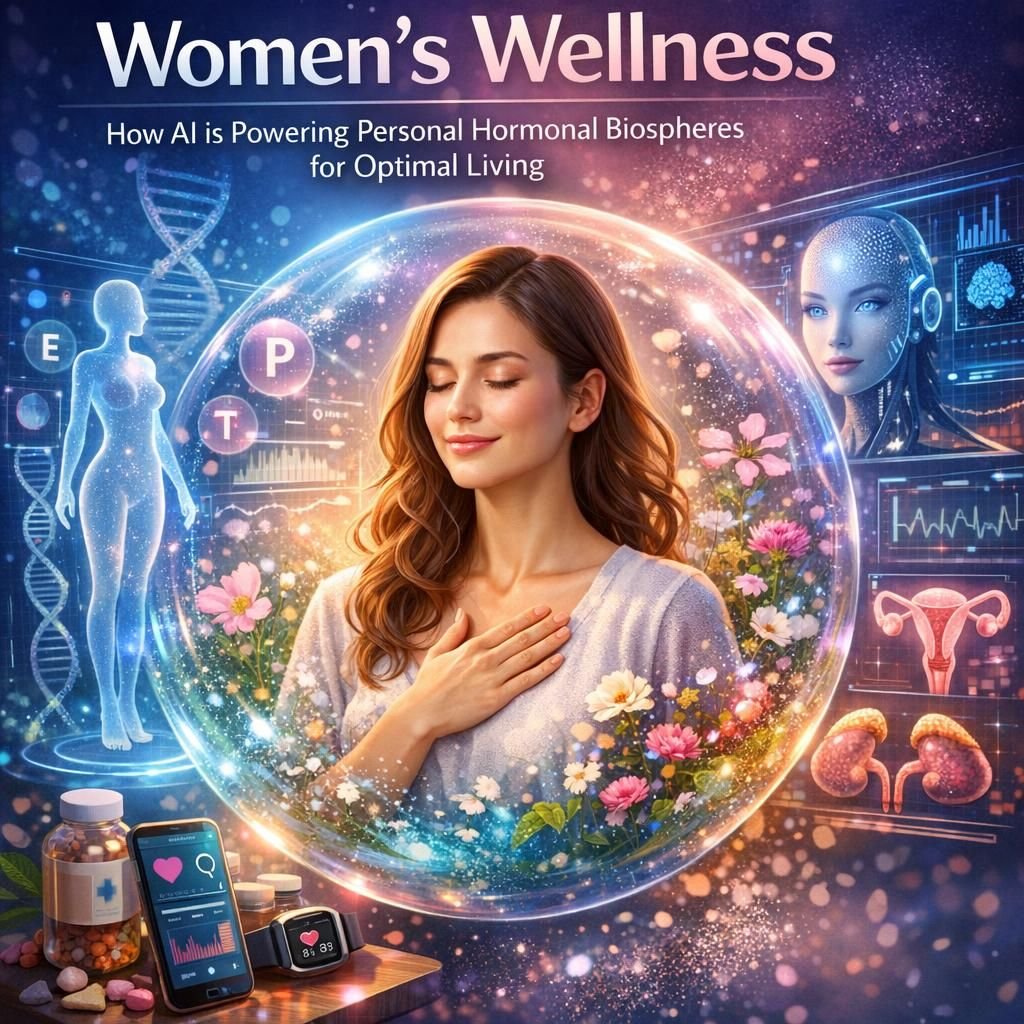
Revolutionizing Women’s Wellness: How AI is Powering Personal Hormonal Biospheres for Optimal Living
In the evolving landscape of digital health, there is a growing emphasis on technologies that empower women to take command of their wellness journey. A frontline technology in this movement is **Artificial Intelligence (AI)**, which is radically transforming the understanding and management of women’s **hormonal health**. **Hormones**, often considered the body’s chemical messengers, play a crucial role in regulating physical and emotional well-being, affecting everything from mood to sleep, energy levels, and reproductive health. However, hormonal imbalances can lead to chronic conditions and disrupt daily life, underscoring the need for personalized wellness solutions.
**Enter the era of AI-powered personal hormonal biospheres**—a term that encapsulates custom, data-driven approaches to managing hormonal health. These biospheres use complex algorithms to analyze a myriad of data points, including **genetic information**, **lifestyle habits**, and daily **biometrics**, to provide actionable insights tailored to individual needs. This personalized approach ensures that women not only monitor their hormonal health but also proactively optimize it.
AI technologies are making it possible to uncover patterns and correlations that were previously invisible to the human eye. By harnessing **machine learning**, these systems can continuously learn and evolve based on user input and emerging scientific data. For example, AI can detect subtle changes in **menstrual cycles** or predict **ovulation** with greater accuracy, allowing women to manage fertility more effectively. Beyond reproductive health, these technologies can offer solutions for managing stress, enhancing sleep quality, and curating diet and exercise plans that support hormonal balance.
These innovations reflect a broader shift towards **precision health**, where AI supports individualized care rather than a one-size-fits-all approach. This shift empowers women with enhanced agency over their health, enabling proactive interventions that align with their unique physiological needs. Such a paradigm change not only improves quality of life but also contributes to the development of a well-informed community of women who can advocate for their health effectively.
Features
Several groundbreaking studies and developments highlight AI’s role in transforming women’s hormonal health. A study published in *Nature Biotechnology* explored how AI-driven platforms could predict hormonal fluctuations by analyzing patterns in biometric data [source: Nature Biotechnology](https://www.nature.com/nbt/). This highlights the potential of AI to create nuanced hormonal profiles that consider individual variations.
Another significant contribution comes from researchers at the Stanford Center for Genomics, who have developed AI models capable of predicting **polycystic ovary syndrome (PCOS)** with high accuracy. By analyzing a vast array of clinical data, these models could revolutionize early diagnosis and management strategies for this common hormonal disorder [source: Stanford Center for Genomics](https://med.stanford.edu/genomics.html).
The involvement of AI in women’s health is also evident in the commercial arena. Applications like **Clue** and **Flo**, which are integrated with AI technologies, offer users personalized insights into their menstrual cycles and overall hormonal health. These apps gather user input and use predictive algorithms to offer tailored advice, improving users’ understanding of their bodies and providing guidance on health and wellness decisions [source: [Clue](https://helloclue.com/), [Flo](https://flo.health/)).
Furthermore, AI’s capability extends to dietary and lifestyle recommendations. A study highlighted in *The Journal of Women’s Health* indicates that AI can process dietary habits and suggest modifications that could help balance hormones naturally. By recognizing patterns in nutrient intake and their effects on hormonal cycles, AI provides insights into potential deficiencies or excesses [source: The Journal of Women’s Health](https://www.liebertpub.com/womenshealth)).
These advancements illustrate a growing confidence in AI’s potential to foster a deeper understanding of **women’s health**, creating a dialogue that merges healthcare, technology, and personal empowerment.
Conclusion
AI’s integration into women’s wellness represents a transformative step towards **personalized healthcare**. By facilitating a deeper understanding of **hormonal health** and offering tailored wellness solutions, AI empowers women to optimize their health and wellbeing like never before. As we continue to advance in this technological age, the potential for AI to enhance **women’s wellness** only grows, promising a future of informed decision-making and proactive health management. Through AI’s lens, the vision of a comprehensive, individualized approach to health is not just possible—it’s already taking shape.
Concise Summary
Artificial Intelligence (AI) is revolutionizing women’s wellness by enabling personalized approaches to hormonal health through data-driven insights. AI-powered personal hormonal biospheres use algorithms to analyze genetic, lifestyle, and biometric data, offering tailored wellness solutions. By providing deeper understanding and effective management of conditions like PCOS and offering personalized insights into menstrual cycles, AI helps women optimize their health. The shift towards precision health allows for individualized care, enhancing women’s agency over their wellness and contributing to a well-informed community advocating for better health management.
“`

Dominic E. is a passionate filmmaker navigating the exciting intersection of art and science. By day, he delves into the complexities of the human body as a full-time medical writer, meticulously translating intricate medical concepts into accessible and engaging narratives. By night, he explores the boundless realm of cinematic storytelling, crafting narratives that evoke emotion and challenge perspectives. Film Student and Full-time Medical Writer for ContentVendor.com