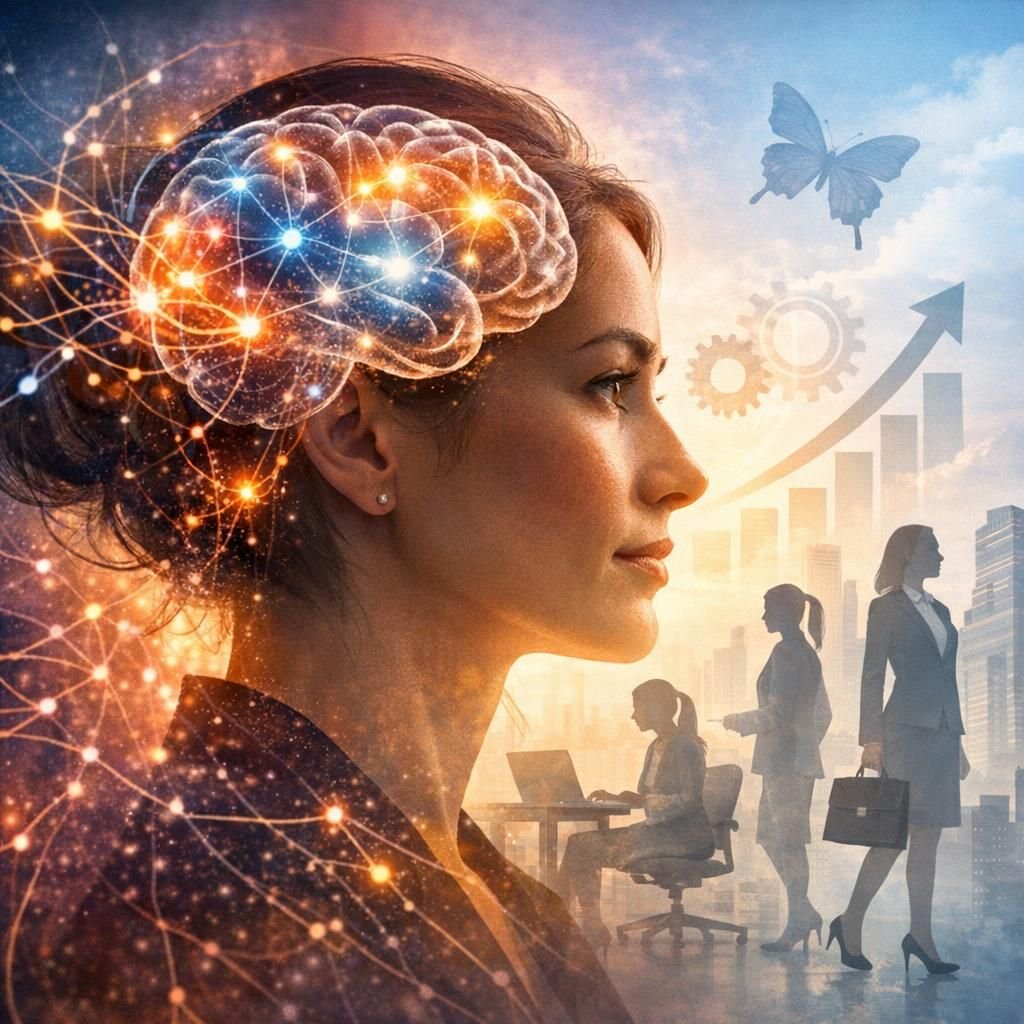
Unlocking the Power of Feminine Cycles in Business Strategy: A New Era of Leadership
**Introduction**
In the dynamic global marketplace, businesses are seeking innovative strategies to stay competitive. Traditionally influenced by **masculine paradigms** such as control and structure, the business world is shifting towards **inclusive leadership** approaches. A groundbreaking concept involves incorporating **feminine cycles**, historically associated with women’s biological and intuitive processes, into business strategy. While unconventional, this approach advocates for using these cycles to foster productivity, creativity, and effective decision-making. It promotes a balanced approach of activity and reflection, leading to enhanced creativity and employee well-being.
With societal norms becoming more inclusive, the opportunity to integrate **feminine cycles** into strategic planning positions companies to align goals with the often non-linear path of progress, promoting sustainable, human-centric business models.
Features
There is increasing scientific and professional support for integrating **feminine cycles** into business strategies. Research shows that acknowledging diverse biological processes can enhance team dynamics and leadership efficacy. A study in the *Journal of Business Research* indicates that women aligning their work with their menstrual cycle experience increased productivity and creativity during different cycle phases. Creative outputs are enhanced during the follicular phase, where rising estrogen levels contribute to increased energy and cognitive function [Journal of Business Research](https://www.sciencedirect.com/journal/journal-of-business-research).
From a medical standpoint, understanding hormonal fluctuations empowers women to schedule tasks around their strengths, fostering a workplace culture that respects individual pacing and needs. Acknowledging these cycles is akin to strategic retreats or downtime, essential for long-term innovation and sustainability. The *Human Performance Institute* advocates recognizing personal energy rhythms to optimize performance and well-being [Human Performance Institute](https://www.humanperformanceinstitute.com/).
Furthermore, a report by the *Fawcett Society* highlights the macroeconomic benefits of diversity in leadership. It claims harnessing feminine principles can lead to more ethical decision-making processes, fostering environments built on empathy, trust, and empowerment—key assets in today’s market [Fawcett Society](https://www.fawcettsociety.org.uk/).
These insights don’t call for replacing conventional methods but enhancing them by including the unique capabilities that **feminine cycles** can provide. Inclusivity is crucial for companies aiming to attract and retain top-tier diverse talent.
**Conclusion**
Incorporating **feminine cycles** into business strategies represents progress towards innovative leadership. By valuing cyclical processes and diverse perspectives, organizations can cultivate a nurturing and productive workplace. Embracing these natural rhythms acknowledges the strengths of the workforce, paving the way for an empathetic and sustainable future. In today’s business landscape, aligning with the power of **feminine cycles** is not just an opportunity but a necessity for success.
**Concise Summary**
This article explores the integration of feminine cycles into business strategies, promoting an inclusive leadership approach that values the rhythmic biological and intuitive processes traditionally associated with women. By aligning business practices with these natural cycles, companies can enhance productivity, creativity, and employee well-being. Research supports the idea that understanding diverse biological processes aids team dynamics, ethical decision-making, and sustainable development. Embracing **feminine cycles** is a forward-thinking strategy that fosters more empathetic, human-centric business models essential for thriving in today’s evolving marketplace.

Dominic E. is a passionate filmmaker navigating the exciting intersection of art and science. By day, he delves into the complexities of the human body as a full-time medical writer, meticulously translating intricate medical concepts into accessible and engaging narratives. By night, he explores the boundless realm of cinematic storytelling, crafting narratives that evoke emotion and challenge perspectives. Film Student and Full-time Medical Writer for ContentVendor.com