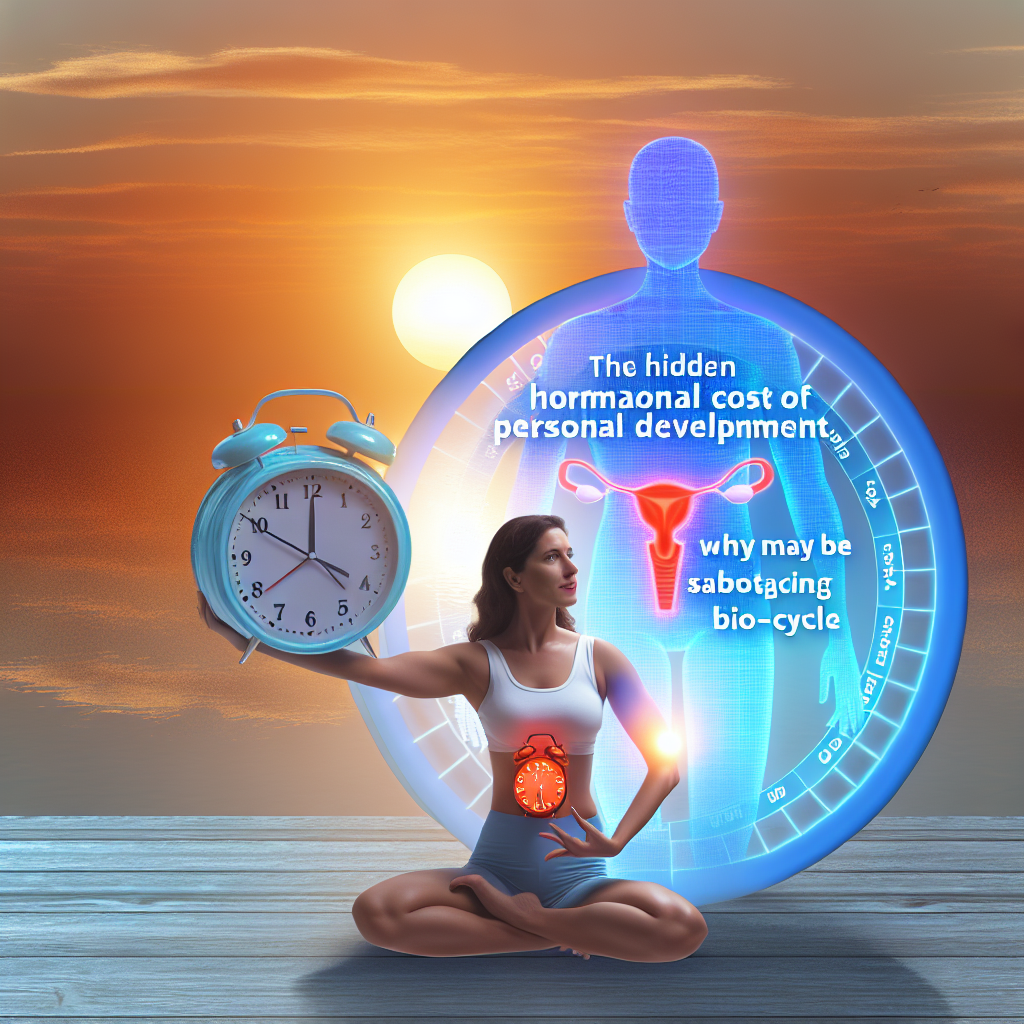
The Hidden Hormonal Cost of Personal Development: Why Self-Optimization May Be Sabotaging Your Bio-Cycle
Introduction
In an era where self-optimization is at the forefront of personal development, people are more inclined than ever to invest time and resources into enhancing their physical, mental, and emotional well-being. Luxurious wellness retreats, high-performance biohacking gear, and a myriad of productivity-enhancing apps have become part of a lavish lifestyle that caters to individuals seeking peak performance. While these advancements promise extraordinary results, there’s an untold story intertwining within this quest for self-improvement—one that involves our body’s delicate hormonal balance.
Our bodies function on an intricate bio-cycle, regulated by hormones that dictate everything from mood to metabolism. In the pursuit of constant self-upgrade, many individuals may inadvertently disrupt these natural hormonal rhythms, creating an imbalance that can have unintended consequences on health and wellness. Understanding the hidden hormonal costs of personal development is imperative for anyone engaged in the luxury of self-optimization.
The article expands on the topic by discussing how exposure to artificial light from screens late into the night, excessive exercise routines, fasting diets, and the use of supplements intended to enhance cognitive performance can lead to hormonal disruptions. For instance, lack of sleep and irregular circadian rhythms can interfere with melatonin production, a hormone essential for quality sleep and recovery. Furthermore, excessive stress from intense exercise or strict diets can spike cortisol levels, causing fatigue and reducing the body’s capacity to recover efficiently. Recognizing these signals early can prevent prolonged hormonal disturbance and promote a truly balanced lifestyle in harmony with our natural biological cycles.
Features
Scientific studies increasingly highlight the complex interplay between self-optimization practices and hormonal balance. A study published in [“The Journal of Endocrinology”](https://joe.bioscientifica.com/view/journals/joe/232/3/JOE-16-0105.xml) reveals that chronic exposure to stressors like reduced sleep quality and caloric restriction can significantly alter the hypothalamic-pituitary-adrenal (HPA) axis, a major component of the body’s stress response system. This alteration leads to irregularities in cortisol production, and can manifest as decreased immunity, altered appetite, and mood disturbances.
Additionally, research published in [“The American Journal of Clinical Nutrition”](https://academic.oup.com/ajcn/article/107/5/759/4945683) suggests that intermittent fasting, a popular self-improvement trend, can affect menstrual cycles and reproductive hormones in women by influencing the body’s energy-balance system. While intermittent fasting may offer benefits like improved metabolic markers, it is not one-size-fits-all and requires careful consideration of individual hormonal health.
Moreover, studies in chronobiology, such as those detailed in the [“British Journal of Sports Medicine”](https://bjsm.bmj.com/content/early/2019/07/17/bjsports-2018-100083), emphasize the importance of aligning physical activity with the body’s natural circadian rhythms. Disregarding these can lead to hormonal imbalances that affect athletic performance, recovery, and overall well-being. For instance, exercising intensely late at night can hinder the natural wind-down process of the body, affecting sleep quality and muscle recovery.
Clinical endocrinologist statements highlight the potential for biohacking instruments to cause dysregulated insulin levels, especially with gadgets that monitor glucose intermittently—misleading data can lead to unnecessary dietary or lifestyle changes, thereby disrupting the hormone’s natural cycle. Rather than blindly following self-improvement trends, consulting with healthcare professionals can accrue benefits for achieving a balanced bio-cycle.
Conclusion
While the journey towards self-optimization and high-end wellness is enticing, the hidden hormonal costs can compromise your health if not managed appropriately. Striking a balance between ambition and awareness ensures that your lavish lifestyle fosters well-being without undermining your natural harmony. Embrace informed decisions, listen to your body’s cues, and prioritize long-term health over instant results.
**Concise Summary**
The drive for self-optimization, though promising, can lead to hormonal imbalances when natural routines are disrupted. Factors like poor sleep, excessive exercise, and restrictive diets can spike cortisol levels and impact hormones like melatonin. Research indicates chronic stress and fasting trends affect the hypothalamic-pituitary-adrenal axis and reproductive health, necessitating a balanced approach to personal development. Aligning activities with natural circadian rhythms is essential. Biohacking tools can mislead, emphasizing the need for expert consultation. Balance between self-improvement and hormonal health fosters sustainable well-being.

Dominic E. is a passionate filmmaker navigating the exciting intersection of art and science. By day, he delves into the complexities of the human body as a full-time medical writer, meticulously translating intricate medical concepts into accessible and engaging narratives. By night, he explores the boundless realm of cinematic storytelling, crafting narratives that evoke emotion and challenge perspectives. Film Student and Full-time Medical Writer for ContentVendor.com