Why “Balance” is Burning Women Out — A New Model for Sustainable Power
In today’s fast-paced world, the allure of a **lavish lifestyle** often calls out to those who can afford its beautiful chaos. However, nestled within this chaos is a narrative of “balance” that is wearing down those striving to keep up—especially **women**. The pursuit of a perfectly harmonious life, where **work commitments**, **family responsibilities**, and **personal desires** are seamlessly aligned, is not just ambitious; it is overwhelming. The narrative of **balance** suggests that everything can and should fit together like a puzzle. Yet, reality presents a different picture: the pressure to simultaneously excel in all life aspects is leading many women towards **burnout**.
For decades, the ideal societal image painted for women was one where they juggled **career aspirations** with **home management** and **social obligations** with grace. This expectation is still very much alive, despite years of **gender equality advocacy** and progressive thinking. It suggests that anything less than a picture-perfect balancing act signifies failure, or at the very least, inadequacy. The problem is, “balance” is often misrepresented and misunderstood. It implies a static state of ease and equilibrium that life rarely offers. And for women, especially those climbing the rungs of a **luxury lifestyle**, this notion is particularly unrealistic and unattainable.
What emerges instead is a state of chronic stress—a relentless drive to meet every expectation without faltering. This pressure to maintain an illusion of balance can lead to **mental and physical burnout**, severely affecting women’s health and wellbeing. A [Harvard Business Review](https://hbr.org/2020/09/why-women-mbps-experiencing-burnout) article pointed out that women, particularly those in leadership roles, experience higher levels of stress and burnout than their male counterparts: a symptom of attempting to fulfill disproportionate expectations in both personal and professional spheres.
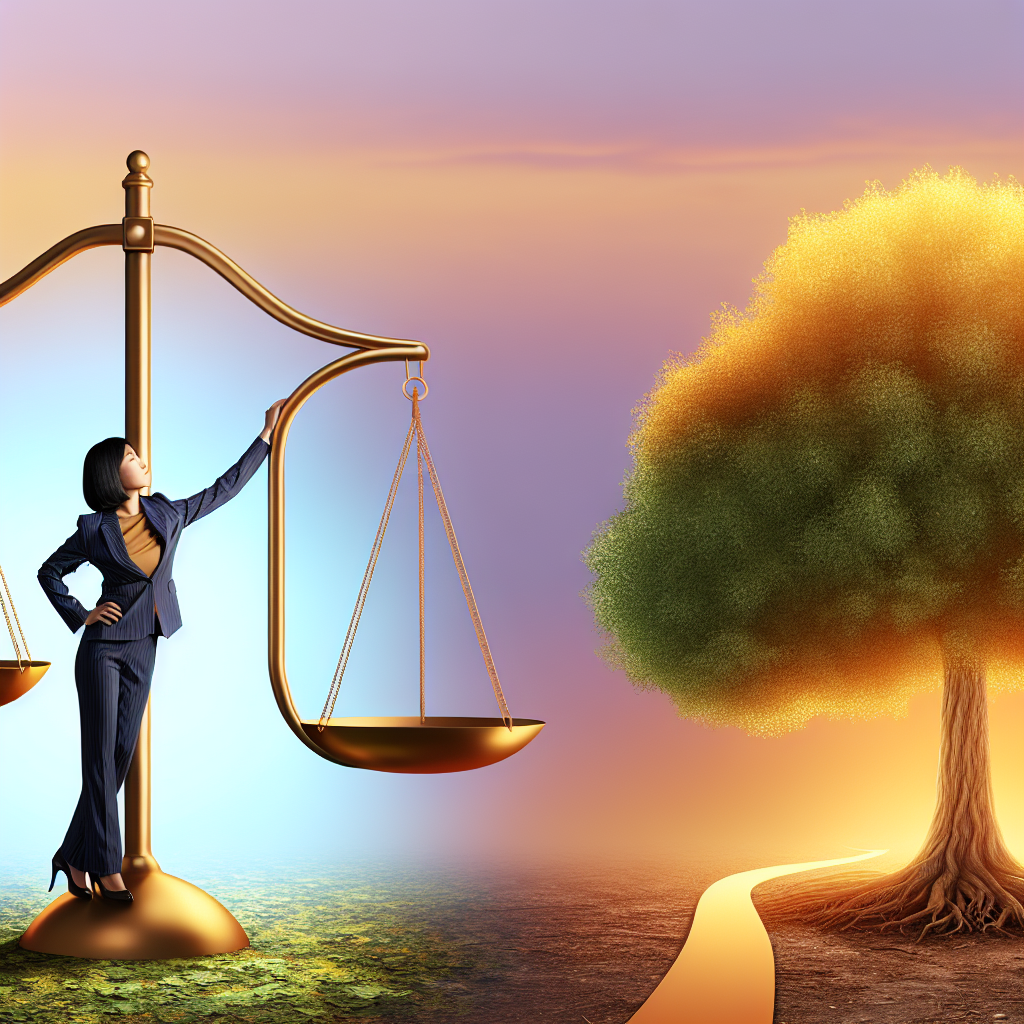
The time has come to redefine what sustainable power looks like for women living in a lavish world. The new model isn’t about perfect balance; it’s about **prioritization**, **delegation**, and **self-compassion**. Let’s explore this transformative approach to harnessing power without succumbing to the burnout caused by the pursuit of an elusive **balance**.
Features: Professional and Medical Studies
The burden of trying to achieve **balance** is a topic of increasing interest among researchers. A study by the [American Psychological Association](https://www.apa.org/news/press/releases/stress/2020/stress-in-america-2020.pdf) revealed that women report higher levels of stress than men, and one of the primary stressors is the struggle to maintain balance in their lives. The study’s findings underscore the negative health implications of this pervasive issue, with many women experiencing **anxiety**, **depression**, and physical health decline stemming from these pressures.
Moreover, **burnout**, which the [World Health Organization classified](https://www.who.int/news/item/28-05-2019-burn-out-an-occupational-phenomenon-international-classification-of-diseases) as an occupational phenomenon, disproportionately affects women. According to a report from [McKinsey & Company and LeanIn.Org](https://www.mckinsey.com/featured-insights/diversity-and-inclusion/women-in-the-workplace), in workplaces striving for gender diversity, women are more likely than men to be operating in a constant state of overdrive to meet the dual demands of their professional and personal lives. The report notes that this often leads to women leaving the workforce at higher rates than men, a clear sign of the unsustainability of their workloads and the imbalance they struggle under.
The harmful effects of this burnout cycle are not confined to mental health. A study published in the [Journal of Health and Social Behavior](https://journals.sagepub.com/doi/full/10.1177/0022146517738988) identified direct correlations between chronic stress and physical illnesses such as **heart disease** and **diabetes**. This is particularly alarming for women in high-stakes lifestyle sectors who not only face professional demands but also societal pressures to sustain an image of success and wellbeing.
Experts propose a shift from seeking **balance** to achieving a sustainable integration of life roles. The emphasis is on **flexibility** and **adaptability** rather than rigidity and precision. It’s about crafting a life that prioritizes personal well-being alongside professional and social commitments—a model that supports long-term success without the emotional and physical toll that traditional notions of balance incur.
Conclusion
The era of chasing **balance** needs to be retired. A new era of sustainable power for women requires redefining what success and fulfillment look like in a luxurious life. By shifting focus from an unattainable state of balance to a more realistic, kinder approach of **integration** and **prioritization**, women can reclaim their well-being and harness their true potential. It’s not about fitting into a mode of perfect balance but rather stepping into a life of intentional, powerful choices that support genuine satisfaction and health.
**Concise Summary**
In an era where the pursuit of balance leads to burnout, particularly among women, a new model emphasizing prioritization and self-compassion is essential. The societal expectation for women to flawlessly juggle personal and professional roles is unrealistic and damaging. Studies show women face higher stress and burnout levels, leading to physical and mental health issues. Instead of chasing an elusive balance, women should focus on sustainable power, integrating life roles for well-being and long-term success.
**References:**
1. [American Psychological Association: Stress in America](https://www.apa.org/news/press/releases/stress/2020/stress-in-america-2020.pdf)
2. [Harvard Business Review on Women’s Burnout](https://hbr.org/2020/09/why-women-mbps-experiencing-burnout)
3. [McKinsey & Company and LeanIn.Org – Women in the Workplace 2020 Report](https://www.mckinsey.com/featured-insights/diversity-and-inclusion/women-in-the-workplace)
4. [Journal of Health and Social Behavior on Chronic Stress](https://journals.sagepub.com/doi/full/10.1177/0022146517738988)
5. [World Health Organization: Burn-out an “occupational phenomenon”](https://www.who.int/news/item/28-05-2019-burn-out-an-occupational-phenomenon-international-classification-of-diseases)

Dominic E. is a passionate filmmaker navigating the exciting intersection of art and science. By day, he delves into the complexities of the human body as a full-time medical writer, meticulously translating intricate medical concepts into accessible and engaging narratives. By night, he explores the boundless realm of cinematic storytelling, crafting narratives that evoke emotion and challenge perspectives. Film Student and Full-time Medical Writer for ContentVendor.com