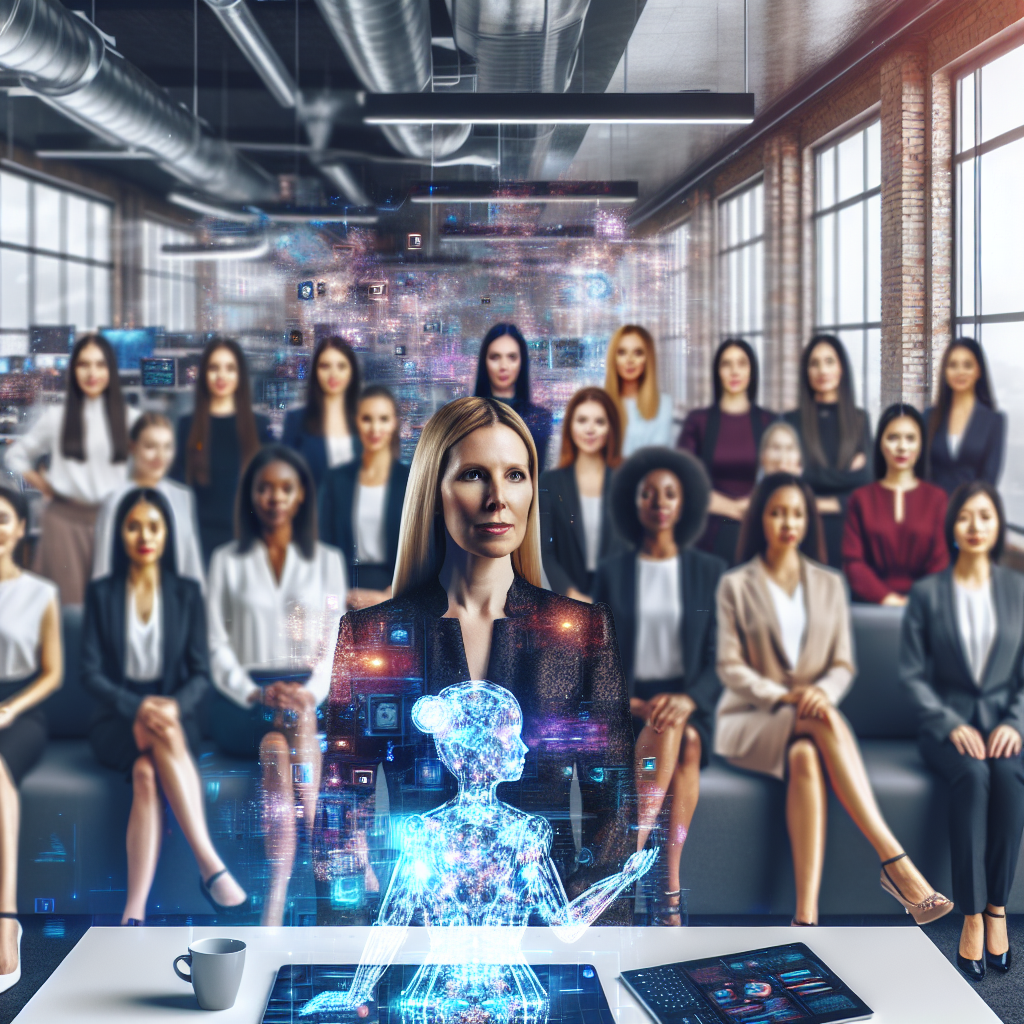
The Hidden Power of Soft Skills: How Women Are Redefining Leadership in the AI Era
In the dynamic landscapes of the business and tech worlds, there’s an ongoing discourse on the pivotal role of **artificial intelligence (AI)** in reshaping industries and **job markets**. However, beneath the mechanical algorithms and data exchanges lies a critical, often underappreciated element of leadership—**soft skills**. As we transition deeper into the AI era, these intrinsic human attributes are gaining unparalleled significance. Notably, women are emerging as vanguards in redefining leadership paradigms through their inherent proficiency in **soft skills**, which are fostering environments of collaboration, empathy, and **innovation**.
AI and Soft Skills in Leadership
The intersection of **AI** and soft skills in leadership has never been more relevant. AI algorithms are primed to manage and analyze tasks with precision, but they cannot replicate the nuanced touch of human insight and **emotional intelligence**. This is where **soft skills**—communication, empathy, adaptability, problem-solving, and teamwork—come into play. These skills are indispensable in leadership roles as they cultivate a nurturing, innovative, and inclusive workplace culture.
Women, through their varied experiences and perspectives, have historically brought a unique lens to leadership. They tend to excel in collaborative environments, often championing inclusive strategies and advocating for diversity. According to the **World Economic Forum**, women are naturally adept at embracing and enhancing soft skills, and this finesse is increasingly recognized as a linchpin for effective leadership in the age of AI.
The AI era demands visionary leaders who not only understand technological capabilities but who can also harness human potential seamlessly. This paradigm shift is empowering women to ascend into leadership roles where they can influence change at macro levels. Importantly, **studies** indicate that organizations led by women or with significant female representation experience higher employee satisfaction, foster more innovation, and often achieve better financial outcomes.
The Influence of Studies and Research
Scientific and professional **studies** back the claims on the transformative impact of **soft skills** championed by women in leadership. A study published in the **Harvard Business Review** highlights that female leaders are often rated higher than their male counterparts on vital leadership competencies such as inspiring and motivating others, building relationships, developing others, and displaying high integrity and honesty. These competencies resonate closely with soft skills that AI cannot emulate.
The **McKinsey Global Institute’s** “Women Matter” report also emphasizes how companies with gender-diverse executive teams led by proficient soft-skilled leaders perform better financially. They experience increased profitability and long-term value creation, asserting that gender-diverse leadership teams benefit from broader perspectives, better decision-making, and improved company reputation (Source: [McKinsey Global Institute](https://www.mckinsey.com)).
Moreover, the **World Economic Forum’s** “Future of Jobs Report” indicates a growing demand for human-centric skills in technological ecosystems, exacerbating the need for leaders who can bridge human and AI capabilities. This demand positions women uniquely as they utilize soft skills to navigate complexities in AI-driven environments, thus proving essential in realizing synergies between human creativity and machine efficiency (Source: [World Economic Forum](https://www.weforum.org)).
**Tech giants** are increasingly prioritizing soft skills as core elements in their leadership recruitment and training strategies, confirming the trend wherein soft-skilled leadership is crucial amidst the technological revolution. For example, **Google’s** own studies confirm that qualities leading to successful leadership are emotional intelligence, collaboration, and being able to coach teams effectively, underscoring the diminishing view of technical prowess as the singular determinant of success (Source: [Google Research](https://research.google)).
Conclusion
As the **AI era** progresses, the hidden power of **soft skills** continues to redefine leadership, with women emerging as eminent trailblazers. Their ability to integrate emotional intelligence with strategic vision invites a new leadership paradigm not confined to gender norms but one that is humane and impactful. By marrying technological innovation with soft-skilled leadership, women are not merely participating in the fourth industrial revolution—they are leading it. This leadership renaissance embodies a future where success is equated not just by technology but by the depth of human connection and understanding.
**Concise Summary:**
In the AI era, the importance of **soft skills** is escalating, offering women a unique platform to redefine leadership. Unlike AI’s technical prowess, women’s inherent skills in areas like empathy and communication are fostering inclusive and innovative environments. Studies confirm that female leaders often excel in emotional intelligence, and organizations with gender-diverse leadership achieve superior financial and cultural outcomes. As companies like Google emphasize these qualities, women are not only participating in the AI revolution but leading it, ensuring a future where human connection and understanding are as valued as technology.

Dominic E. is a passionate filmmaker navigating the exciting intersection of art and science. By day, he delves into the complexities of the human body as a full-time medical writer, meticulously translating intricate medical concepts into accessible and engaging narratives. By night, he explores the boundless realm of cinematic storytelling, crafting narratives that evoke emotion and challenge perspectives. Film Student and Full-time Medical Writer for ContentVendor.com