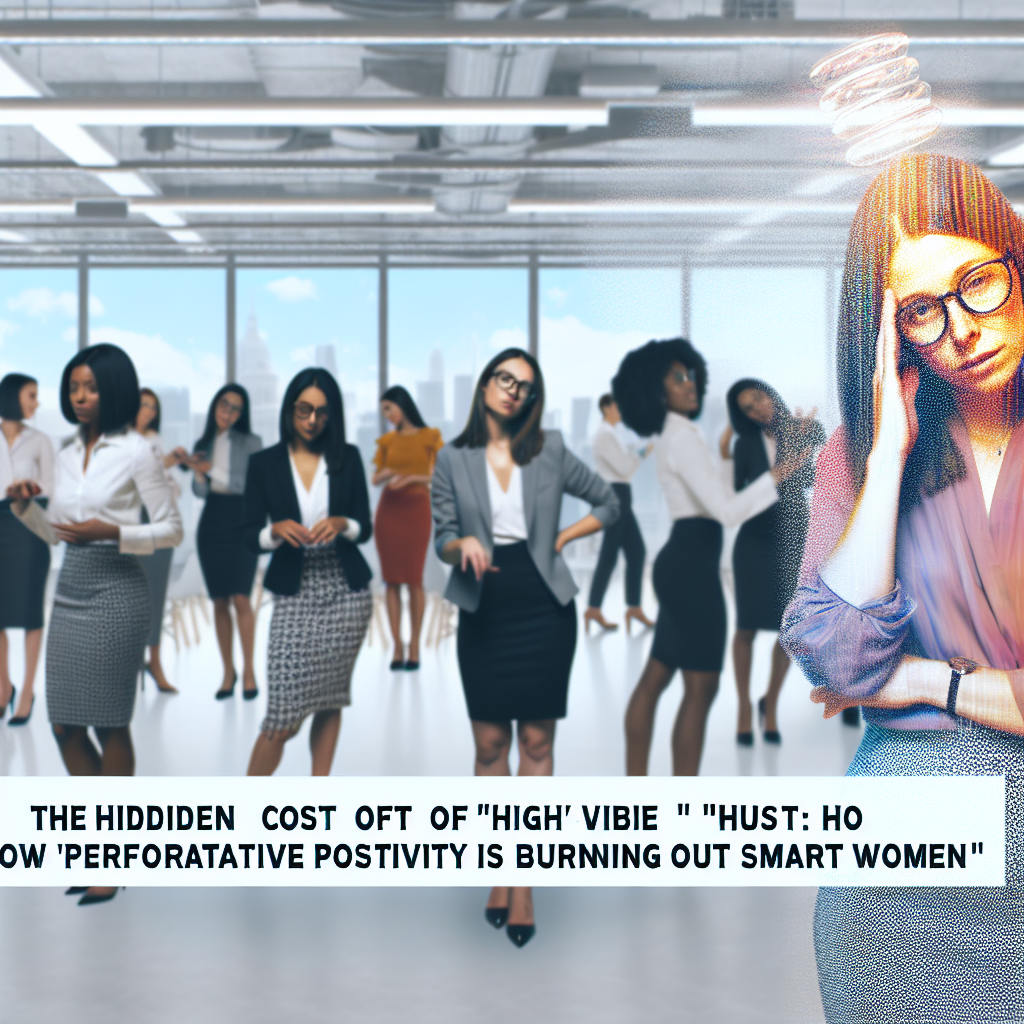
The Hidden Cost of “High-Vibe” Hustle: How Performative Positivity is Burning Out Smart Women
In today’s **digital-first world**, a new trend called the “**high-vibe hustle**” has emerged, particularly affecting ambitious women. It emphasizes maintaining a facade of **perpetual positivity** and success, driven by the broader hustle culture. This pressure is exacerbated for women due to societal expectations to stay cheerful and composed. While positivity can be beneficial, the insistence on being endlessly positive often overlooks the natural ebb and flow of human emotions, leading to a disconnect that can result in **burnout**.
Social media plays a significant role in amplifying this performative positivity, as it encourages users to share only the highlights of their lives, potentially leading to emotional exhaustion and **anxiety**. As women strive to keep up with this unrealistic standard, they may equate success with their ability to juggle challenges while appearing cheerful, unaware of the detrimental effects this can have on their **mental health**.
Features: Studies and Insights
Numerous studies have explored the effects of constant positivity, especially in high-pressure environments. **Lisa Feldman Barrett**, a psychologist, has researched **emotional granularity** and found that accepting a range of emotions can lead to greater psychological resilience. According to the [Harvard Business Review](https://hbr.org/2016/11/emotional-agility), emotional agility is crucial for overcoming challenges. Additionally, **toxic positivity** is increasingly recognized in psychology; as stated in [Psychology Today](https://www.psychologytoday.com/us/basics/toxic-positivity), suppressing genuine emotions in favor of forced positivity can lead to shame and guilt.
Research from the [University of Pennsylvania](https://www.apa.org/news/press/releases/2018/11/social-media-depression) links increased social media usage with declining mental health, particularly among young women, who may feel inadequate when comparing themselves to curated portrayals online. In the workplace, studies like one from the [Journal of Organizational Behavior](https://onlinelibrary.wiley.com/doi/abs/10.1002/job.2187) reveal that the pressure to maintain positivity can negatively impact job performance and satisfaction.
Conclusion
The “high-vibe” lifestyle embodies both the allure and dangers of **performative positivity**. It’s crucial for women to distinguish between genuine positivity and its toxic counterpart to preserve mental well-being. Embracing a holistic approach that allows vulnerability can foster resilience and fulfillment. Recognizing these hidden costs helps pave the way for a more authentic cultural narrative that celebrates genuine experiences and sustainable achievements.
**References**
1. [Harvard Business Review: Emotional Agility](https://hbr.org/2016/11/emotional-agility)
2. [Psychology Today: Toxic Positivity](https://www.psychologytoday.com/us/basics/toxic-positivity)
3. [University of Pennsylvania: Social Media and Depression](https://www.apa.org/news/press/releases/2018/11/social-media-depression)
4. [Journal of Organizational Behavior: Positivity Pressure](https://onlinelibrary.wiley.com/doi/abs/10.1002/job.2187)
Concise Summary:
The “high-vibe” hustle pressures women to maintain a front of perpetual positivity, often at the cost of their mental health. Amplified by social media, this trend leads to burnout and anxiety. Studies emphasize the importance of embracing a range of emotions for true resilience. Acknowledging these hidden costs can help shift cultural narratives towards more authentic and sustainable expressions of success.

Dominic E. is a passionate filmmaker navigating the exciting intersection of art and science. By day, he delves into the complexities of the human body as a full-time medical writer, meticulously translating intricate medical concepts into accessible and engaging narratives. By night, he explores the boundless realm of cinematic storytelling, crafting narratives that evoke emotion and challenge perspectives. Film Student and Full-time Medical Writer for ContentVendor.com