Hormonal Intelligence: The Key to Unlocking Authentic Female Leadership in Today’s Corporate World
In the ever-evolving realm of **corporate leadership**, where **innovation** and **emotional intelligence** are highly prized, a new paradigm is emerging that recognizes the profound impact of **hormonal intelligence** on female leadership. Historically, discussions around **hormones** in professional settings have often been limited or cloaked in stigma. However, as our understanding of **endocrinology** in women deepens, there’s a growing acknowledgment of how hormones can significantly influence leadership styles, decision-making, and overall workplace effectiveness. This burgeoning body of knowledge is not just reshaping perceptions but is also empowering women to harness their hormonal cycles as a source of strength.
Understanding Hormonal Intelligence
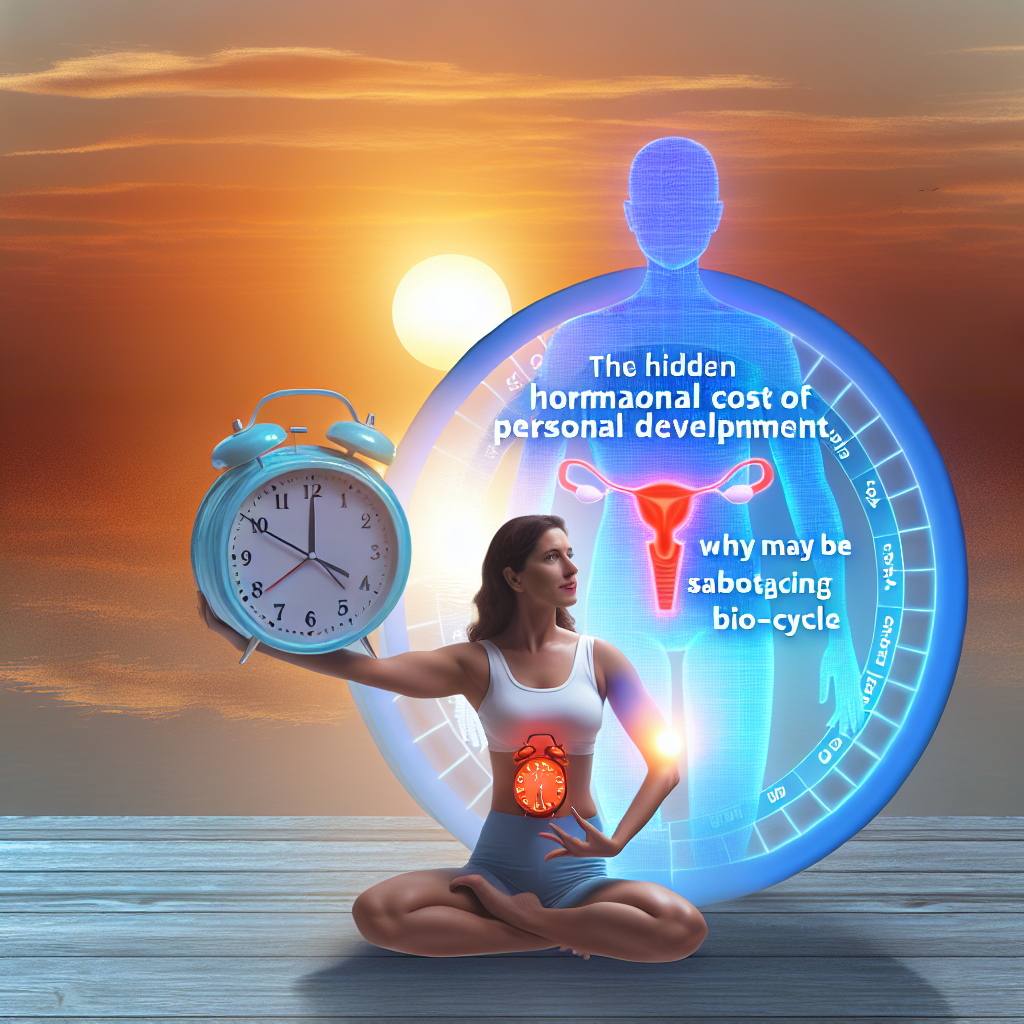
**Hormonal intelligence** refers to one’s ability to understand and use insights from hormonal fluctuations to enhance leadership efficacy. This concept is particularly relevant for women, whose hormonal changes throughout the menstrual cycle, pregnancy, postpartum, and menopause phases can impact emotional and cognitive functions. Contrary to outdated beliefs that these changes hinder women’s professional capacities, an awareness and strategic use of hormonal intelligence can actually augment skills such as empathy, creativity, and problem-solving. For instance, during the **follicular phase**, which is the first half of the menstrual cycle, increased **estrogen levels** boost communication skills, which can aid in team-oriented tasks and negotiations.
Application in Corporate Settings
In today’s corporate settings, where authentic leadership is celebrated for its ethical influence and motivational prowess, **hormonal intelligence** offers a unique pathway for women to lead with authenticity and confidence. By aligning work tasks with hormonal strengths, women can optimize performance and well-being. This alignment not only fosters personal success but also models a viable, sustainable approach to leadership that blends professional ambition with self-care. Moreover, **corporate cultures** that support this awareness cultivate environments where women feel empowered to express and leverage their intrinsic strengths without stigma or reservation, ultimately driving diversity and innovation company-wide.
Features
Emerging research and professional insights underscore the value of hormonal intelligence in corporate leadership. A study published in the [Frontiers in Psychology](https://www.frontiersin.org/articles/10.3389/fpsyg.2019.00001/full) highlights how hormonal fluctuations can influence mood, energy levels, and cognitive function across different phases of the menstrual cycle. This research suggests that understanding these fluctuations can help women optimize their work-life balance, contributing to heightened creativity, emotional intelligence, and strategic decision-making.
Furthermore, a report from the [Harvard Business Review](https://hbr.org/2015/04/how-leaders-manage-their-emotions) emphasizes the role of **emotional intelligence**—closely tied to hormonal intelligence—as a key predictor of effective leadership. This report posits that leaders, especially women, who cultivate a deep awareness of their physiological and emotional states are better equipped to engage empathetically with their teams, manage stress, and drive change.
On the professional front, numerous companies are adopting wellness programs and training workshops to educate employees about hormonal health. These initiatives are designed not only to debunk myths but also to equip women with practical strategies to leverage their hormonal cycles for enhanced performance and leadership. Notably, UK-based company **Forth** offers hormonal mapping, a service that provides women insights into their hormonal rhythms and practical advice for maximizing productivity and well-being. By integrating such resources into the corporate wellness landscape, businesses are recognizing and validating the importance of hormonal intelligence in leadership and personal development.
As awareness grows, more women are encouraged to explore **hormonal coaching services**, which guide them in creating personalized strategies for utilizing their hormonal rhythms in professional contexts. These efforts reflect a broader cultural shift towards acknowledging the profound ways in which biological science can contribute to business innovation and leadership resiliency.
Conclusion
Recognizing and utilizing **hormonal intelligence** is an empowering avenue for women to lead with authenticity and impact in the corporate world. It reflects a modern leadership philosophy that values individuality, empathy, and continuous personal growth. As women learn to harness the power of their hormonal cycles, corporations can expect to see a new era of leadership characterized by genuine connections, sustainable success, and innovative perspectives. By embracing hormonal intelligence, businesses and leaders alike can redefine leadership for a future that is as inclusive as it is dynamic.
**Concise Summary:**
Hormonal intelligence acknowledges the impact of hormonal fluctuations on women’s leadership capabilities, offering a new lens to enhance workplace effectiveness. As understanding grows, integrating this knowledge into corporate environments empowers women to align tasks with hormonal strengths, enhancing empathy and creativity. Companies adopting wellness programs that educate on hormonal health can prosper from diversified and innovative leadership. This strategic adoption reshapes corporate culture, allowing women to lead authentically by leveraging hormonal cycles, ultimately fostering an inclusive and dynamic future in business.

Dominic E. is a passionate filmmaker navigating the exciting intersection of art and science. By day, he delves into the complexities of the human body as a full-time medical writer, meticulously translating intricate medical concepts into accessible and engaging narratives. By night, he explores the boundless realm of cinematic storytelling, crafting narratives that evoke emotion and challenge perspectives. Film Student and Full-time Medical Writer for ContentVendor.com