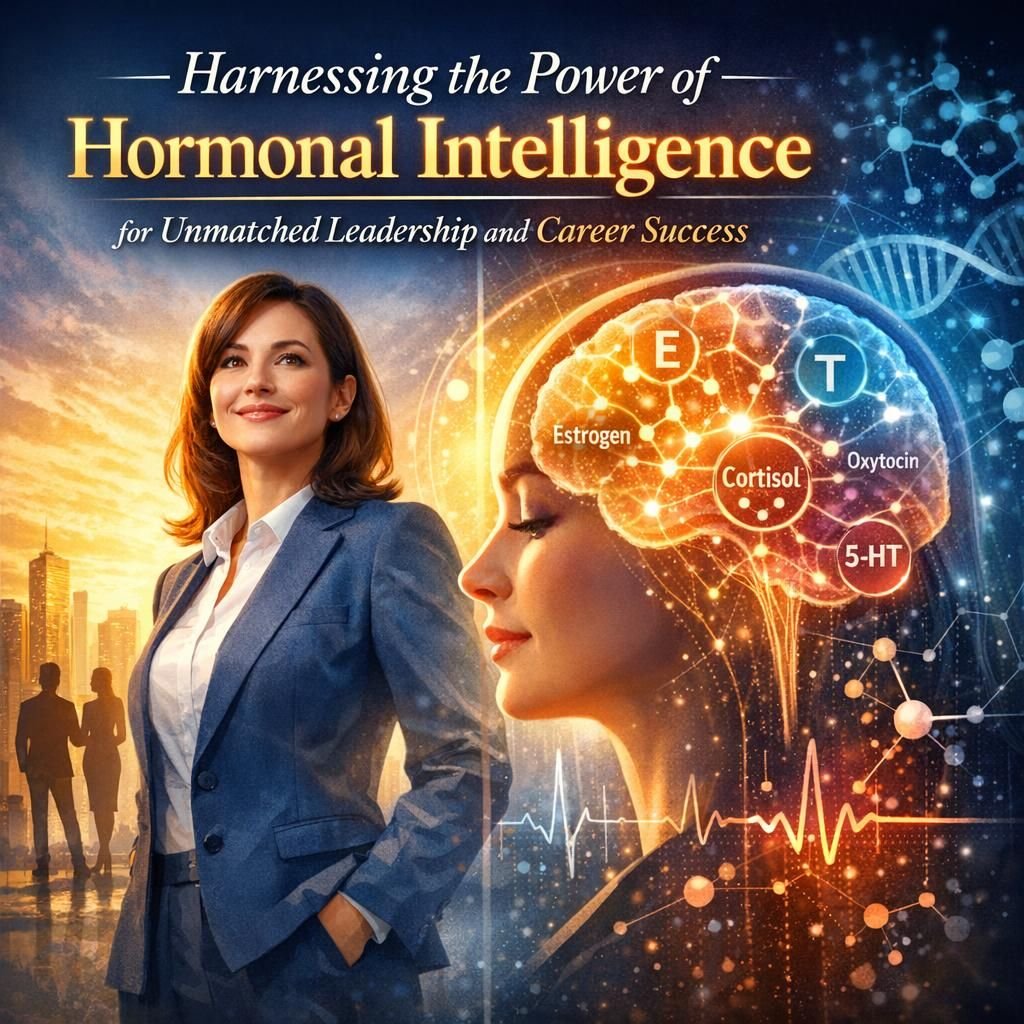
Harnessing the Power of Hormonal Intelligence for Unmatched Leadership and Career Success
**Introduction:**
In the evolving landscape of career success and leadership, traditional skill sets like technical expertise and strategic planning are no longer enough. Today’s leaders, particularly in high-stakes environments, must navigate complex emotional and interpersonal challenges, requiring an advanced toolkit. This is where the concept of “Hormonal Intelligence” becomes an invaluable asset. It’s the ability to understand and manage one’s own **hormonal cycles** and their effects on **mood**, **energy**, **decision-making**, and **interpersonal dynamics**.
Hormonal Intelligence refers to the awareness and regulation of hormones to enhance personal and professional effectiveness. While it’s a concept deeply rooted in medical science, it also intersects with personal development and leadership theory. Hormones such as **cortisol**, **serotonin**, and **oxytocin** have profound effects on mood and behavior. When harnessed properly, they can enhance clarity, improve decision-making, and foster better communication—key attributes for effective **leadership**.
The business world is beginning to take notice of the importance of **emotional intelligence**, **mental health**, and **holistic wellness**. An essential component of this broader movement is recognizing the role of **hormones** in our daily professional lives. Challenging work environments can lead to **stress**, **negative mood swings**, and **decreased productivity**, all of which can be mitigated through hormonal intelligence. By learning to balance and optimize our body’s natural rhythms, not only can we achieve better personal health outcomes, but we also cultivate a leadership style that is both empathetic and results-driven.
For women, in particular, recognizing hormonal cycles and harnessing this intelligence can be transformative. Understanding how hormonal shifts influence emotions and decisions enables female leaders to use their cycles as an energy compass rather than a roadblock. However, this is not gender-specific; men, too, experience hormonal fluctuations that affect their professional efficacy.
**Features:**
Over the past decade, a number of studies and professional fields have highlighted the significance of hormonal intelligence in leadership and career success. One such study published in The Leadership Quarterly examines how **cortisol**, the stress hormone, can affect **decision-making** and leadership behaviors. Elevated cortisol levels can impair judgment and increase the likelihood of making rash decisions. However, leaders who harness their hormonal intelligence can reduce cortisol levels through techniques like **mindfulness** and **exercise**, thereby enhancing their decision-making faculties and maintaining composure under pressure.
Furthermore, the interplay between **oxytocin** and leadership qualities such as **empathy** and **trust-building** has been widely studied. Oxytocin, often referred to as the “bonding hormone,” fosters connection and trust among team members. In environments where collaboration is key, leaders who understand and work with their oxytocin levels can cultivate a more harmonious and effective workplace culture. A study available in Psychoneuroendocrinology indicates that enhancing oxytocin through social bonding activities, such as team-building exercises, can significantly improve professional relationships and collective success.
Another study, published in the Journal of Applied Psychology, highlights the role of **serotonin** in leadership energy and resilience. Leaders with balanced serotonin levels are more likely to remain energized and optimistic, even in the face of challenges. This can be achieved through dietary choices, physical activity, and exposure to natural light, all part of a comprehensive approach to hormonal intelligence.
Incorporating hormonal intelligence into professional development programs can revolutionize workplace dynamics. Training initiatives that educate employees on understanding and managing their hormonal influences can lead to improved well-being, increased productivity, and a more empathetic leadership style.
**Conclusion:**
In a world where leadership success is increasingly defined by interpersonal and emotional capabilities, **hormonal intelligence** offers an unparalleled advantage. By harnessing this burgeoning field, leaders can not only enhance their personal effectiveness but also cultivate a work environment that prioritizes health, balance, and performance. It’s time to embrace hormonal intelligence as the next frontier in career success and unmatched **leadership**.
**Concise Summary:**
Hormonal intelligence is the ability to understand and manage one’s hormonal cycles to enhance leadership and career success. By harnessing hormones such as cortisol, oxytocin, and serotonin, leaders can improve decision-making, empathy, and energy levels. Studies indicate mindfulness and exercise can reduce cortisol, while team-building boosts oxytocin, and serotonin is balanced through diet and activity. As businesses recognize the importance of emotional intelligence and mental health, incorporating hormonal intelligence into professional development can transform workplace dynamics for improved well-being and productivity.

Dominic E. is a passionate filmmaker navigating the exciting intersection of art and science. By day, he delves into the complexities of the human body as a full-time medical writer, meticulously translating intricate medical concepts into accessible and engaging narratives. By night, he explores the boundless realm of cinematic storytelling, crafting narratives that evoke emotion and challenge perspectives. Film Student and Full-time Medical Writer for ContentVendor.com