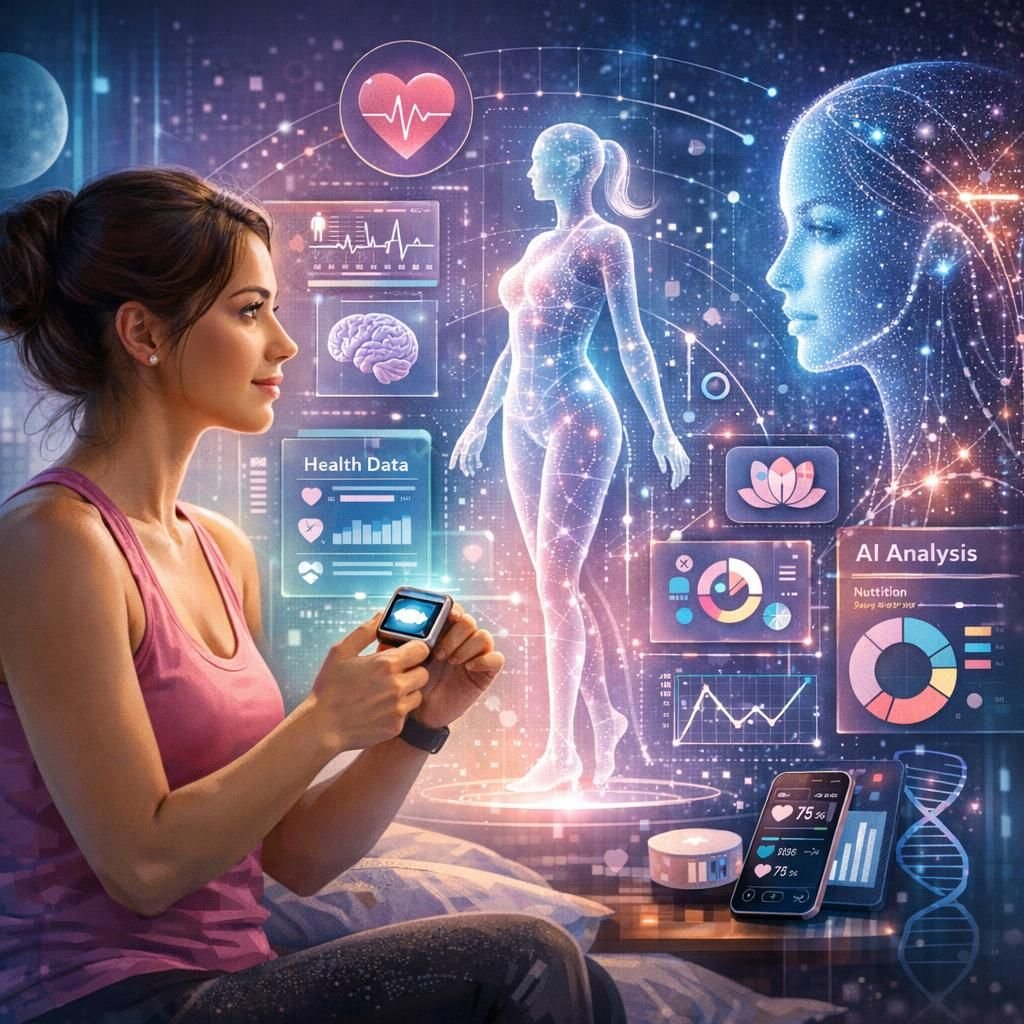
**The Future of Women’s Wellness: Embracing AI to Tailor Personal Health Experiences**
Introduction
The pursuit of **wellness** has undergone a transformative journey over the past few decades, and as we step deeper into the **digital age**, the possibilities for enhancing **personal health experiences** are virtually boundless. **Women**, in particular, demand an approach to **wellness** that respects their unique physiological and emotional needs. Enter **artificial intelligence (AI)**, a groundbreaking force reshaping the landscape of personalized healthcare. This sophisticated technology is poised to redefine how **women** approach not only their physical well-being but also their **mental** and **emotional health**.
In today’s fast-paced world, where **lifestyle** and **environmental factors** constantly challenge our health, the one-size-fits-all model of healthcare is rapidly becoming obsolete. **Women**, given their distinct health profiles, hormonal changes, and life stages, require a more nuanced understanding of their wellness needs. **AI technology**, with its ability to analyze vast amounts of data, offers a beacon of hope for tailoring health strategies that are not just generic but deeply personalized. From wearable devices that monitor real-time health metrics to apps that track menstrual cycles and offer insights into hormonal fluctuations, **AI** is opening doors to individualized care previously thought unimaginable.
Moreover, the societal shift towards prioritizing **mental health** has seen **AI-driven platforms** emerge that cater specifically to **emotional well-being**. These innovations include **virtual therapy assistants** and mood-tracking apps designed to keep **mental health**, in check, offering support 24/7. This technology ensures that **women** do not have to wait for physical appointments to receive guidance and support, thus bridging the gap between need and access.
Essentially, **AI** is crafting a new era for women’s wellness, one that harmonizes technology and empathy to empower **women** by providing them with the tools to take charge of their **health destinies**. As the sector continues to evolve, we’re witnessing an unprecedented collaboration between technology and healthcare, aiming to enhance quality of life, improve health outcomes, and ultimately nurture a generation of women who are not only healthier but also more informed and empowered.
Features
The integration of **AI into women’s wellness** is supported by various professional and medical studies, confirming its efficacy and potential. Research conducted by the **Mayo Clinic** has shown that **AI algorithms** can predict health issues with higher accuracy than traditional methods, particularly in areas of **cardiovascular disease**, which disproportionately affects women [source](https://www.mayoclinic.org/).
One particularly exciting development in this field is the use of **AI** to decode genetic information. A study published in the journal *Nature* discusses the potential of AI to analyze genetic data for personalized medicine. By understanding unique genetic makeups, **AI systems** can recommend lifestyle choices and treatments that align with an individual’s specific health profile, helping to prevent illnesses rather than just treating them [source](https://www.nature.com/).
**AI** is also making waves in the area of **reproductive health**. A project by **Stanford University** explores how AI can accurately predict **ovulation**, helping women who are trying to conceive or, alternatively, control fertility [source](https://www.stanford.edu/). These predictive models use data from wearable devices, such as body temperature and hormone levels, providing an unprecedented level of precision.
**Mental health** is another critical area where AI promises transformation. **IBM’s Watson Health** is developing tools that leverage **natural language processing** to detect signs of **depression** and **anxiety** in patient dialogues, offering real-time support and early intervention strategies [source](https://www.ibm.com/watson/health/).
Despite the promising advancements, it is essential to address the **ethical implications** of AI in healthcare, including concerns around **data privacy** and **algorithmic bias**. The healthcare industry must take steps to foster transparency and ensure equitable access to **AI-powered tools**. According to a report by **McKinsey & Company**, fostering diversity within AI training datasets is crucial to ensure these systems serve **women** from all backgrounds effectively [source](https://www.mckinsey.com/).
Conclusion
As **AI** continues to advance, it holds the potential to revolutionize women’s wellness by providing personalized, accessible, and proactive health solutions. Embracing **AI in health** allows **women** to become active participants in their well-being journey, equipping them with knowledge and control like never before. By ensuring ethical standards, these technologies promise a future where optimal health is not just a possibility, but a personalized and attainable reality for every woman.
**Summary**:
Artificial intelligence (AI) is revolutionizing the way women experience health and wellness by providing personalized healthcare solutions. By analyzing vast data, AI tailors health strategies to meet the unique physiological and emotional needs of women, moving beyond a one-size-fits-all approach. Notable advancements include the prediction of health issues and ovulation, personalized medicine, and tools for mental health support. While AI offers unprecedented personalization and accessibility, ethical concerns such as data privacy and bias must be addressed to ensure equitable access. Ultimately, AI promises to empower women, enabling them to actively participate in their health journey.

Dominic E. is a passionate filmmaker navigating the exciting intersection of art and science. By day, he delves into the complexities of the human body as a full-time medical writer, meticulously translating intricate medical concepts into accessible and engaging narratives. By night, he explores the boundless realm of cinematic storytelling, crafting narratives that evoke emotion and challenge perspectives. Film Student and Full-time Medical Writer for ContentVendor.com