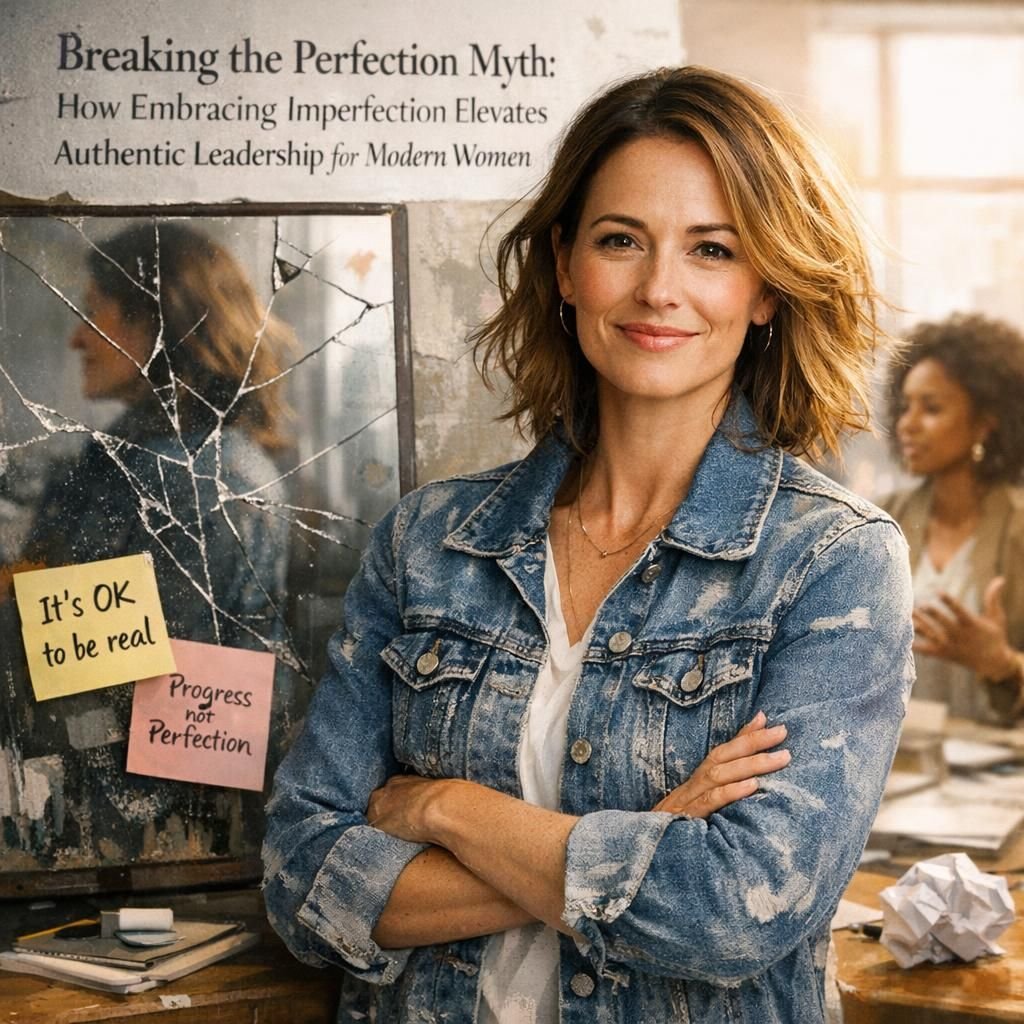
Breaking the Perfection Myth: How Embracing Imperfection Elevates Authentic Leadership for Modern Women
In today’s fast-paced world, where perfection is often idolized and imperfection is frowned upon, the narrative around effective leadership is changing—especially for modern women. From boardrooms to creative industries, embracing imperfection is emerging as a potent tool to engender authentic leadership. Historically, leadership has been about exerting control, exhibiting flawless behavior, and showing no sign of weakness. Yet, as the paradigms shift, the new-age woman leader is embracing authenticity over perfection. This transformative shift is not just a trend but a movement towards holistic and genuine leadership.
The Societal Pressures and the Pursuit of Perfectionism
The societal pressures placed on women, to seamlessly juggle professional and personal lives, often lead to the pursuit of unattainable perfectionism. However, perfectionism has its pitfalls, including stress, burnout, and stifling creativity. In contrast, embracing imperfection humanizes leaders, making them more relatable and approachable. Women leaders who acknowledge their shortcomings and learn from them often inspire their teams to do the same, creating a safe space for innovation and growth. Expanding further, this approach encourages healthier work-life balance, reducing mental health issues often caused by perfectionist tendencies.
The Journey to Authentic Leadership
The journey to authentic leadership involves vulnerability, emotional intelligence, and an appreciation for human fallibility. By understanding that mistakes are integral to learning, leaders can foster a culture where team members feel free to take risks and express innovative ideas without the fear of failure. Not only does this promote a positive work environment, but it also aligns with the contemporary values of inclusivity and diversity. To delve deeper, fostering such environments can lead to enhanced employee satisfaction and retention, driving long-term success.
Breaking Down Traditional Barriers
Moreover, authentic leadership is pivotal in breaking down the traditional barriers that have long impeded women’s progress in corporate hierarchies. By presenting themselves as they are, rather than conforming to a preconceived notion of a ‘perfect leader,’ women have the opportunity to redefine what leadership can look like. This transformation initiates a ripple effect, broadening perspectives, and enthusing future generations of women to lead with authenticity and integrity. This paradigm shift not only helps in gender inclusion but also propels organizations towards sustainable leadership models.
Features: The Science Behind Embracing Imperfection
Several professional and medical studies underline the advantages of embracing imperfection in leadership, corroborating the shift towards authenticity. A study published in the Journal of Business Research reveals that leaders who express vulnerability are perceived as more trustworthy and relatable by their teams. The study emphasizes that acknowledging human flaws and imperfections does not signal weakness but rather presents an opportunity for connection and respect among colleagues.
Psychologically, the act of embracing imperfections is linked to elevated levels of emotional intelligence—a trait increasingly valued in leaders today. According to research published in the Harvard Business Review, leaders who practice emotional intelligence, acknowledging personal flaws and learning from them, create a nurturing environment where team members feel valued and understood. This emotional transparency boosts morale and enhances team cohesion, productivity, and well-being.
From a mental health standpoint, continuously seeking perfection can exacerbate stress, anxiety, and burnout, as addressed in a study by the American Psychological Association. The research highlights that women striving for perfection are more susceptible to psychological distress, impacting their leadership efficacy. By accepting imperfection, women can alleviate these pressures, leading to improved mental well-being and more effective leadership dynamics.
Furthermore, the notion of embracing imperfection aligns with the principles of growth mindset, a concept extensively researched by psychologist Carol Dweck. According to Dweck, individuals and leaders with a growth mindset view challenges as opportunities to grow rather than insurmountable obstacles, thus fostering resilience and adaptability—key traits for effective leadership. More specifically, a growth mindset facilitates continuous learning and development within organizations, promoting adaptability in changing market conditions.
Conclusion
In a world that often equates leadership with flawless execution, redefining this narrative is essential—especially for women. By embracing imperfection and authenticity, female leaders can drive meaningful change, facilitating environments that celebrate creativity and innovation. As the barriers of traditional leadership continue to dissolve, the future becomes a landscape where genuine connections and authentic leadership thrive, shaping not just companies but societal values at large. Transforming leadership narratives will pave the way for inclusive future workplaces, ultimately contributing to a more equitable society.
Concise Summary
As leadership narratives evolve, embracing imperfection has become crucial for women leaders. Rejecting perfectionism allows for authentic, innovative leadership and breaks traditional barriers in corporate settings. Authenticity and vulnerability foster trust and inclusiveness, while scientific studies affirm the advantages of a growth mindset and emotional intelligence. Embracing imperfections improves mental well-being and encourages environments that celebrate creativity. This paradigm shift not only reshapes organizations but also influences societal values, allowing genuine connections and effective leadership to thrive.

Dominic E. is a passionate filmmaker navigating the exciting intersection of art and science. By day, he delves into the complexities of the human body as a full-time medical writer, meticulously translating intricate medical concepts into accessible and engaging narratives. By night, he explores the boundless realm of cinematic storytelling, crafting narratives that evoke emotion and challenge perspectives. Film Student and Full-time Medical Writer for ContentVendor.com