**
Harnessing Feminine Cycles for Peak Productivity: The New Edge in Women’s Work-Life Strategy
**
**Introduction**
In an era where self-optimization is the vogue, the pursuit of peak productivity is a common goal for individuals navigating the high-stakes environment of modern workspaces. However, as organizations and individuals seek new strategies to enhance efficiency and performance, an unconventional concept is taking the spotlight—**harnessing the power of the feminine cycles** for optimal work-life management. This progressive approach acknowledges the unique physiology of women and challenges the traditional, linear work paradigm that has long dominated professional settings.
Understanding the **hormonal cycles** that women experience is essential to realizing how these natural rhythms can be aligned with work responsibilities for enhanced productivity. Conventionally, the workplace has been designed to accommodate a ‘9 to 5,’ Monday-to-Friday schedule, largely shaped by male-oriented **productivity patterns**. For women, this model often requires them to conform to biological schedules that don’t necessarily match their natural ebb and flow of energy, focus, and creativity.
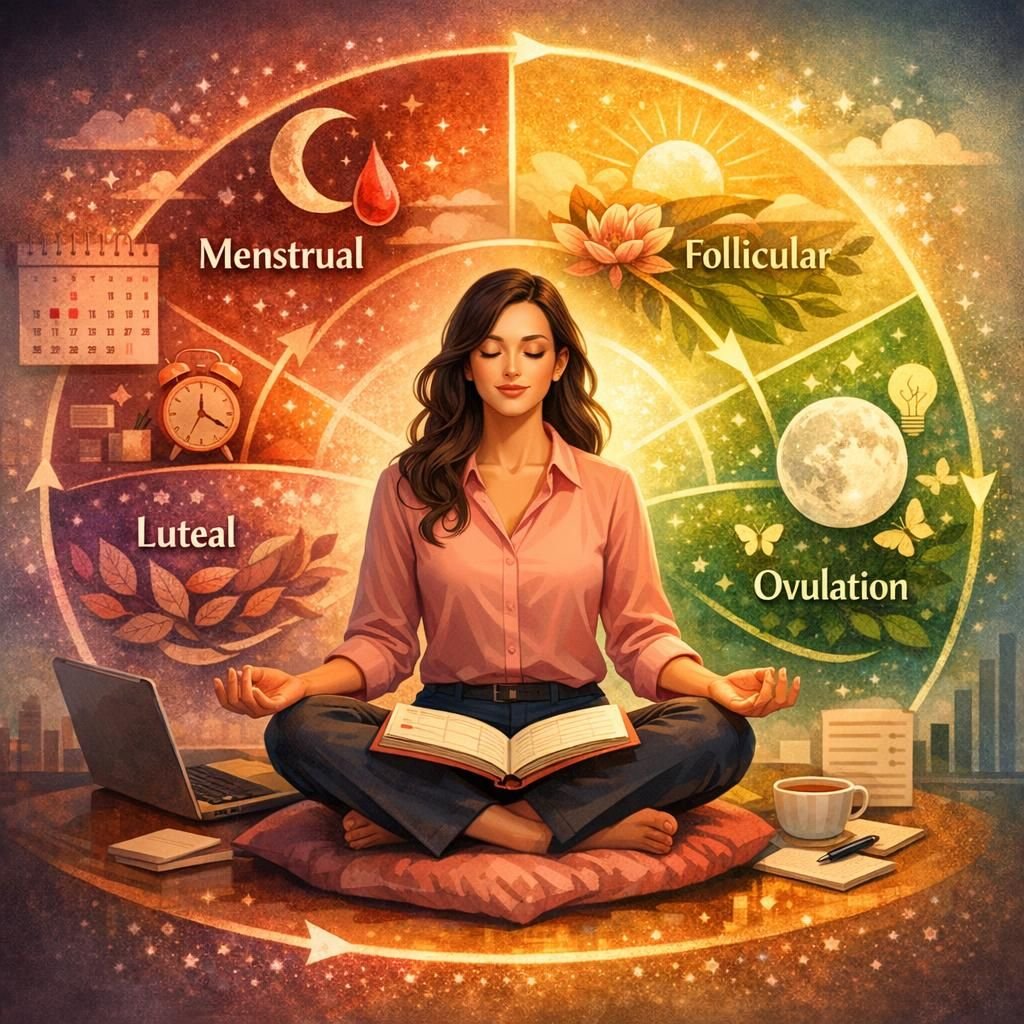
The **menstrual cycle**, typically lasting around 28 days, comprises four distinct phases—**menstrual, follicular, ovulatory, and luteal**—each characterized by fluctuating hormone levels that influence physical and emotional states. By leveraging the specific traits associated with these phases, women can strategically plan their tasks, meetings, and projects to align with their natural aptitudes. This not only promotes greater productivity and satisfaction but also supports a more sustainable **work-life balance** that considers holistic well-being.
Women’s workplace experiences and productivity peaks vary across these phases. For instance, the **follicular phase** often brings a burst of energy and creativity, ideal for brainstorming and tackling complex tasks. In contrast, the **luteal phase** might be a time for detailed work and critical thinking given the hormonal shift toward introspection and analytical capacity. Recognizing these cycles empowers women to work with their bodies rather than against them, fostering an empowered, self-aware approach to professional life that emphasizes quality and efficiency over mere output.
**
Features
**
Research in this area is growing, as experts from various fields, including **endocrinology**, **psychology**, and **organizational behavior**, explore the implications of aligning work with biological rhythms. A critical study by the **International Journal of Environmental Research and Public Health** outlines how variations in **estrogen** and **progesterone** during the menstrual cycle impact cognitive functions such as mood, concentration, and stress levels. This research supports the understanding that different phases of the cycle can offer opportunities for different types of work, ranging from ideal periods for collaboration to peak times for complex problem-solving ([Source](https://www.mdpi.com/1660-4601/17/25/9548)).
Further compelling evidence is provided by a study conducted by the **University of Oxford**, which suggests that recognizing and adapting to hormonal changes can lead to enhanced job performance and satisfaction. Participants in the study who tailored their work tasks to their menstrual cycle reported improved emotional well-being and a better sense of balance in their professional and personal lives ([Source](https://academic.oup.com/biomedgerontology/article/75/3/552/5581356)).
Moreover, the integration of cycle-aware strategies is gaining traction in professional circles, with an increasing number of companies offering resources and training on how to incorporate these insights into work schedules. This transition not only fosters **inclusivity** but also promotes **innovation** as organizations embrace diversity in thought and function, recognizing that varied approaches to productivity can indeed coexist and thrive.
Nevertheless, it is essential to approach this strategy with flexibility, acknowledging that not all women experience cycles in the same way, and some may not have cycles at all due to different health or life conditions. Personalized approaches are critical, involving an understanding of individual patterns and preferences, and fostering environments that prioritize open dialogue and adaptable workflows.
**
Conclusion
**
Harnessing feminine cycles for peak productivity offers a transformative work-life strategy that empowers women to align their professional responsibilities with their natural rhythms. By embracing this individualized approach, organizations can cultivate a more inclusive, innovative, and efficient workplace. As we continue to learn more about the interplay between physiology and productivity, it’s essential to ensure that these insights are used to foster both individual well-being and organizational success.
**References**
– [Influence of Menstrual Cycle Phases on Cognitive and Emotional Aspects](https://www.mdpi.com/1660-4601/17/25/9548)
– [University of Oxford Study on Hormonal Effects and Job Performance](https://academic.oup.com/biomedgerontology/article/75/3/552/5581356)
**Concise Summary**
Harnessing feminine cycles aims to align women’s work tasks with their natural menstrual cycle phases for enhanced productivity and satisfaction. This approach challenges traditional work schedules, acknowledging unique physiological rhythms. The menstrual cycle’s phases—menstrual, follicular, ovulatory, and luteal—each offer distinct aptitudes, from increased energy to critical thinking. Research indicates aligning tasks with these phases boosts well-being and performance, prompting companies to adopt flexible and inclusive strategies. A personalized approach is crucial, as women’s experiences vary widely, fostering environments that prioritize adaptability and open dialogue.

Dominic E. is a passionate filmmaker navigating the exciting intersection of art and science. By day, he delves into the complexities of the human body as a full-time medical writer, meticulously translating intricate medical concepts into accessible and engaging narratives. By night, he explores the boundless realm of cinematic storytelling, crafting narratives that evoke emotion and challenge perspectives. Film Student and Full-time Medical Writer for ContentVendor.com