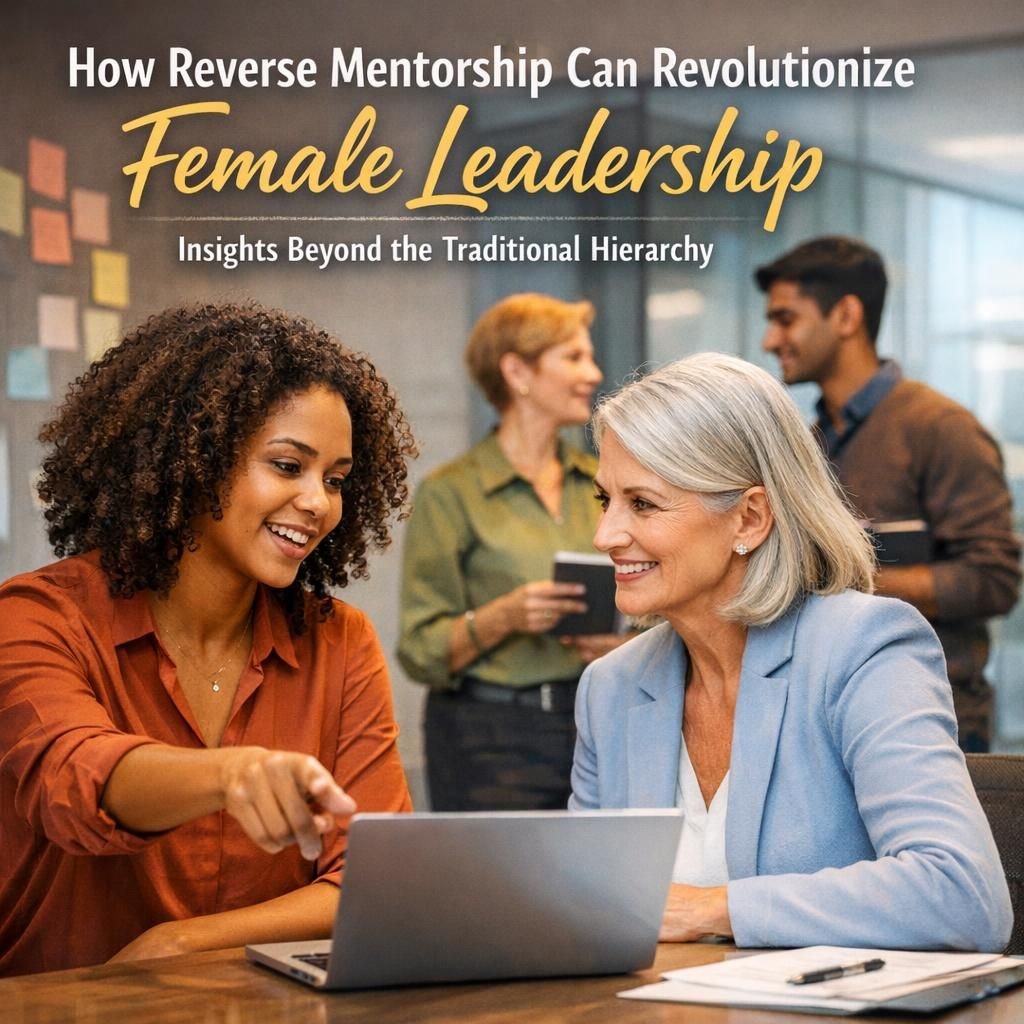
How Reverse Mentorship Can Revolutionize Female Leadership Insights Beyond the Traditional Hierarchy
In the ever-evolving landscape of business, **leadership paradigms** are continually scrutinized, particularly in the context of **female leadership**. The traditional top-down hierarchical model of mentorship is giving way to more progressive models, with **reverse mentorship** emerging as a transformative force. Reverse mentorship flips the conventional script; instead of only seniors imparting wisdom to juniors, younger employees mentor their elders. This practice has the potential to revolutionize female leadership by providing new perspectives, fostering innovation, and breaking down the barriers entrenched in traditional corporate hierarchies.
Today’s business ecosystem is more diverse than ever, and female leaders are seeking ways to leverage **diversity** to gain strategic insights. Reverse mentorship provides a dynamic platform for established leaders to gain exposure to millennial and Gen Z methods and mindsets. As the younger generation is often more in tune with the latest **digital trends**, technologies, and cultural phenomena, they offer valuable insights that can empower female leaders to adapt to modern challenges. This form of mentorship not only bridges the generational gap but also enhances the emotional intelligence and adaptability of leadership.
In this hierarchical inversion, mentees can demonstrate fresh problem-solving approaches, alternative viewpoints on workplace issues, and new ideas that may not yet be on senior leaders’ radars. For instance, younger generations often bring a stronger focus on **inclusivity** and **sustainability**, which are critical in today’s business ethos. This practice can help female leaders craft strategies that reflect modern societal values, which are increasingly important to stakeholders, consumers, and employees alike.
Additionally, reverse mentorship can serve to bolster a culture of continuous learning, essential for today’s rapidly changing environment. It provides female leaders with firsthand insights into emerging technologies or platforms that are reshaping industries. By becoming students of their younger counterparts, they can remain relevant and pioneering in their approaches.
Important to emphasize is the fact that reverse mentorship fosters a two-way street of communication that benefits both parties. The junior mentor gains visibility, leadership skills, and an understanding of the broader organizational context, which are crucial for career advancement. Meanwhile, the senior leader benefits from a fresh perspective that challenges one’s thinking and enhances overall strategic vision.
Features:
Several professional studies underscore the significance of reverse mentorship, especially in transforming leadership dynamics. A study published in the Harvard Business Review highlights that reverse mentorship can lead to increased **innovation** by facilitating a dynamic exchange of ideas across generational divides. This exchange can dismantle obsolete practices and introduce novel strategies conducive to a global business environment that no longer rests on the laurels of traditional hierarchies. According to the study, companies that embraced reverse mentorship witnessed a significant increase in diversity of thought and creativity, which subsequently influenced their profitability and employee satisfaction.
Furthermore, research conducted by the Center for Creative Leadership indicates that reverse mentorship enhances empathy and emotional intelligence, both of which are critical components of effective leadership. Through interactions with younger mentors, senior female leaders often become more attuned to the motivations and concerns of their younger colleagues, leading to more cohesive teams and improved organizational climates.
The benefits of reverse mentorship are not limited to anecdotal evidence. A report from the consulting firm Deloitte highlights how reverse mentorship has been instrumental in fostering inclusive workplace climates. It provides senior leaders with insights into **inclusivity**, **equity**, and **diversity**, topics that younger generations often prioritize. Such insights are pivotal for female leaders seeking to create workplaces that are not only diverse but also truly inclusive, helping attract and retain top talent.
In the healthcare industry, where studies like those published in The Lancet note the impact of hierarchical structures on efficiency, reverse mentorship has been shown to collapse the barriers that often stifle innovation. Female leaders in healthcare settings who embrace reverse mentorship are better equipped to keep up with technological advancements, thus improving patient care outcomes.
Conclusion:
**Reverse mentorship** has the transformative potential to revolutionize **female leadership** in ways traditional hierarchies cannot. By embracing this empowered model, female leaders gain strategic insights that are contemporary, inclusive, and aligned with modern business climates. It is a progressive step forward, challenging the status quo and paving the way for a future where leadership is defined not by age or seniority, but by the value of shared knowledge and collaborative growth.
**References:**
1. [Harvard Business Review – On Reverse Mentoring](https://hbr.org)
2. [Center for Creative Leadership – The Benefits of Reverse Mentorship](http://www.ccl.org)
3. [Deloitte Insights – Reverse Mentorship in Workplace Diversity](https://www2.deloitte.com)
4. [The Lancet – Hierarchies in Healthcare](https://www.thelancet.com)
**Concise Summary:**
Reverse mentorship revolutionizes female leadership by fostering a dynamic exchange of ideas between younger and senior employees. This practice bridges generation gaps and provides female leaders with insights into modern digital trends, inclusivity, and sustainability. Studies highlight its impact on enhancing innovation, empathy, and workplace inclusivity. This two-way mentorship also benefits younger mentors gaining leadership skills and visibility. Embracing reverse mentorship challenges traditional hierarchies and supports leadership defined by collaborative knowledge-sharing and growth.

Dominic E. is a passionate filmmaker navigating the exciting intersection of art and science. By day, he delves into the complexities of the human body as a full-time medical writer, meticulously translating intricate medical concepts into accessible and engaging narratives. By night, he explores the boundless realm of cinematic storytelling, crafting narratives that evoke emotion and challenge perspectives. Film Student and Full-time Medical Writer for ContentVendor.com