**
Why Most “Balance” Advice for Women Is Gaslighting (and What Actually Works in a Post-Burnout World)**
**
Introduction**
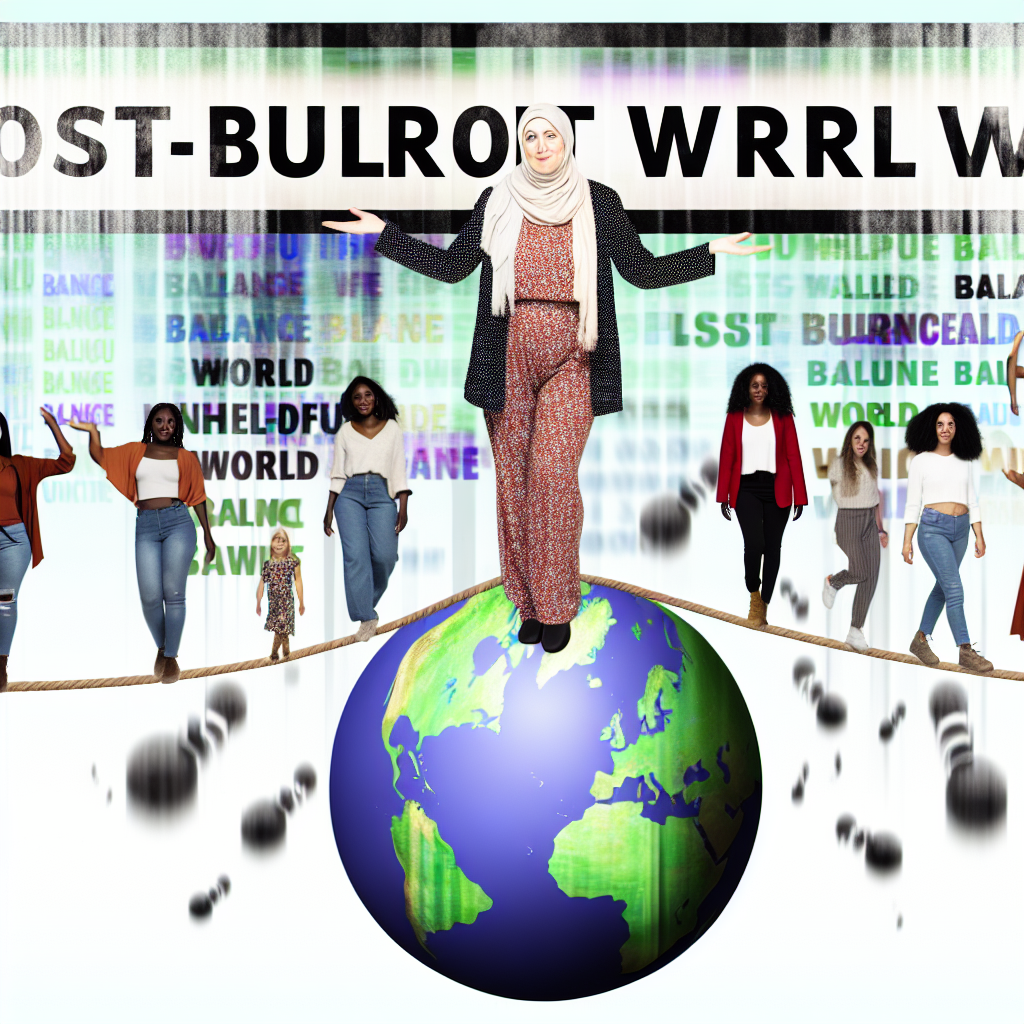
In our fast-paced society, where **ambition** and **success** are highly valued, achieving a balanced life has become a modern mantra for **women**. The notion of **balance**, often discussed in **blogs**, **workplace seminars**, and **self-help** books, suggests an ideal equilibrium between professional achievements and personal fulfillment. However, this aspiration frequently masks a deeper issue—the misleading narrative that balance can be effortlessly achieved by trying hard enough. For many women, especially those who have experienced burnout, conventional advice on **balance** feels more like a path to failure than success.
The concept of balance is marketed as a remedy for stress-free days, promising an ideal alignment of **career**, **family**, **social life**, and personal care. However, life’s realities rarely allow for such a flawless distribution of time and energy. Pursuing this ideal can lead to feelings of inadequacy and increased stress, a phenomenon akin to **gaslighting**—convincing someone of a reality that is misleadingly simplified. For many women managing multiple roles, this approach results in emotional exhaustion rather than empowerment.
A more nuanced understanding acknowledges life’s inherent unpredictability and instead emphasizes resilience and flexibility. In a **post-burnout world**, the focus needs to shift from achieving perfection to embracing adaptability. This shift encourages women to prioritize personal well-being, set realistic expectations, and define success on their own terms. Rather than following a one-size-fits-all formula, experts now highlight personalized strategies reflecting individual values and circumstances. This empowers women to navigate unique paths without the pressure of a contrived equilibrium.
**
Features**
Recent **studies** explore the psychological underpinnings of **workplace burnout** and its impact on **mental health**, particularly among women. A comprehensive report by the [World Health Organization (WHO)](https://www.who.int/news/item/17-05-2019-burn-out-an-occupational-phenomenon-international-classification-of-diseases) reclassified burnout as an occupational phenomenon, highlighting its effects on mental states characterized by energy depletion, distancing from one’s job, and reduced professional efficacy. Women, often primary caregivers in **dual-income households** ([McKinsey & Company – Women in the Workplace 2023](https://www.mckinsey.com/business-functions/organization/our-insights/women-in-the-workplace-2023)), are disproportionately affected due to societal expectations and multitasking demands, exacerbating stress and burnout.
The **American Psychological Association (APA)** ([APA – Stress in America 2022](https://www.apa.org/news/press/releases/stress/2022)) notes that the pressure to maintain an ideal work-life balance significantly contributes to anxiety and depression in women. Traditional **balance advice** often overlooks systemic barriers women face, such as unequal workload division at home and gender bias in professional settings.
Medical professionals now advocate for shifting focus from striving for conventional balance to fostering overall well-being. A study in the [Journal of Occupational Health Psychology](https://psycnet.apa.org/record/2022-00018-005) suggests that strategies like cognitive-behavioral therapy, mindfulness practices, and boundary-setting effectively reduce burnout symptoms. These methods promote mental resilience, empowering women to manage tasks based on their priorities rather than external pressures.
The key to navigating life in a post-burnout world lies in redefining success and balance based on personal circumstances. This includes setting realistic goals, practicing self-compassion, and acknowledging that life’s demands are fluid, necessitating a flexible approach to personal and professional responsibilities.
**
Conclusion**
To conclude, the traditional narrative of achieving perfect balance is not only unrealistic but also a source of significant stress for many women. Embracing flexibility and resilience over rigid balance offers a more practical and empowering framework. By prioritizing mental well-being and setting personalized goals, women can create fulfilling lives that reflect their values and needs. Balance is personal, fluctuating with life’s ever-changing rhythms. Being adaptable, rather than striving for an impossible equilibrium, allows for true fulfillment and sustained well-being in today’s dynamic world.
**Concise Summary**
The article critiques the traditional notion of achieving perfect balance in life, often imposed on women as attainable through mere effort, arguing it leads to stress and burnout. Instead, it advocates for a flexible approach focused on resilience and personal well-being. Emphasizing personalized strategies over one-size-fits-all solutions, it encourages women to define success on their own terms, reprioritizing based on individual values and circumstances. By embracing adaptability and realistic expectations, women can find fulfillment without the pressure of conforming to an unrealistic ideal of balance.

Dominic E. is a passionate filmmaker navigating the exciting intersection of art and science. By day, he delves into the complexities of the human body as a full-time medical writer, meticulously translating intricate medical concepts into accessible and engaging narratives. By night, he explores the boundless realm of cinematic storytelling, crafting narratives that evoke emotion and challenge perspectives. Film Student and Full-time Medical Writer for ContentVendor.com